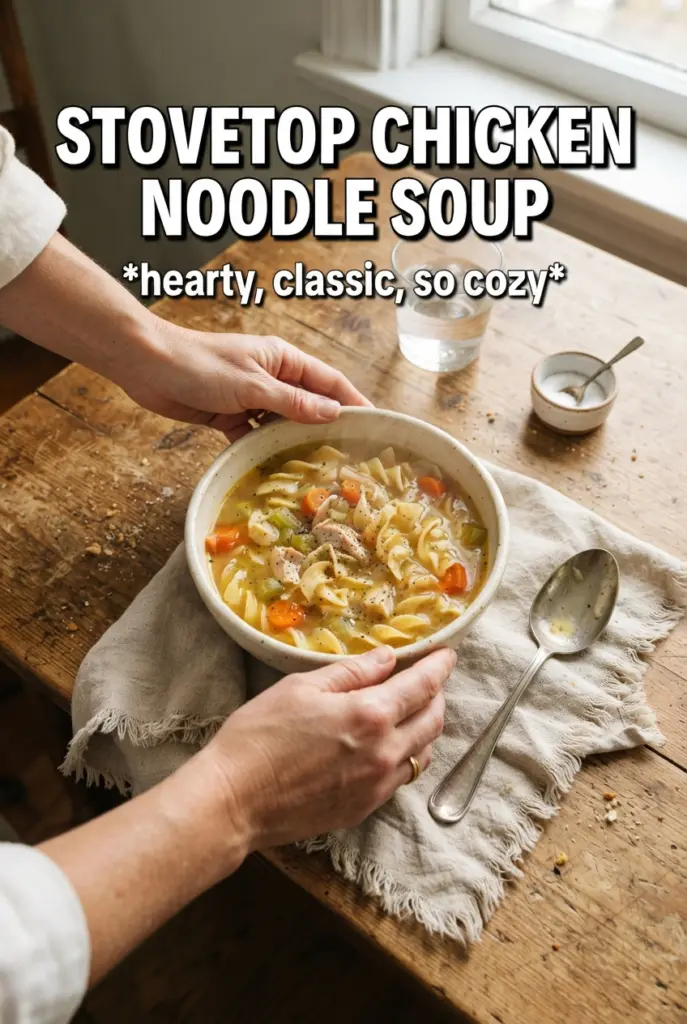
Clear broth, tender chicken, and noodles that still have some bite turn this stovetop chicken noodle soup into the kind of dinner people remember. It tastes like it simmered for hours, but the whole pot comes together fast enough for a weeknight, which is exactly why it earns a repeat spot. The vegetables stay soft but not mushy, the broth stays clean and savory, and the chicken gets shredded right back into the soup so every spoonful feels complete.
What makes this version work is the order. The onions, carrots, and celery get a quick sauté first, which builds a better base than dumping everything into the pot and hoping the broth carries the flavor. The chicken simmers whole, so it stays juicy while the soup develops, and the noodles go in at the end so they don’t soak up all the broth before you sit down to eat.
You’ll find the exact timing below, plus the little details that keep the broth from going flat and the noodles from turning soft and bloated if you have leftovers.
The broth turned out clear and full of flavor, and the noodles stayed just right because I added them at the end. My husband went back for a second bowl before I even sat down.
Love how the egg noodles and shredded chicken make this stovetop soup feel hearty and homemade? Save it to Pinterest for the next time you need a fast bowl of comfort.
The Trick to Clear Broth and Tender Noodles in the Same Pot
The biggest mistake in chicken noodle soup is letting the noodles run the show. If they cook too long in the broth, they go soft and the starch thickens the soup until it tastes dull instead of bright. Cooking the chicken first, removing it to shred, and adding the noodles only after the broth has already developed keeps the texture cleaner and the finished bowl lighter.
The other place people lose flavor is in the first few minutes. Those vegetables need a little time in the oil before the broth goes in. That step softens the onion and starts pulling sweetness from the carrots and celery, which gives the soup a fuller base without needing extra ingredients.
What Each Ingredient Is Actually Doing in This Soup

- Chicken breast — Lean breast meat cooks quickly and shreds cleanly. If you swap in thighs, the soup gets richer and a little more forgiving, but the broth will be less light.
- Chicken broth — This is the body of the soup, so use one you’d actually drink. A low-sodium broth gives you control at the end, which matters because the noodles and chicken both need proper seasoning.
- Egg noodles — They soften fast and give the soup its classic comfort-food texture. Wide noodles hold up best, but any egg noodle works as long as you add it right before serving.
- Celery seed — Optional, but it deepens the broth in a way you can taste even though you can’t point to it on the spoon. If you don’t have it, the soup still works; it just loses a little of that old-school deli flavor.
- Fresh parsley — Stir it in at the end or sprinkle it on top for a clean, fresh finish. Dried parsley won’t do the same job here.
Building the Soup So Nothing Turns Soft or Stringy
Softening the Vegetables First
Warm the olive oil in a heavy-bottomed pot over medium heat, then add the onion, carrots, and celery. Cook them until the onion turns translucent and the carrots start to lose their raw edge, about 5 minutes. If the heat is too high, the vegetables brown before they soften, and that gives the broth a harsh edge instead of a mellow base.
Letting the Chicken Simmer Gently
Stir in the garlic for just a minute, then add the broth and seasonings before nestling in the chicken breasts. Bring the pot to a boil, then lower the heat so the soup simmers gently. A hard boil will tighten the chicken and make it stringy; a gentle simmer keeps it tender while the broth takes on flavor.
Shredding and Finishing with Noodles
Remove the chicken once it’s cooked through and shred it with two forks. Bring the soup back to a boil before adding the egg noodles so they cook evenly, then simmer until they’re tender but still hold their shape. Add the chicken back in at the end and season generously with salt and pepper, because broth that tastes flat before seasoning will still taste flat after the noodles go in.
How to Adapt This for What’s in Your Kitchen
Use chicken thighs for a richer bowl
Boneless skinless thighs give you a deeper, more savory soup and stay juicy even if you let them simmer a minute too long. The broth will be a little more golden and less clean-tasting, which is a good trade if you want a heartier pot.
Make it gluten-free without losing the comfort
Swap the egg noodles for a gluten-free pasta that holds its shape, and cook it separately if the package says it softens quickly. Rice noodles work too, but they change the soup into something lighter and more delicate.
Add extra vegetables without muddying the broth
Mushrooms, peas, or diced zucchini can go in near the end so they stay distinct. Anything starchy or strongly flavored should be added in small amounts, or it will take over the clean chicken-and-herb balance.
Storage and Reheating
- Refrigerator: 4 days. The noodles will keep absorbing broth, so expect the soup to thicken as it sits.
- Freezer: It freezes well if you leave out the noodles. Freeze the broth, chicken, and vegetables, then add freshly cooked noodles when you reheat.
- Reheating: Warm it gently on the stove over medium-low heat. If it starts at a hard boil, the noodles break down and the chicken dries out before the center heats through.
Answers to the Questions Worth Asking
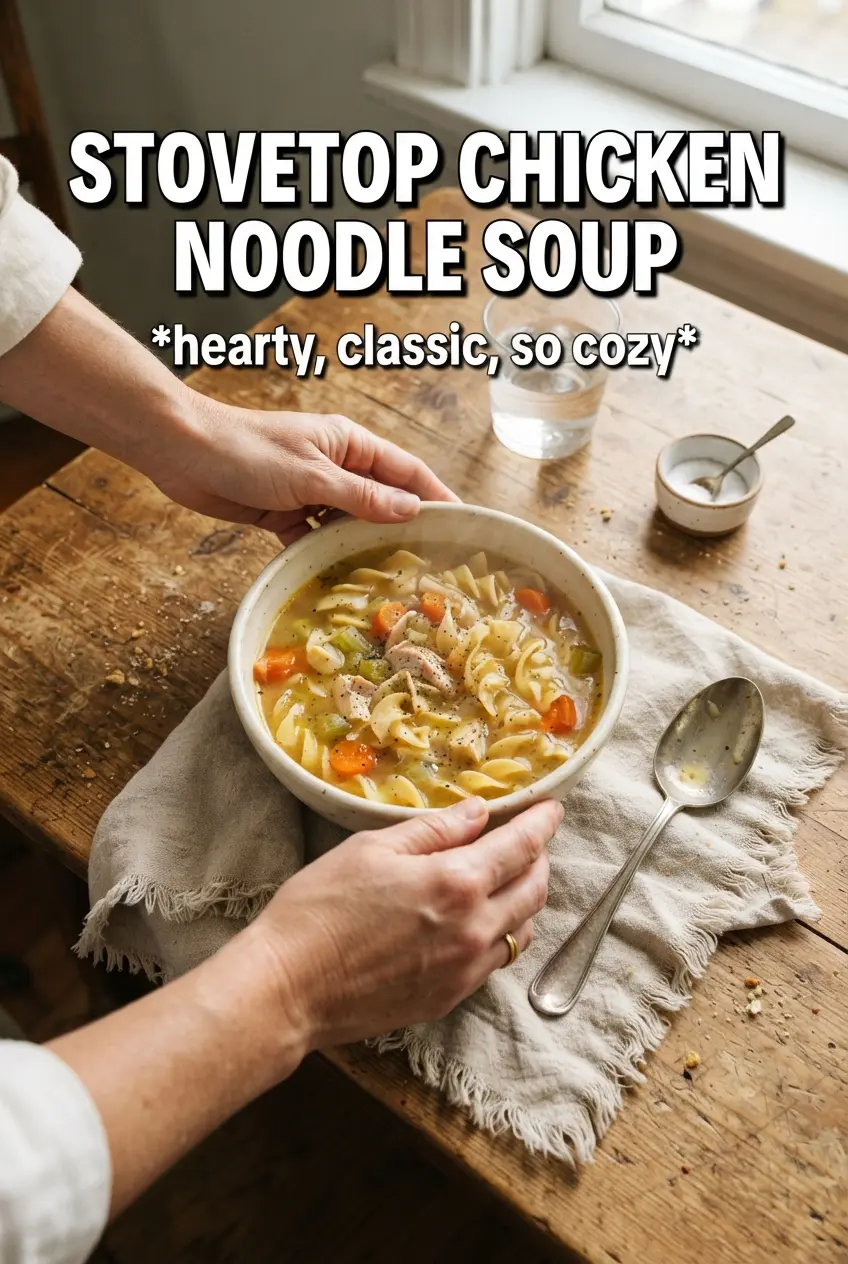
Stovetop Chicken Noodle Soup
Ingredients
Equipment
Method
- Heat the olive oil in a large heavy-bottomed pot over medium heat, then add the onion, carrots, and celery. Sauté for 5 minutes, stirring until the onion looks slightly translucent and the vegetables start to soften.
- Add the garlic and cook for 1 minute, keeping the heat at medium. Stir until fragrant, about the time the garlic turns aromatic.
- Pour in the chicken broth and add dried thyme, garlic powder, onion powder, and celery seed. Stir to combine until the broth is evenly seasoned.
- Add the chicken breast to the pot and bring everything to a boil. Once boiling, make sure the chicken is mostly submerged so it cooks evenly.
- Reduce heat to a simmer and cook for 18-20 minutes until the chicken is fully cooked. You should see gentle bubbling, and the chicken should reach an internal doneness appropriate for chicken breast.
- Remove the chicken breast and shred it with two forks. Shred until the pieces are evenly sized for each spoonful.
- Bring the soup back to a boil. Confirm you have active bubbling before adding the noodles.
- Add the egg noodles and cook for 6-8 minutes, stirring occasionally, until tender. The broth should thicken slightly and the noodles should be fully cooked.
- Return the shredded chicken to the pot and stir to distribute it. Heat just until warmed through, keeping the soup at a gentle simmer.
- Season the soup generously with salt and pepper. Finish by garnishing with fresh parsley for a fresh green cue on top.