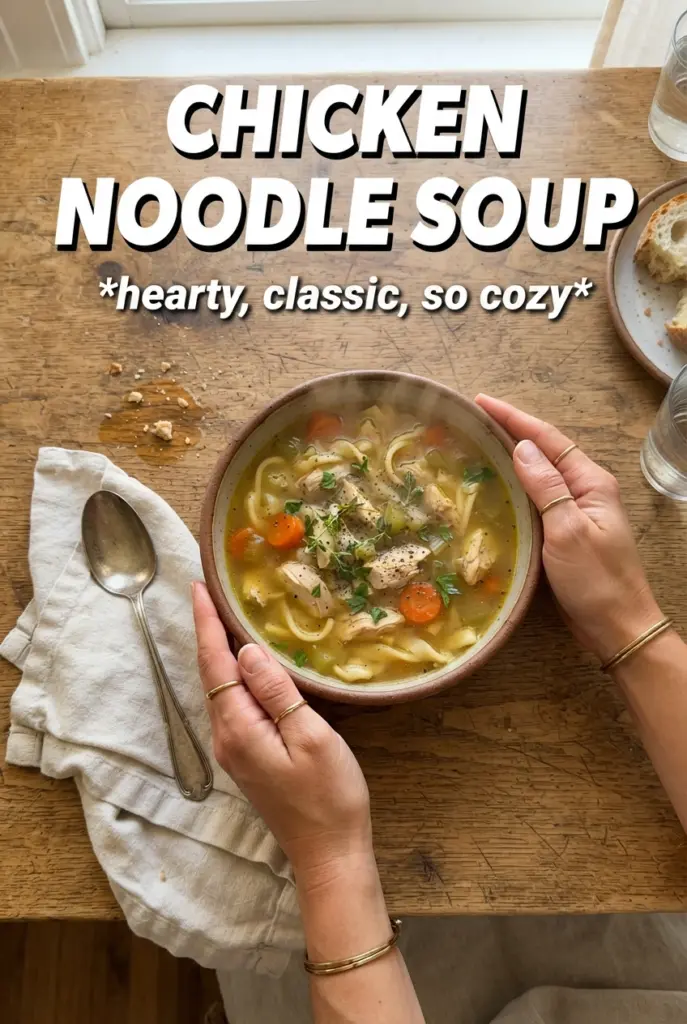
Chicken noodle soup earns its keep when the broth tastes full-bodied, the noodles stay tender instead of bloated, and the chicken comes out soft enough to shred with barely any effort. The version I reach for most starts with bone-in chicken, which gives the pot more depth than boneless meat alone, and it keeps the broth tasting like it simmered all afternoon even when it didn’t.
The other thing that matters here is timing. The vegetables cook first so the onion loses its raw edge, then the chicken simmers gently until it’s cooked through, and the noodles go in at the very end so they don’t soak up half the pot before dinner. That order keeps the soup clean and balanced instead of thick and tired.
Below, I’ve included the small details that make a good bowl turn into one you’ll come back to — when to season, how to keep the noodles from getting mushy, and a few ways to adapt the pot if you need to work with what’s in the kitchen.
The broth was so clear and flavorful, and the noodles stayed springy even after I reheated it the next day. My husband said it tasted like the soup his mom used to make.
Chicken noodle soup with bone-in chicken, tender noodles, and that rich homemade broth belongs in your Pinterest comfort-food board.
The Reason Chicken Noodle Soup Turns Muddy Instead of Clear
The fastest way to ruin chicken noodle soup is to boil it hard once the chicken goes in. That turns the broth cloudy and can make the meat stringy before it’s done. A gentle simmer keeps the broth cleaner and gives the chicken time to cook through without squeezing all the moisture out of it.
The second mistake is adding the noodles too early. Egg noodles drink up broth fast, and if they sit in the pot while the soup is still cooking, they’ll go soft and heavy. Pull the chicken out first, shred it, then add the noodles at the end so they finish in broth that still tastes bright and fresh.
What Each Ingredient Is Doing in This Bowl

- Bone-in chicken breasts or thighs — This is what gives the broth backbone. Thighs bring a little more richness, while breasts stay lean and shred neatly. If you use boneless chicken, the soup will still work, but the broth won’t have quite the same depth.
- Chicken broth plus water — The broth carries the flavor, and the water keeps it from tasting too salty or heavy after the chicken simmers. If your broth is very mild, use all broth instead of splitting it with water. If it’s already salty, the water helps keep the seasoning in range.
- Carrots, celery, and onion — This is the base that makes the soup taste like soup instead of hot broth with add-ins. Dice the onion small so it melts into the liquid, and slice the carrots and celery evenly so they soften at the same pace.
- Egg noodles — These are the texture that makes the bowl feel finished. Wide noodles hold up well, but any egg noodle will work. If you’re planning leftovers, cook them just until tender and expect them to absorb more broth as the soup sits.
- Thyme, dried parsley, and bay leaves — These herbs don’t shout; they round out the chicken and vegetables. Bay leaves matter here more than people think, so don’t skip them if you have them.
The Simmer That Builds the Broth
Softening the vegetables first
Start with the onion, carrots, and celery in olive oil and cook them until the onion looks translucent and the carrots have just begun to lose their hard edge. You’re not chasing color here. You’re building a sweet, savory base that will blend into the broth instead of floating around tasting raw. If the pan starts to brown too fast, lower the heat — you want the vegetables softened, not fried.
Cooking the chicken gently
Once the broth, water, herbs, and chicken go in, bring the pot up to a boil only long enough to get it moving, then lower it to a simmer. You should see small bubbles, not a rolling boil. That slower heat keeps the chicken tender and gives the broth time to pick up flavor without turning greasy or cloudy.
Shredding and finishing the noodles
Take the chicken out when it’s cooked through and shreds easily with two forks. Remove the bay leaves before anything else gets back into the pot, then add the chicken and bring the soup to a gentle simmer again before the noodles go in. Cook the noodles just until tender, because they’ll keep softening in the hot broth even after the burner turns off.
How to Adapt This Soup When You Need a Different Bowl
Use rotisserie chicken for a faster version
Skip the raw chicken simmer and add shredded rotisserie chicken after the vegetables have softened and the broth is hot. The soup will be ready faster, but the broth won’t have quite the same depth, so use a good-quality broth and let the soup simmer a few extra minutes before serving.
Make it gluten-free with rice noodles or potatoes
Egg noodles are the classic choice, but rice noodles work well if you add them at the very end and serve the soup right away. You can also leave the noodles out and add diced potatoes early in the simmer for a heartier gluten-free bowl with a softer, stew-like feel.
Turn it into a dairy-free, lighter broth
This recipe is naturally dairy-free as written, so the main thing to watch is broth quality. Use a broth you like the taste of on its own, because there’s no cream or cheese here to cover a flat base. A squeeze of lemon at the end can brighten the pot if it tastes a little heavy.
Storage and Reheating
- Refrigerator: Keeps for 4 days. The noodles will continue to absorb broth, so the soup thickens as it sits.
- Freezer: Freezes well if you leave the noodles out and add fresh noodles after thawing. If the noodles are already in the soup, they’ll get soft after freezing and reheating.
- Reheating: Warm gently on the stove over medium-low heat until steaming. Don’t boil it hard, or the chicken can turn stringy and the noodles can break apart.
Answers to the Questions Worth Asking
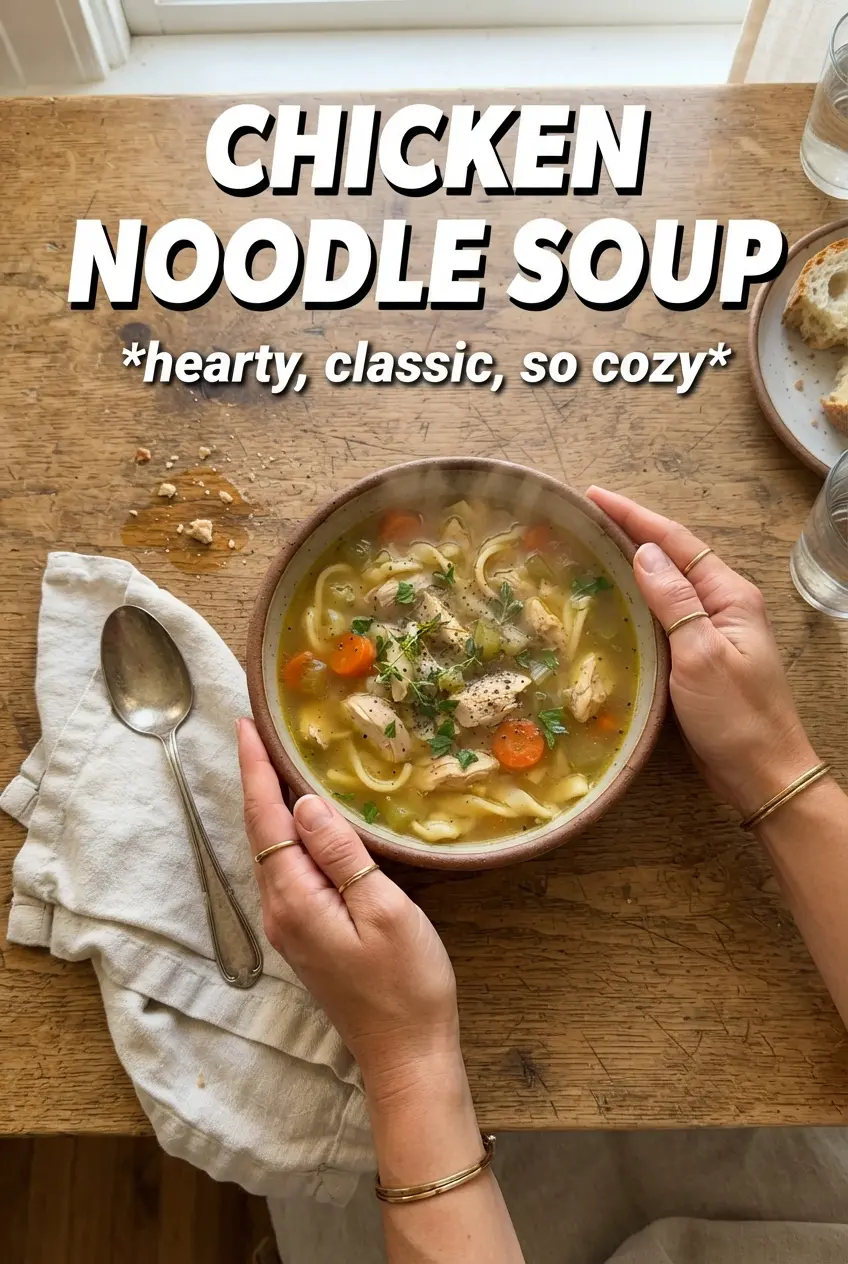
Chicken Noodle Soup
Ingredients
Equipment
Method
- Heat the olive oil in a large pot over medium heat, then add the onion, carrots, and celery. Sauté for 5 minutes until slightly softened and fragrant.
- Add the garlic and cook for 1 minute, stirring so it doesn’t brown. Keep the heat at medium for even cooking.
- Add the chicken broth, water, dried thyme, dried parsley, bay leaves, and bone-in chicken to the pot. Bring everything to a boil over high heat.
- Reduce the heat to maintain a gentle simmer and cook for 20-25 minutes, until the chicken is cooked through. Skim foam if needed for a cleaner broth.
- Remove the chicken to a plate and shred with two forks, then discard the bay leaves. Return the shredded chicken to the pot.
- Bring the pot back to a simmer and keep it at a gentle bubble. This helps the flavors mingle before adding noodles.
- Add the egg noodles and cook for 6-8 minutes, until tender. Stir occasionally to prevent sticking.
- Season generously with salt and pepper to taste, then garnish with fresh parsley. Serve hot with the noodles evenly distributed.