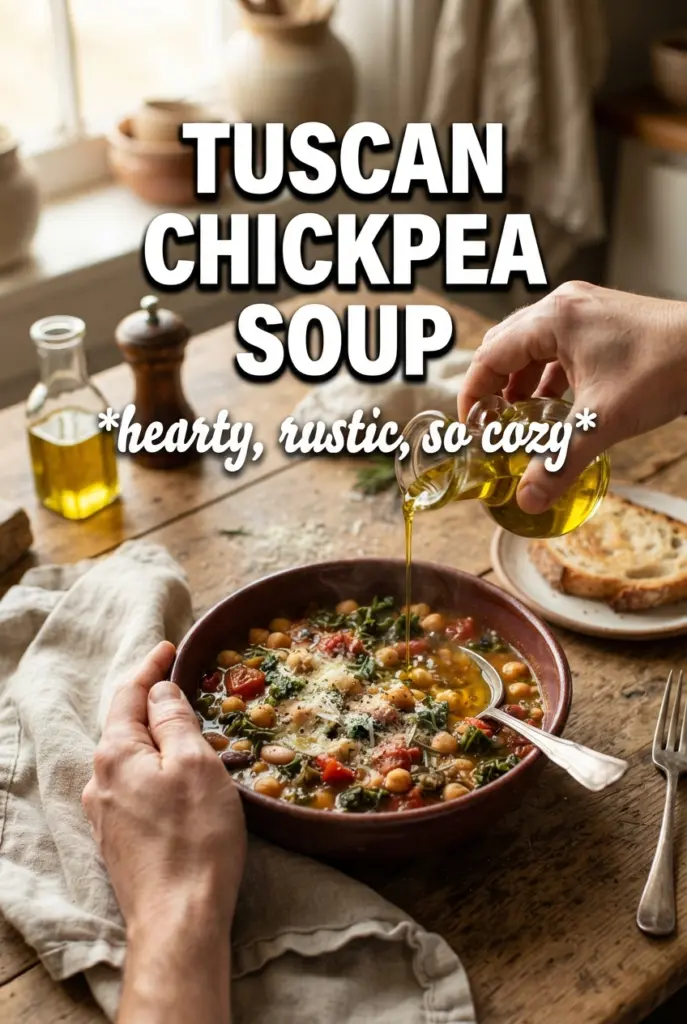
Rustic, brothy, and deeply savory, Tuscan chickpea soup lands in the bowl with the kind of comfort that still feels fresh. The chickpeas give it body, the kale stays pleasantly toothsome, and the fire-roasted tomatoes bring a slow, sweet edge that makes every spoonful taste like it simmered all afternoon.
What sets this version apart is the way it builds flavor in layers. The onion gets a proper sauté first, the garlic and red pepper flakes bloom just long enough to wake up, and then the rosemary and parmesan rind go into the pot where they can perfume the broth without taking over. I also like to mash a portion of the chickpeas at the end, because that gives the soup a naturally thicker texture without turning it heavy.
You’ll find a few small details below that matter more than they look on paper, especially how to keep the kale bright and the broth balanced at the end. The result is a soup that tastes clean, rich, and sturdy enough to stand on its own.
The broth had so much flavor after just 20 minutes, and mashing some of the chickpeas made it taste thick and rich without any cream. I added extra lemon at the end and my husband went back for a second bowl right away.
Save this Tuscan chickpea soup for nights when you want a brothy, lemony bowl with real depth from rosemary, parmesan, and mashed chickpeas.
The Reason the Broth Tastes Slow-Simmered in Just 35 Minutes
This soup gets its depth from building flavor in the right order, not from a long simmer. The onion softens first so it can sweeten the base, then the garlic and red pepper flakes only stay in the hot oil long enough to bloom. If the garlic browns, the soup takes on a bitter edge, so keep that part brief and move straight into the broth.
The other piece that matters is the parmesan rind, if you have one. It doesn’t melt into the soup; it gently seasons the broth from the inside out and gives it that round, savory finish people usually assume came from much more effort. The mashed chickpeas are the texture fix at the end. Without that step, the broth stays thinner and the soup eats more like a light bean stew than a full meal.
What Each Ingredient Is Doing in This Bowl

- Chickpeas — These are the backbone of the soup. A third of them get mashed so the broth turns creamy and clingy without any dairy.
- Fire-roasted diced tomatoes — They bring smoky sweetness and a little acidity, which keeps the soup from tasting flat. Regular diced tomatoes work, but you’ll lose some of that roasted depth.
- Fresh rosemary — Fresh rosemary is worth using here because it gives the broth a piney, savory note that dried rosemary can turn dusty fast. Remove the sprigs after simmering so the flavor stays balanced.
- Parmesan rind — Optional, but excellent if you have it. It adds body and a salty, nutty finish that makes the broth taste fuller.
- Kale — Add it at the end so it stays green and slightly firm. If it simmers too long, it turns drab and softens past the point where it adds much to the bowl.
- Lemon — The final squeeze wakes up everything else. The soup tastes richer and cleaner after that hit of acid.
Building the Flavor Without Turning the Vegetables to Mush
Softening the Onion First
Warm the olive oil over medium heat and cook the diced onion until it turns translucent and starts to look glossy around the edges, about 5 minutes. You’re not chasing color here. If the onion browns too quickly, the broth loses the gentle sweetness that keeps the tomatoes and rosemary in balance.
Blooming the Garlic and Pepper Flakes
Add the garlic and red pepper flakes and stir them for about 2 minutes, just until the garlic smells fragrant. The pot should smell sharp and savory, not toasted. If the garlic starts to take on color, lower the heat right away so it doesn’t turn bitter before the liquid goes in.
Simmering the Soup Base
Stir in the chickpeas, tomatoes, broth, rosemary, Italian seasoning, and parmesan rind, then bring the pot up to a boil before dropping it to a steady simmer. The broth should move gently, with only small bubbles breaking the surface. A hard boil drives off too much liquid and can make the chickpeas split before they’ve had time to absorb flavor.
Thickening and Finishing
After 20 minutes, remove the rosemary sprigs and parmesan rind, then mash or blend about a third of the chickpeas against the side of the pot. That’s what gives the soup a fuller body without making it heavy or pasty. Stir in the kale and cook just until it wilts and turns a brighter green, then season with salt, pepper, and lemon. Finish with a drizzle of olive oil and parmesan so the top tastes as good as the broth underneath.
How to Adapt This When You Need It a Little Different
Dairy-Free but Still Savory
Skip the parmesan rind and finish with extra olive oil plus a little more salt and lemon. You’ll lose some of the round, aged-cheese depth, but the soup still tastes complete because the rosemary, tomatoes, and chickpeas carry the base.
Make It Heartier for Dinner
Stir in a small handful of small pasta or serve it over toasted bread if you want something more substantial. The soup is brothy enough that it can handle that extra starch without turning gluey, especially if you keep the pasta amount modest.
Swap the Kale
Spinach works if that’s what you have, but add it in the last minute because it wilts fast and disappears into the broth. Swiss chard is another good choice, though the stems need a little more time than the leaves.
Use Dried Rosemary Instead of Fresh
If fresh rosemary isn’t available, use a smaller amount of dried rosemary and keep it in the broth the whole simmer so it has time to soften. Dried rosemary is more concentrated and a little tougher, so too much can make the soup taste woody.
Storage and Reheating
- Refrigerator: Keeps for 4 days in a sealed container. The broth thickens a little as it sits, which is normal.
- Freezer: Freezes well for up to 3 months, though the kale will soften after thawing. Cool it fully before freezing and leave a little space at the top of the container.
- Reheating: Reheat gently on the stove over medium-low heat with a splash of broth or water if needed. Don’t boil it hard, or the chickpeas can break down too much and the kale can lose its texture.
Answers to the Questions Worth Asking
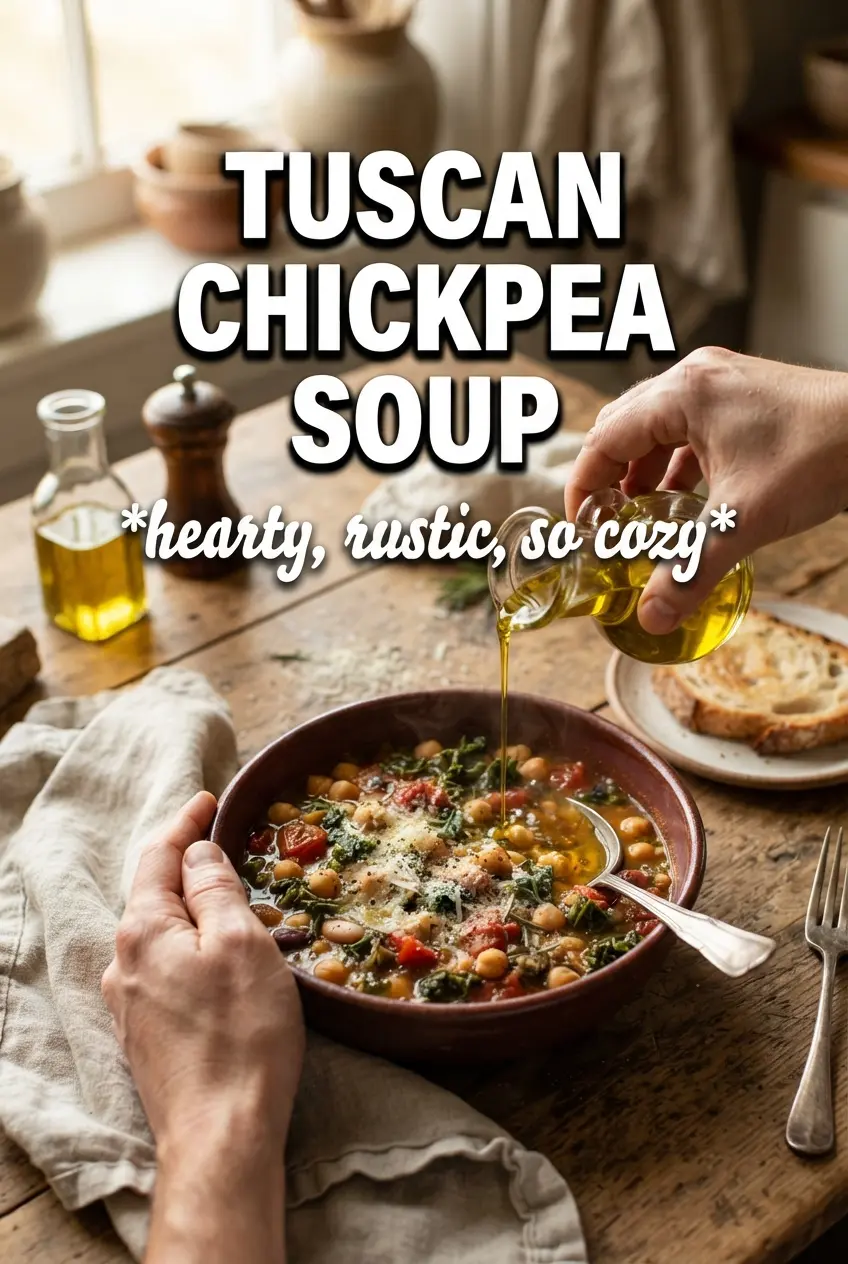
Tuscan Chickpea Soup
Ingredients
Equipment
Method
- Heat the olive oil in a large pot over medium heat, then sauté the diced onion for 5 minutes until softened and fragrant.
- Add the minced garlic and red pepper flakes, and cook for 2 minutes, stirring, until the garlic smells aromatic.
- Add the drained chickpeas, fire-roasted diced tomatoes, vegetable broth, fresh rosemary, Italian seasoning, and the optional parmesan rind; bring everything to a boil.
- Reduce to a simmer and cook for 20 minutes, then remove the rosemary sprigs and the parmesan rind.
- Mash or blend about a third of the chickpeas in the pot for a thicker, creamy consistency.
- Add the chopped kale and cook for 5 minutes until wilted and tender.
- Season with salt and pepper, then add lemon to taste; drizzle with olive oil and top with parmesan before serving.