
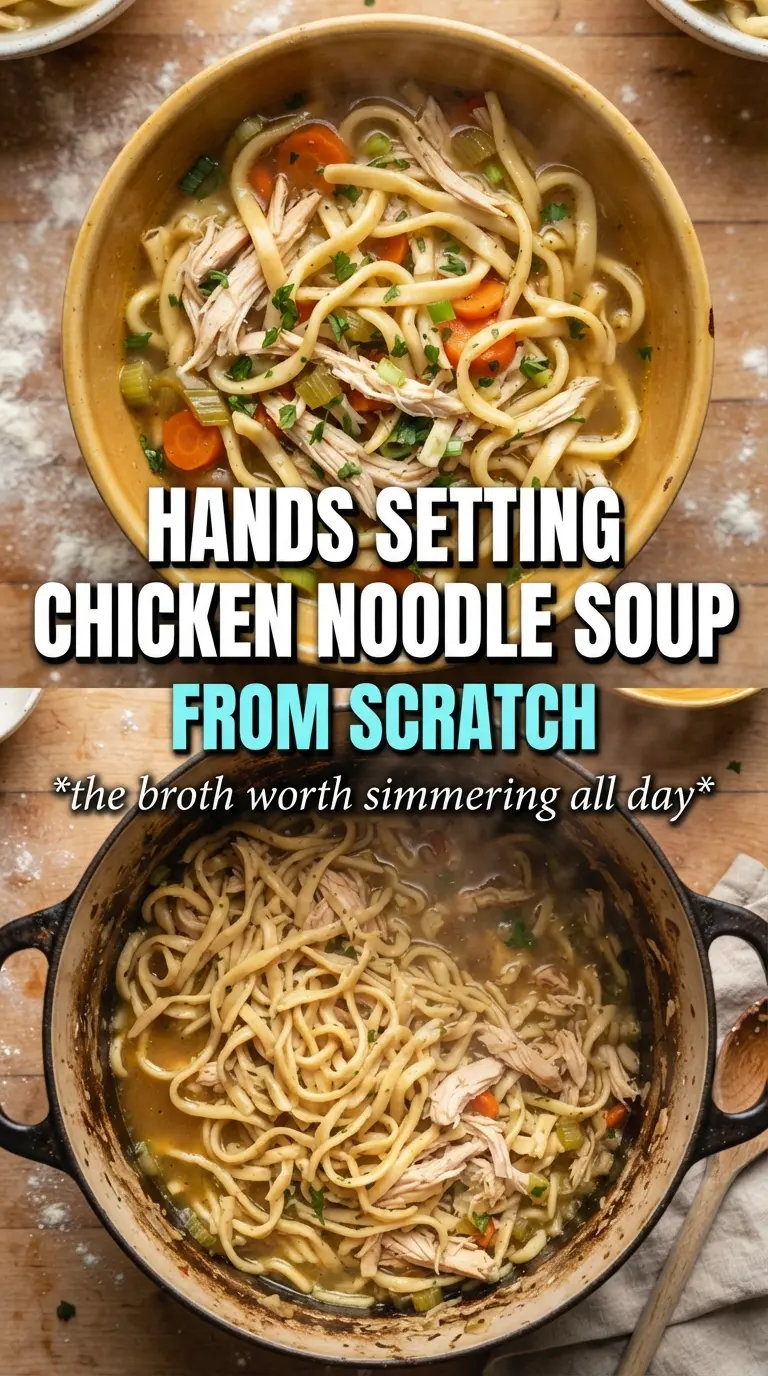
Deeply golden chicken noodle soup has a way of tasting like you spent all day fussing, even when the method is straightforward. The broth is what makes this version stand out: it starts with a whole chicken and cold water, then simmers long enough to turn simple vegetables, herbs, and bones into something rich, savory, and clean-tasting. The noodles stay tender, the chicken shreds into soft strands, and the carrots and celery keep enough texture to feel like part of the bowl, not just background noise.
The key is patience in the broth stage and restraint at the end. Starting with cold water helps draw flavor out gradually, and skimming the foam early keeps the broth clear instead of muddy. Once the broth is strained, the fresh vegetables and noodles go in separately so they cook at the right pace. That keeps the chicken from turning stringy and the noodles from dissolving into the pot.
Below you’ll find the small choices that matter most, plus the timing that keeps the noodles from getting bloated and the broth from losing its clean, homemade character.
The broth had such a deep homemade flavor, and the noodles stayed perfect because I added them at the end like you said. My husband went back for a second bowl before I even sat down.
Save this Chicken Noodle Soup From Scratch for the days when you want a deeply golden broth and tender noodles without opening a carton.
The Broth Gets Cloudy When You Rush the First 20 Minutes
Most homemade chicken soup problems start at the beginning, not the end. If the pot comes up to a hard boil too fast, the broth turns cloudy and the chicken can tighten before it has time to give up its flavor. A gentler simmer pulls out the good stuff without beating it into the liquid. Skimming the foam early matters too, because that gray froth is what keeps the finished broth from tasting clean and polished.
The other mistake is seasoning too soon. The broth reduces as it cooks, so if you salt aggressively at the start, you can end up with soup that tastes sharp instead of balanced. Season the strained broth after the chicken has come out and you know exactly how much liquid you have left. That gives you control over the final bowl instead of guessing at the stove.
What Each Ingredient Is Actually Doing in This Pot
- Whole chicken — This gives you both meat and broth in one pot. A cut-up chicken will work in a pinch, but a whole bird brings more body to the broth because the bones, skin, and connective tissue all cook together. If you use chicken parts, choose bone-in pieces and keep the simmer time generous.
- Carrots, celery, onion, and garlic — These are the backbone of the broth and the fresh soup base. The halved vegetables for the stock can be rough because they get strained out, but the sliced and diced vegetables added later need to be cut evenly so they soften at the same rate.
- Bay leaves, peppercorns, thyme, and parsley stems — These build the old-fashioned chicken soup flavor that tastes rounded instead of flat. Parsley stems are especially useful here because they hold up to long simmering better than leaves. Don’t swap in dried parsley and expect the same result; it won’t give the broth the same fresh, green lift.
- Wide egg noodles — These soak up broth beautifully and keep the soup hearty. Thin noodles can go mushy faster, especially if the pot sits on the stove after cooking. If you want the cleanest texture, cook the noodles just until tender and serve right away.
Building the Soup in the Right Order
Cooking the Broth Low and Slow
Put the whole chicken and broth ingredients in a very large pot, then cover with cold water and bring it up gradually. Once it reaches a boil, lower the heat so the surface stays at a lazy simmer, with only small bubbles breaking here and there. This is where the flavor develops, and it’s also where the broth stays clear. If the pot boils hard, the broth can turn murky and the chicken can dry out at the edges before the rest is tender.
Straining and Shredding Without Losing the Good Stuff
When the chicken is very tender, lift it out and strain the broth through a fine sieve or colander. Discard the cooked vegetables from the broth base; they’ve given up everything useful by this point. Pull the meat from the chicken while it’s still warm enough to handle, then shred it into bite-size pieces. If you leave big chunks, they’ll feel heavy in the bowl and won’t catch the broth and noodles the way shredded meat does.
Cooking the Vegetables Before the Noodles
Return the clear broth to the pot and bring it back to a simmer before adding the fresh carrots, celery, and onion. These need a head start because the noodles cook fast and the vegetables should be tender before the starch goes in. After about 10 minutes, the carrots should yield when pierced but still keep their shape. If they’re still crunchy when the noodles are done, the soup will feel unfinished.
Finishing the Bowl at the Last Minute
Add the egg noodles and cook just until they’re tender, usually 6 to 8 minutes depending on the brand. Stir in the shredded chicken and chopped parsley at the end so the meat warms through without turning stringy and the herbs stay bright. Taste the soup before serving and adjust with salt and pepper. If the broth tastes a little flat, it almost always needs more salt, not more thyme.
What to Change When You Want a Different Version
Gluten-Free Soup
Swap the egg noodles for a gluten-free noodle that holds up well in broth, or cook rice separately and add it to the bowl. Gluten-free pasta can turn soft if it sits too long in hot liquid, so it’s best to keep it slightly underdone and ladle the soup right away.
Extra-Hearty Chicken Soup
Add a few extra carrots and celery stalks, or stir in a handful of chopped spinach at the end. The soup will still taste like classic chicken noodle soup, but the bowl will feel fuller and a little more vegetable-forward without changing the base method.
Using Leftover Roast Chicken
If you already have cooked chicken, skip the long simmer and build the broth from the vegetables, herbs, and water for about 45 minutes instead. Add the shredded chicken only at the very end so it stays juicy. You’ll lose a little of the deep backbone that comes from simmering a whole bird, but it’s still a good shortcut for a weeknight pot.
Storage and Reheating
- Refrigerator: 4 days in a covered container. The noodles will keep absorbing broth, so expect the soup to thicken as it sits.
- Freezer: Freezes well if you freeze the broth, chicken, and vegetables without the noodles. Cook fresh noodles when you reheat, because frozen noodles turn soft and grainy.
- Reheating: Warm it gently over medium-low heat until steaming, not boiling. If the soup has thickened in the fridge, add a splash of water or broth to loosen it before serving.
Questions I Get Asked About This Recipe

Chicken Noodle Soup From Scratch
Ingredients
Equipment
Method
- Place the whole chicken and all broth ingredients into a very large pot with the 12 cups of cold water.
- Bring to a boil, then skim off foam as needed until the surface looks clearer.
- Reduce heat to maintain a gentle simmer and cook for 1.5 hours, until the chicken is very tender and easily shreds.
- Strain the broth and discard the used vegetables.
- Remove all meat from the chicken, then shred it; return the clear broth to the pot and taste, seasoning with salt.
- Bring the seasoned broth to a simmer, then add the sliced carrots, celery, and diced onion.
- Cook for 10 minutes, until the vegetables are tender.
- Add the wide egg noodles and continue simmering for 6-8 minutes, until the noodles are cooked through.
- Stir in the shredded chicken and chopped fresh parsley, then cook just until warmed through.
- Adjust seasoning with salt and pepper to taste, then serve hot.