
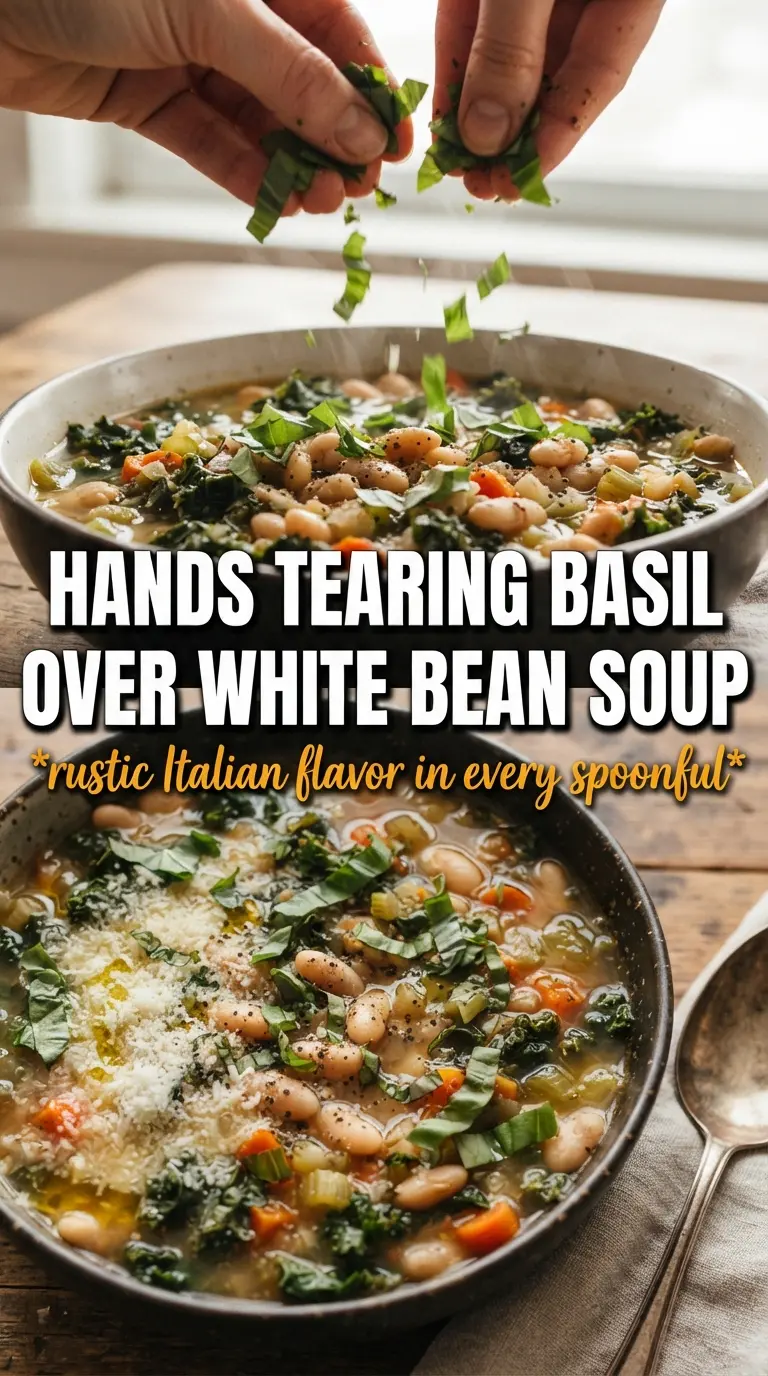
Tuscan white bean soup lands in that sweet spot between hearty and light: silky broth, creamy beans, salty pancetta, and just enough kale to keep each spoonful tasting fresh. The beans break down a little as they simmer, which gives the pot body without turning it into a purée, and the parmesan rind adds the kind of slow, savory depth you can taste even before the bowl hits the table. A drizzle of olive oil and a few parmesan shavings at the end pull everything together.
What makes this version work is building flavor in layers instead of trying to force it at the end. Browning the pancetta first gives you fat for the onion, celery, and garlic, and that seasoned base carries the whole soup. Cannellini beans are the right bean here because they soften into the broth without falling apart completely, and the kale goes in late so it stays green and tender instead of dull and stringy.
Below, I’ve included the small details that matter most: when to mash the beans, how to keep the kale from overcooking, and what to do if you want a vegetarian version that still tastes full and rich.
The broth got so much body after I mashed a few of the beans, and the kale stayed tender instead of getting mushy. My husband went back for a second bowl before I even sat down.
Love the creamy broth, smoky pancetta, and kale in this Tuscan white bean soup? Save it to Pinterest for an easy dinner that tastes like it simmered all afternoon.
The Trick to Keeping the Beans Creamy Without Making the Soup Heavy
The beans do two jobs here: they hold their shape and they thicken the broth once you mash a portion of them. That’s the move that gives you a soup with body instead of a thin broth full of floating ingredients. If you mash all of them, the soup turns dense and pasty. If you mash none, it stays a little brothy and loses that satisfying, spoon-coating texture.
Parmesan rind is worth using if you have it. It doesn’t melt into the soup, but it infuses the pot with a rounded, savory richness that plays especially well with the tomatoes and rosemary. If you don’t have one, the soup still works; just lean on a little extra parmesan at serving time. Cannellini beans are the best choice because they’re soft and creamy without collapsing completely, but great northern beans will stand in just fine.
What Each Ingredient Is Doing in This Pot
- Cannellini beans — These are the backbone of the soup. They break down enough to thicken the broth, but they still keep a soft, creamy bite. Great northern beans work too, though they’re a little firmer.
- Pancetta or bacon — This is your first layer of salt and fat. Pancetta gives a cleaner, more Italian flavor; bacon adds more smoke. Either one is fine, but don’t skip the step that renders it until crisp, because those drippings are what season the vegetables.
- Kale — Add it at the end so it stays bright and tender. If it goes in too early, it loses its color and turns limp. Lacinato kale is especially good here because it softens without dissolving.
- Parmesan rind — Optional, but it adds a deep savory note you can’t fake with grated cheese alone. If you have one in the freezer, this is the kind of soup that proves why people save them.
- Broth — Use a broth you actually like tasting on its own. This soup is simple enough that bland broth stays bland. Vegetable broth keeps it meat-free; chicken broth gives it a rounder finish.
How to Build the Soup So the Broth Has Real Depth
Crisping the pancetta first
Start the pancetta in a cold pot and let the fat render slowly. That gives you crisp pieces instead of chewy ones and enough fat to cook the vegetables without extra oil. If the heat is too high, the pancetta browns before the fat has a chance to render, and you lose the flavor you’re trying to build.
Softening the vegetables in the fat
Add the onion, celery, and garlic to the rendered fat and cook them until the onion turns translucent and the garlic smells sweet, not sharp. This is the base of the soup, so don’t rush it. If the garlic starts to brown, the pot is too hot and the flavor will turn bitter.
Simmering the beans and broth
Once the tomatoes, broth, rosemary, parmesan rind, and seasoning go in, bring everything up to a boil, then drop it to a steady simmer. That gentler heat lets the beans soften and the broth take on the rosemary and parmesan without evaporating too quickly. After about 20 minutes, the beans should be tender enough to mash easily against the side of the pot.
Finishing with kale and texture
Pull out the rosemary sprigs and parmesan rind before you mash the beans. Mash about a third of the beans right in the pot, then stir in the kale and simmer just until it softens. The soup should look glossy and slightly thickened, with the kale still green at the edges. If it looks too thick, add a splash of broth; if it looks thin, give it a few extra minutes uncovered.
How to Adapt This for a Lighter Bowl or a Meatless Night
Make it vegetarian without losing depth
Use vegetable broth and skip the pancetta. To replace the missing savory richness, lean on the parmesan rind and a little extra olive oil at the end. The soup will still be full-bodied, just a little cleaner in flavor.
Use bacon instead of pancetta
Bacon gives the soup a smokier finish and a more familiar pantry flavor. Cook it the same way, then use the drippings to build the base. It’s a little more assertive than pancetta, so the rosemary stands out less and the soup tastes a touch richer.
Swap the kale for spinach
Spinach works if that’s what you have, but it wilts faster and gives you a softer, silkier texture. Stir it in at the very end and turn off the heat right away. If you cook it too long, it disappears into the broth.
Make it gluten-free and still satisfying
The soup is naturally gluten-free as long as your broth is certified gluten-free. Serve it with gluten-free bread or a simple salad, and keep the texture on the thicker side by mashing a few more beans for body.
Storage and Reheating
- Refrigerator: Store in an airtight container for up to 4 days. The broth thickens as it sits, so it usually tastes even better the next day.
- Freezer: It freezes well for up to 3 months. Let it cool fully first, and leave a little space in the container because the liquid expands.
- Reheating: Rewarm gently on the stove over medium-low heat. Add a splash of broth or water if the beans have absorbed too much liquid. Don’t boil it hard, or the kale can go dull and the beans can start to break down too far.
Answers to the Questions Worth Asking

Tuscan White Bean Soup
Ingredients
Equipment
Method
- Cook the pancetta in a large pot over medium heat until crispy, about 6 to 8 minutes, stirring occasionally; visual cue: browned, crisp edges.
- Remove the pancetta and set it aside, leaving the rendered fat in the pot; visual cue: about 2 tablespoons fat in the bottom.
- Sauté the onion, celery, and garlic in the pancetta fat over medium heat for 5 minutes, until softened and fragrant; visual cue: onion turns translucent.
- Add the diced tomatoes, broth, rosemary sprigs, parmesan rind if using, and Italian seasoning to the pot; bring to a boil over high heat, then maintain a steady simmer; visual cue: active bubbling across the surface.
- Add the cannellini beans and simmer for 20 minutes, stirring occasionally; visual cue: beans tender and broth slightly thickens.
- Remove the rosemary and parmesan rind, then mash about a third of the beans in the pot to thicken; visual cue: you see creamy, broken beans throughout.
- Add the kale and simmer for 5 to 8 minutes until wilted; visual cue: dark green leaves turn tender and glossy.
- Season with salt and pepper to taste, then drizzle with olive oil and top with parmesan and pancetta; visual cue: parmesan lightly melts on the hot surface.