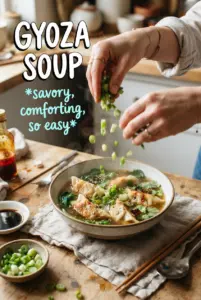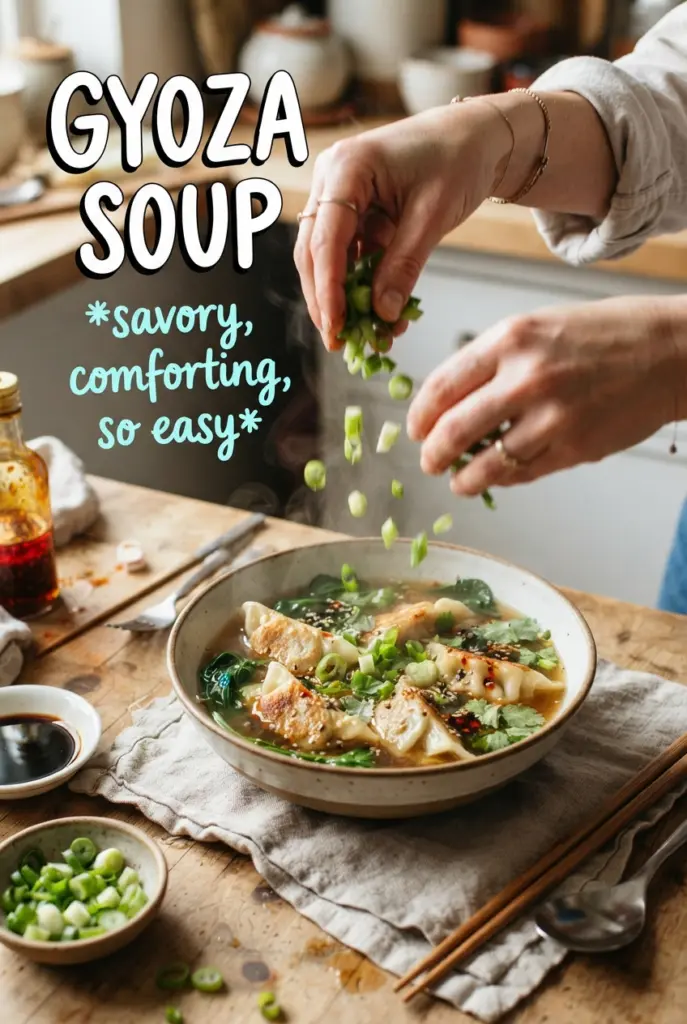
Gyoza soup lands in that perfect middle ground between comforting and light. The dumplings turn tender in the broth without falling apart, the shiitake mushrooms bring a deeper savoriness than a plain vegetable soup ever could, and the sesame oil at the end gives the whole bowl a rounded, nutty finish. It eats like something you’d order out, but it comes together fast enough for a weeknight.
What makes this version work is the order of the ingredients. The broth gets built first with garlic, ginger, soy sauce, mirin, and rice vinegar so it tastes layered before the dumplings even go in. Then the mushrooms simmer long enough to soften and give up their flavor, while the bok choy goes in at the end so it stays bright and just wilted instead of limp. Frozen gyoza work well here because they cook gently in the broth and help thicken the soup ever so slightly as the wrappers release a little starch.
Below you’ll find the little timing details that keep the dumplings intact, plus a few swaps if you need to work with what’s already in your fridge. The chili oil at the table is worth keeping optional, because a spoonful changes the whole bowl.
The broth had such a clean ginger-garlic flavor, and the gyoza stayed intact instead of tearing open. I added a little extra chili oil at the table and my husband went back for a second bowl right away.
Love how the dumplings, bok choy, and ginger broth come together? Save this gyoza soup for the nights when you want a fast bowl that still tastes layered and homemade.
The Trick to Keeping Gyoza Tender Instead of Torn
The biggest mistake with dumpling soup is boiling the gyoza hard. That kind of heat knocks the wrappers apart before the filling has time to heat through. A steady simmer is enough. You want small bubbles moving across the surface, not a rolling boil that bangs the dumplings around the pot.
The other thing that helps is putting the mushrooms in before the gyoza and the bok choy after. Mushrooms need a few minutes to soften and season the broth, but bok choy only needs a short cook or it turns dull and stringy. With frozen gyoza, cook them right from the freezer and follow the package timing closely so the wrappers stay intact and the filling stays juicy.
What Each Ingredient Is Doing in This Bowl
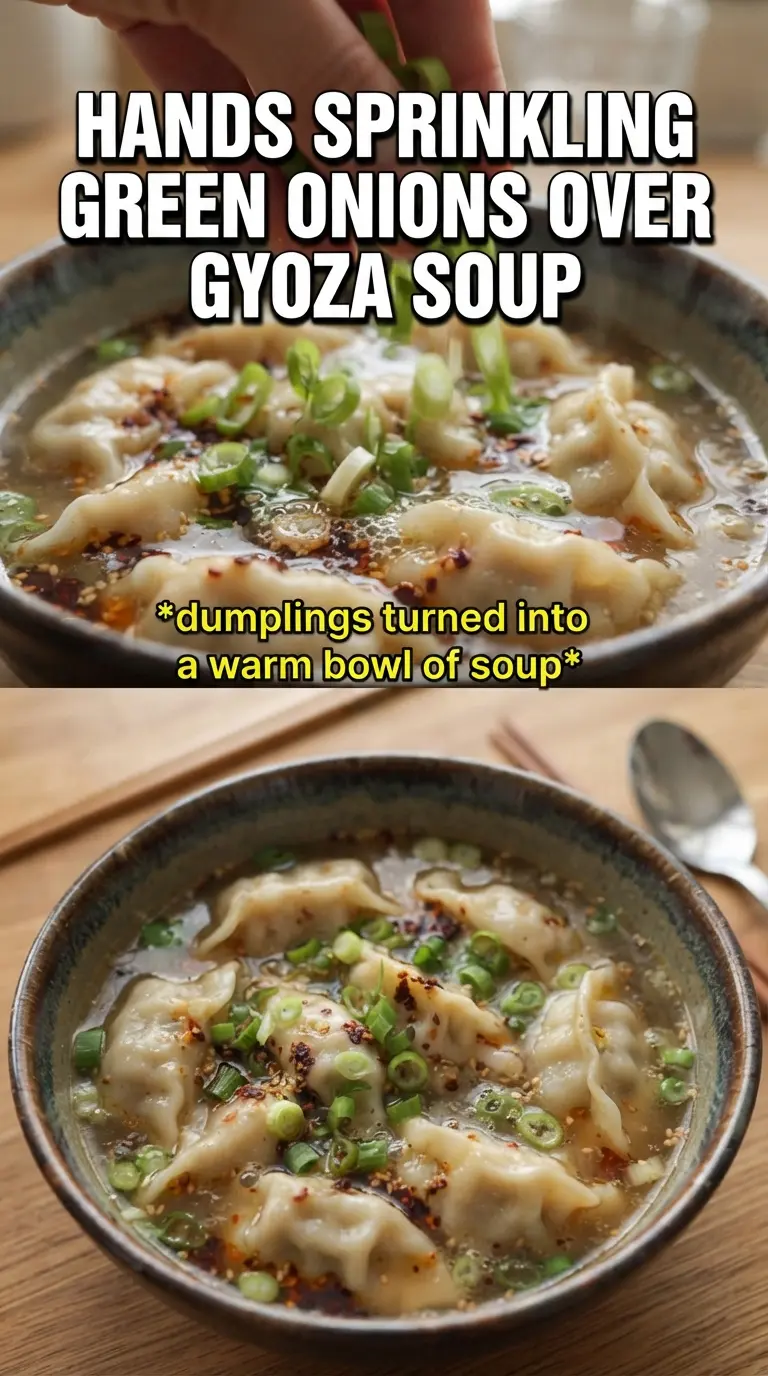
- Gyoza dumplings — These are the heart of the soup. Frozen dumplings work beautifully because they hold their shape and are convenient, and fresh ones cook even faster. If you use pan-fried potstickers from the store, skip any extra browning and drop them into the broth as-is.
- Chicken broth — This gives the soup its body, so use one you actually like tasting on its own. If your broth is weak, the whole bowl will taste thin no matter how good the dumplings are.
- Ginger and garlic — Fresh is worth it here. They turn a plain broth into something that tastes layered and fragrant. Powdered versions can work in a pinch, but they won’t give you the same brightness.
- Mirin and rice vinegar — Mirin adds gentle sweetness and shine, while rice vinegar keeps the broth from tasting flat. If you need a substitute for mirin, use a small splash of honey plus a little extra broth, but keep it subtle so the soup doesn’t drift sweet.
- Bok choy and shiitake mushrooms — Bok choy gives the bowl freshness and crunch at the edges, while shiitakes bring a deeper, earthy note. White button mushrooms will work if that’s what you have, but the broth won’t taste as rich.
- Sesame oil, chili oil, and sesame seeds — Sesame oil finishes the broth with a toasted aroma, not something you want to cook hard into the soup. Chili oil and sesame seeds are the table-side extras that make each bowl feel complete.
Building the Broth So the Dumplings Stay Intact
Start with the aromatics and seasoning
Bring the broth to a simmer with the garlic, ginger, soy sauce, mirin, and rice vinegar. This gives the soup a seasoned base before any dumplings go in, which matters because the gyoza only need enough time to cook through. If you add the dumplings before the broth tastes balanced, you end up overcooking them while trying to fix the seasoning later.
Let the mushrooms soften the broth
Add the shiitake mushrooms and let them simmer for 3 to 4 minutes. They should turn tender and slightly silky, and the broth will pick up a darker, savory edge. If you rush this part, the mushrooms stay rubbery and the soup tastes more one-note than it should.
Cook the gyoza gently
Add the dumplings directly to the simmering broth and cook them according to the package timing, usually 5 to 7 minutes. Keep the heat low enough that the liquid barely bubbles around them. If the soup boils hard, the wrappers split and the filling can leak into the broth.
Finish with the greens and sesame oil
Stir in the bok choy and cook just until it softens and turns bright green, about 2 to 3 minutes. Pull the pot off the heat and stir in the sesame oil at the end so the aroma stays fresh instead of fading. Taste the broth, then add salt only if it needs it after the soy sauce has had time to settle in.
How to Adapt This for the Ingredients You Already Have
Make It Gluten-Free
Use gluten-free dumplings and swap in tamari for the soy sauce. The broth stays just as savory, but you’ll want to check the dumpling package carefully because many frozen gyoza wrappers contain wheat even when the filling is gluten-free.
Make It Vegetarian
Use vegetable broth and vegetable gyoza, then add a few extra shiitakes for depth. You’ll lose the roundness that chicken broth brings, so taste the pot at the end and add a touch more soy sauce or a tiny splash of mirin if it needs a fuller finish.
Swap the Greens
Baby spinach, napa cabbage, or chopped choy sum all work if bok choy isn’t in the fridge. Spinach wilts almost instantly and gives the lightest bowl, while cabbage adds more body and a slightly sweeter edge.
What to Do If You Want a Heartier Bowl
Add a handful of noodles or a few cubes of tofu, but keep the dumpling count the same so the soup doesn’t turn heavy. If you add noodles, cook them separately or they’ll soak up too much broth and crowd the pot.
Storage and Reheating
- Refrigerator: Store leftovers for up to 3 days. The dumplings will soften a bit as they sit, but the broth still tastes great.
- Freezer: I don’t recommend freezing the finished soup. Dumplings and bok choy both suffer in the freezer and turn mushy after thawing.
- Reheating: Reheat gently on the stove over low heat until just hot. A hard boil can split the dumplings and make the greens limp, so keep the heat low and stir carefully.
Questions I Get Asked About This Recipe
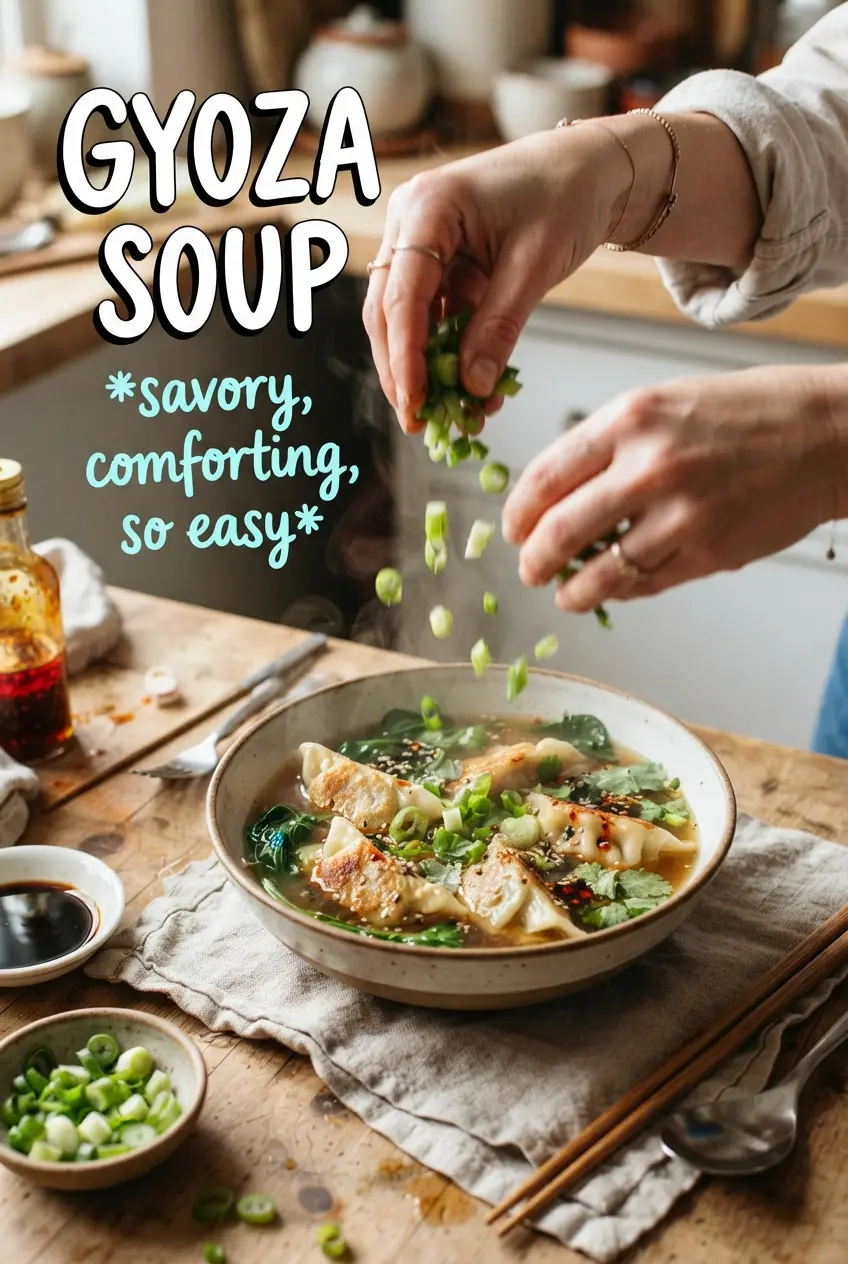
Gyoza Soup
Ingredients
Equipment
Method
- Bring the chicken broth to a simmer in a large pot, then add the garlic, ginger, soy sauce, mirin, and rice vinegar. Reduce to a gentle simmer so the surface gently bubbles without a hard boil (about 5 minutes).
- Add the sliced shiitake mushrooms and continue to simmer until tender, 3-4 minutes. You should see the mushrooms darken slightly and the broth turn fragrant.
- Add the gyoza directly to the simmering broth and cook according to the package directions, usually 5-7 minutes. The dumplings should be cooked through and feel tender when pierced.
- Add the chopped bok choy and cook 2-3 minutes until wilted. Stir gently so the greens soften but keep a bright color.
- Stir in the sesame oil and taste the soup, then season with salt to taste. The broth should taste balanced and savory with a toasted aroma.
- Ladle the soup into bowls and top with sliced green onions, sesame seeds, and chili oil. Finish with a final drizzle of chili oil for visible heat.