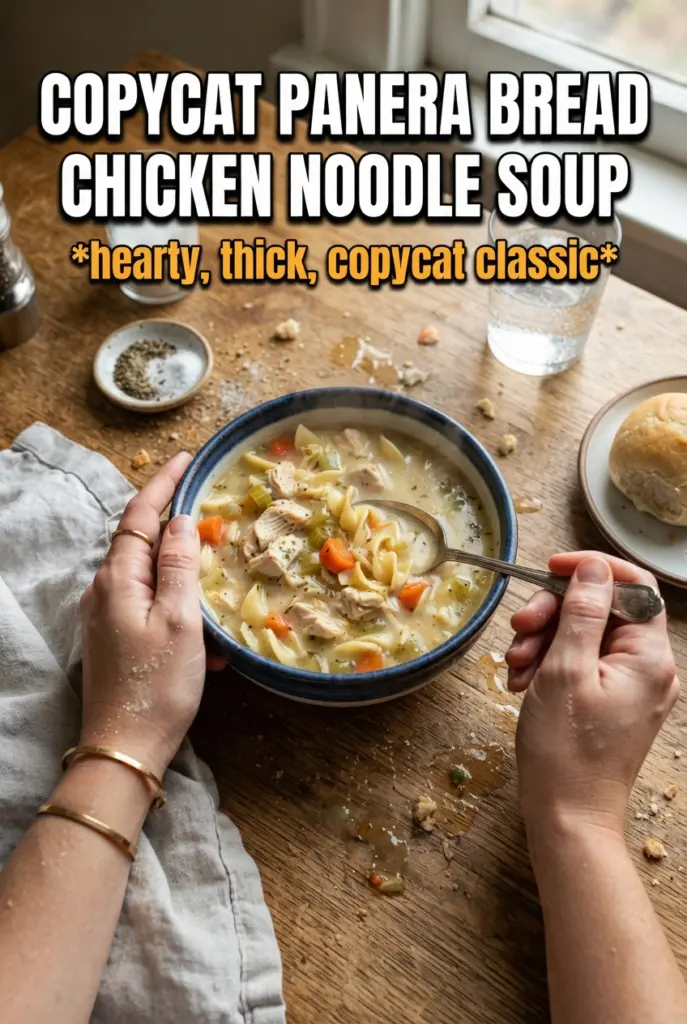
Clear broth, tender chicken, and soft egg noodles are what make Panera-style chicken noodle soup so comforting, and this version keeps every part of that balance intact. The broth stays bright and savory instead of turning heavy, the vegetables soften just enough to taste sweet, and the noodles soak up flavor without going mushy. That mix is what keeps you going back for another bowl.
The trick is building the base in stages. The onion, carrot, and celery need a few minutes in olive oil before the broth goes in, because that quick sauté pulls out their flavor and gives the soup more depth without making it cloudy. Chicken breast works well here as long as it’s cut into small pieces and simmered just until cooked through. Overcooked chicken turns stringy fast, and the noodles need only the last few minutes so they stay pleasantly firm.
Below, I’m walking through the part that matters most: keeping the broth clear, the noodles intact, and the seasoning in line with the bakery-café version people remember. There’s also a handy note on what to change if you want to make it ahead without losing that fresh-from-the-pot texture.
The broth stayed clear and the noodles held their shape, which is exactly what I wanted. My daughter said it tasted just like the Panera soup she always orders, and the leftovers reheated beautifully the next day.
Save this Panera-style chicken noodle soup for the nights when you want a clear, savory broth and tender noodles without a long simmer.
The broth only stays Panera-clear if you don’t boil it hard
A cloudy soup usually starts with a rough boil. Once the broth goes in, keep the heat at a steady simmer so the chicken cooks gently and the noodles don’t throw starch everywhere. That’s how you get a clean, golden broth with a soft body instead of a heavy, murky pot.
The other mistake is adding the noodles too early. Egg noodles keep cooking after the burner goes off, and they’ll soak up a lot of liquid if they sit in the soup for long. Add them near the end and pull the pot as soon as they’re just al dente. They’ll finish in the hot broth without turning pasty.
What Each Ingredient Is Actually Doing in This Soup
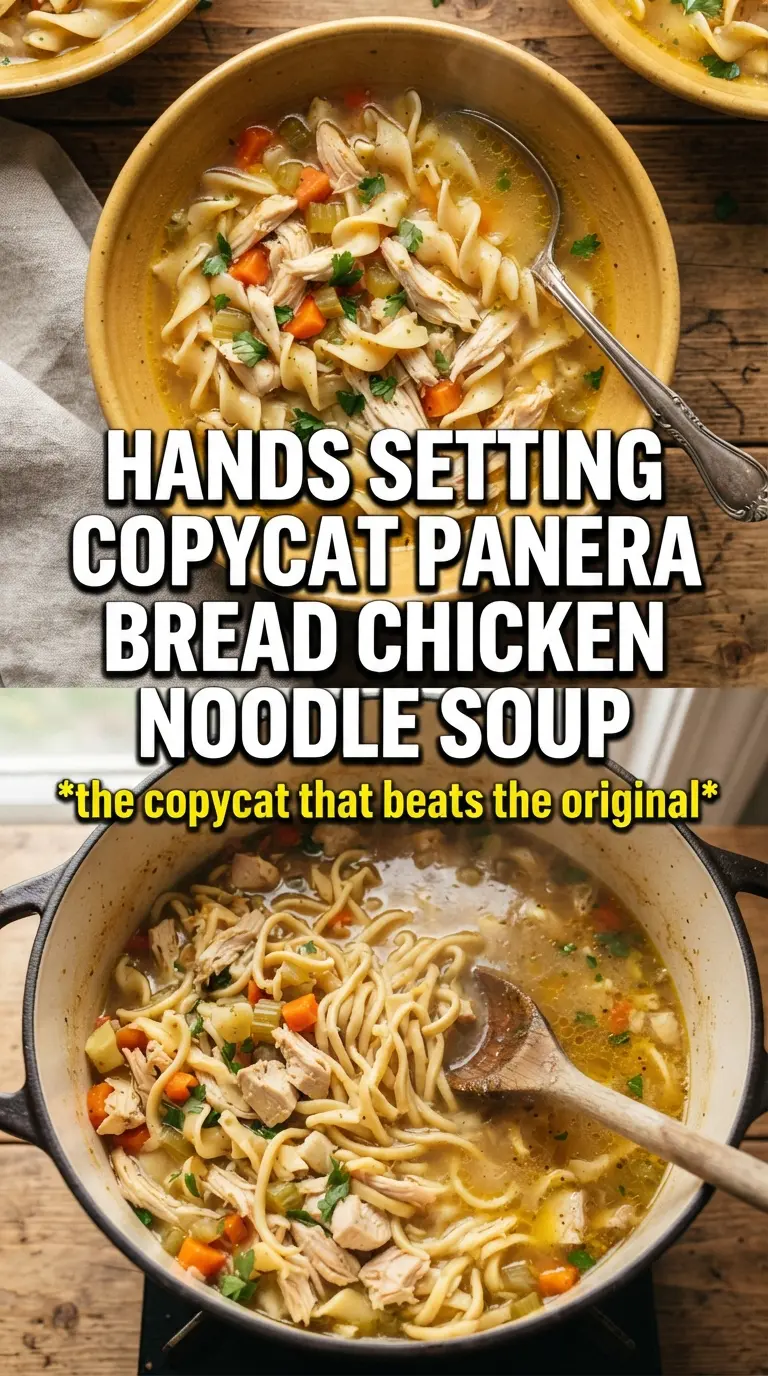
- Chicken breast — Cutting it into 1-inch pieces helps it cook fast and stay tender. Larger chunks take longer and are more likely to dry out before the noodles are done.
- Chicken broth — This is the backbone of the soup, so use the best broth you can get. A thin or bland broth will taste flat no matter how well you season the rest of it.
- Egg noodles — Broken noodles are easier to eat with a spoon and give you that Panera-style texture. Freshly cooked noodles are best here; if you plan to store leftovers, cook them just to al dente so they don’t fall apart.
- Carrots, celery, and onion — This trio builds the sweet-savory base that makes the soup taste complete. Dice the onion small so it melts into the broth, and keep the carrots and celery uniform so they soften at the same pace.
- Thyme, rosemary, and poultry seasoning — These herbs give the broth that familiar café-style flavor. Rosemary is strong, so the small amount matters; too much can take over and push the soup away from the clean chicken-noodle flavor you want.
- Fresh parsley — Stirring it in at the end keeps the soup tasting bright. Dried parsley won’t give you the same fresh finish.
Building the Soup in the Right Order
Softening the Vegetables First
Start by warming the olive oil and cooking the onion, carrots, and celery until the onion turns translucent and the carrots lose their raw edge. You’re not trying to brown anything here. If the vegetables start taking on color, the heat is too high and the broth will taste more roasted than clean.
Turning the Broth Into the Main Event
Add the garlic for just a minute, then pour in the broth and herbs. The garlic should smell fragrant, not toasted, before the liquid goes in. Once the broth is in, scrape up any bits from the bottom of the pot and bring everything to a gentle boil only long enough to get the chicken going, then lower it back to a simmer.
Cooking the Chicken Without Toughening It
Drop in the chicken pieces and simmer until they’re just cooked through, about 12 minutes depending on the size of the pieces. The chicken should look opaque and feel firm but still springy. If you cook it until it starts shredding in the pot, it’s gone too far for this style of soup.
Finishing With the Noodles at the Last Minute
Add the egg noodles only when the chicken is done. Cook them until they’re just tender with a little bite left in the center, then take the pot off the heat. Stir in the parsley and season with salt and pepper at the end, because broth varies a lot and the final seasoning is what makes the whole bowl taste complete.
What to Change When You Want a Different Bowl
Make it dairy-free as written
This soup is naturally dairy-free if your broth is dairy-free too. That makes the broth taste light and clean, and it’s one of the easiest comfort soups to keep that way without losing anything in texture.
Use rotisserie chicken to speed things up
Skip the raw chicken step and stir in shredded rotisserie chicken during the last few minutes, just long enough to heat through. The broth will be slightly less silky from the poached chicken juices, but it still tastes close to the original and cuts the cook time way down.
Make it gluten-free with the right noodle swap
Use a sturdy gluten-free egg-style noodle or short pasta and cook it separately if you can. Gluten-free noodles can shed starch fast and thicken the broth more than expected, so keeping them out of the main pot until serving gives you the cleanest result.
Make it ahead without mushy noodles
Cook the soup base without the noodles, then boil the noodles separately and add them to each bowl when serving. That keeps the broth clear and gives you leftovers that still taste fresh instead of bloated and starchy.
Storage and Reheating
- Refrigerator: Store in an airtight container for up to 4 days. The noodles will keep soaking up broth, so the soup gets thicker as it sits.
- Freezer: Freeze the broth, chicken, and vegetables without the noodles for best results. Noodles turn soft and waterlogged after freezing, so add fresh ones when you reheat.
- Reheating: Warm gently on the stove over medium-low heat until steaming. If it looks too thick, add a splash of broth or water. High heat is what breaks the broth down and makes the chicken go dry.
Questions I Get Asked About This Recipe
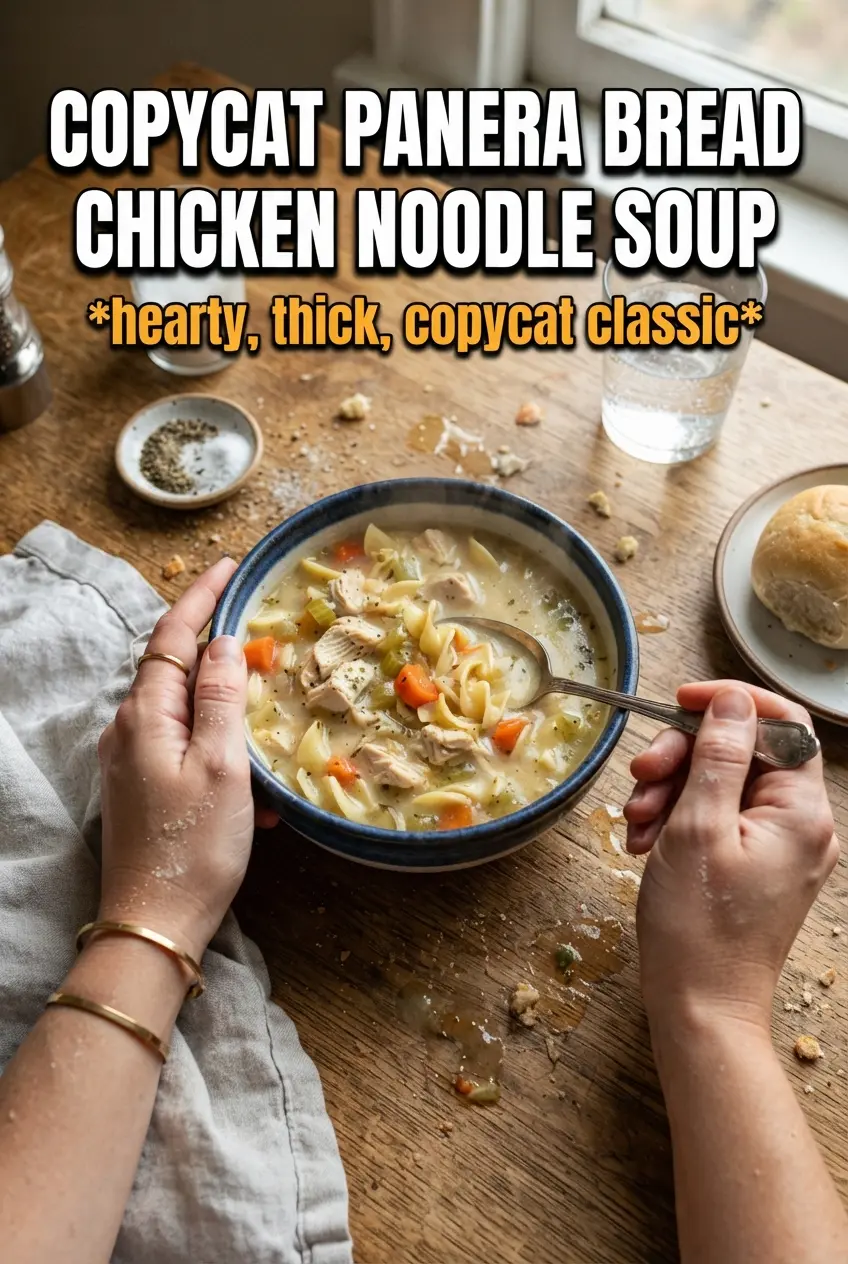
Copycat Panera Bread Chicken Noodle Soup
Ingredients
Equipment
Method
- Heat the olive oil in a large pot over medium heat and sauté the onion, carrots, and celery for 5 minutes until softened, stirring occasionally until glossy and tender.
- Add the minced garlic and cook for 1 minute until fragrant, then add the chicken broth, thyme, rosemary, and poultry seasoning.
- Bring the soup to a boil, then add the chicken and simmer for 12 minutes until the chicken is cooked through and no longer pink in the center.
- Add the egg noodles and cook for 6-7 minutes until just al dente, stirring so the noodles don’t stick and the broth stays clear-looking.
- Stir in the chopped fresh parsley and season generously with salt and pepper until the broth tastes balanced and well seasoned.