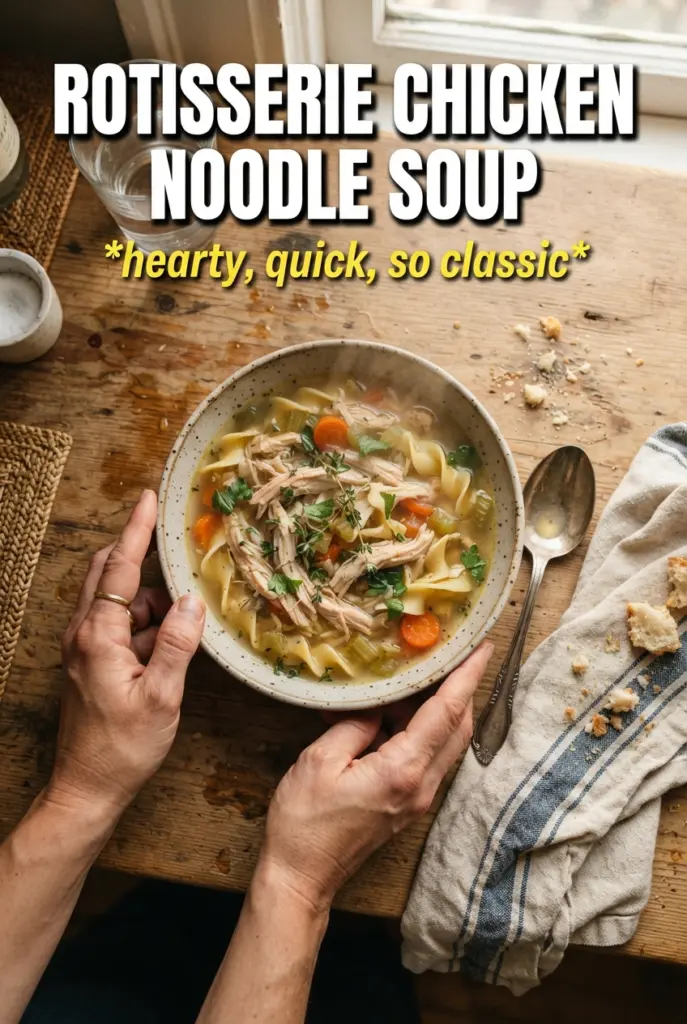
Rotisserie chicken noodle soup lands on the table fast, but it still tastes like someone spent all afternoon on it. The broth turns golden and savory, the vegetables stay tender instead of mushy, and the shredded chicken soaks up enough broth to taste seasoned all the way through. Egg noodles finish it off with that soft, slurpable texture that makes a bowl disappear quickly.
The trick here is using the rotisserie chicken for both speed and flavor, but not treating it like a shortcut in every part of the soup. A brief sauté on the onion, carrots, and celery builds a better base than dumping everything into broth at once, and the dried thyme and parsley give the pot the familiar chicken-soup taste without needing a long simmer. Pulling the skin off the chicken keeps the broth cleaner and less greasy, which matters in a soup this simple.
Below, I’ve included the few details that make the biggest difference, plus a couple of easy ways to adapt the soup if you want to change the noodles or stretch it for later.
The broth had a great homemade taste even with rotisserie chicken, and the noodles stayed tender without getting mushy. I added a little extra parsley at the end and my kids ate two bowls each.
Love a fast, cozy bowl of rotisserie chicken noodle soup? Save this one for busy nights when you want a golden broth and tender noodles without standing over the stove all evening.
The Shortcut That Still Tastes Like Homemade Soup
Rotisserie chicken solves the biggest weeknight problem in chicken noodle soup: the chicken is already cooked, seasoned, and tender enough to add at the end without turning stringy. The mistake people make is relying on that shortcut for everything else and skipping the flavor base. If you only simmer broth and noodles, the soup tastes thin. If you sauté the vegetables first and give the dried herbs a minute in the pot, the broth picks up a rounder, more finished flavor.
The other thing that matters is timing. Egg noodles keep cooking in the hot broth even after the pot comes off the heat, so adding them too early turns the soup soft and bloated. Pull the soup as soon as the noodles are just tender. That little bit of firmness pays off when the soup sits for a few minutes at the table.
What Each Ingredient Is Actually Doing in This Bowl
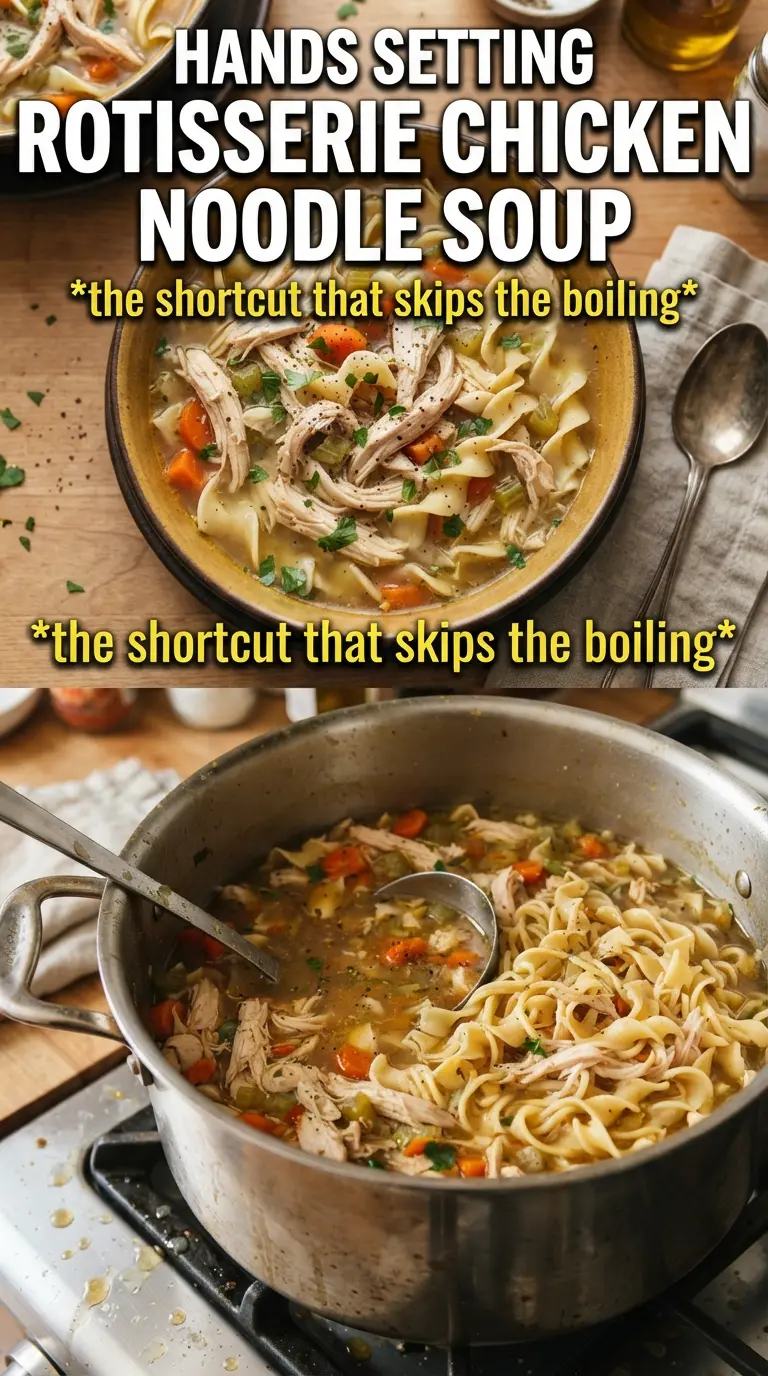
The rotisserie chicken does more than save time. It brings seasoned meat into the soup, and because it’s already cooked, it only needs enough heat to warm through and absorb broth. Skinless chicken keeps the soup cleaner and keeps extra fat from floating on top.
- Chicken broth — Use one that tastes good enough to sip. A bland broth stays bland no matter how many vegetables you add, but a decent store-bought broth works well here. If yours is low sodium, you’ll have more control at the end.
- Carrots, celery, and onion — This is the soup’s backbone. Dice the onion small enough that it almost melts into the broth, and slice the carrots and celery evenly so they soften at the same pace.
- Egg noodles — These give the soup that classic feel, but they absorb liquid fast. If you expect leftovers, cook them just to tender and don’t let the soup boil hard after they go in.
- Dried thyme, parsley, and garlic powder — These herbs build the familiar chicken soup flavor without needing fresh herbs in the pot. Fresh parsley at the end adds brightness, while the dried herbs do the deeper work.
- Olive oil or butter — Either one works. Butter gives a little more richness, while olive oil keeps the broth lighter. Use butter if you want a rounder, more old-fashioned soup.
The 25 Minutes That Matter Most
Softening the Vegetables First
Start with the onion, carrots, and celery in hot oil or butter and give them about 5 minutes over medium heat. You’re looking for the onion to turn translucent and the carrots to lose their raw edge, not for deep browning. If the pot is crowded or the heat is too low, the vegetables steam and stay sharp-tasting. Keep stirring just enough to prevent sticking at the bottom.
Building the Broth
Add the garlic for just 1 minute, then pour in the broth and herbs. Garlic burns fast, and once it does, the whole pot tastes bitter, so don’t walk away during that minute. Bring the soup up to a boil only long enough to get everything moving, then lower it to a steady simmer before the chicken goes in. That keeps the broth clear and the vegetables from turning ragged.
Cooking the Noodles at the End
Stir in the shredded chicken first so it heats through and takes on the broth flavor. Add the egg noodles after that and simmer until they’re tender, usually 6 to 8 minutes. The common mistake here is leaving the soup at a hard boil, which breaks the noodles apart and clouds the broth. Taste near the end and season generously with salt and pepper, because noodles soak up seasoning fast.
Finishing the Bowl
Turn off the heat and garnish with fresh parsley right before serving. That last handful of herbs matters because it keeps the soup from tasting flat. If the broth seems thin, let the pot sit uncovered for a couple of minutes so the noodles don’t keep absorbing liquid while you rush to the table.
How to Adapt This for Leftovers, Gluten-Free Eating, or a Bigger Pot
Gluten-Free Version with the Same Comfort
Swap the egg noodles for a gluten-free noodle that holds up in broth, or use rice instead if you want a softer texture. Gluten-free pasta can go from firm to fragile fast, so cook it separately if you want the best chance of keeping the soup clear and the noodles intact.
Make It Dairy-Free Without Losing Richness
Use olive oil instead of butter and the soup stays light but still full-flavored. The broth carries the dish here, so you won’t miss dairy as long as the vegetables get a proper sauté at the beginning.
How to Stretch It for More Servings
Add an extra cup or two of broth and another handful of shredded chicken if you need to feed more people. Keep the noodles in balance with the liquid, though, or the soup turns starchy instead of brothy. If you’re serving a crowd, cook the noodles separately and add them to each bowl.
Storage and Reheating
- Refrigerator: Store in an airtight container for up to 4 days. The noodles will continue to soften, so the texture gets a little more absorbed each day.
- Freezer: It freezes best without the noodles. Freeze the soup base, then cook fresh noodles when you reheat it.
- Reheating: Warm it gently on the stove over medium-low heat until steaming. A hard boil will break the noodles and make the chicken stringy.
Answers to the Questions Worth Asking
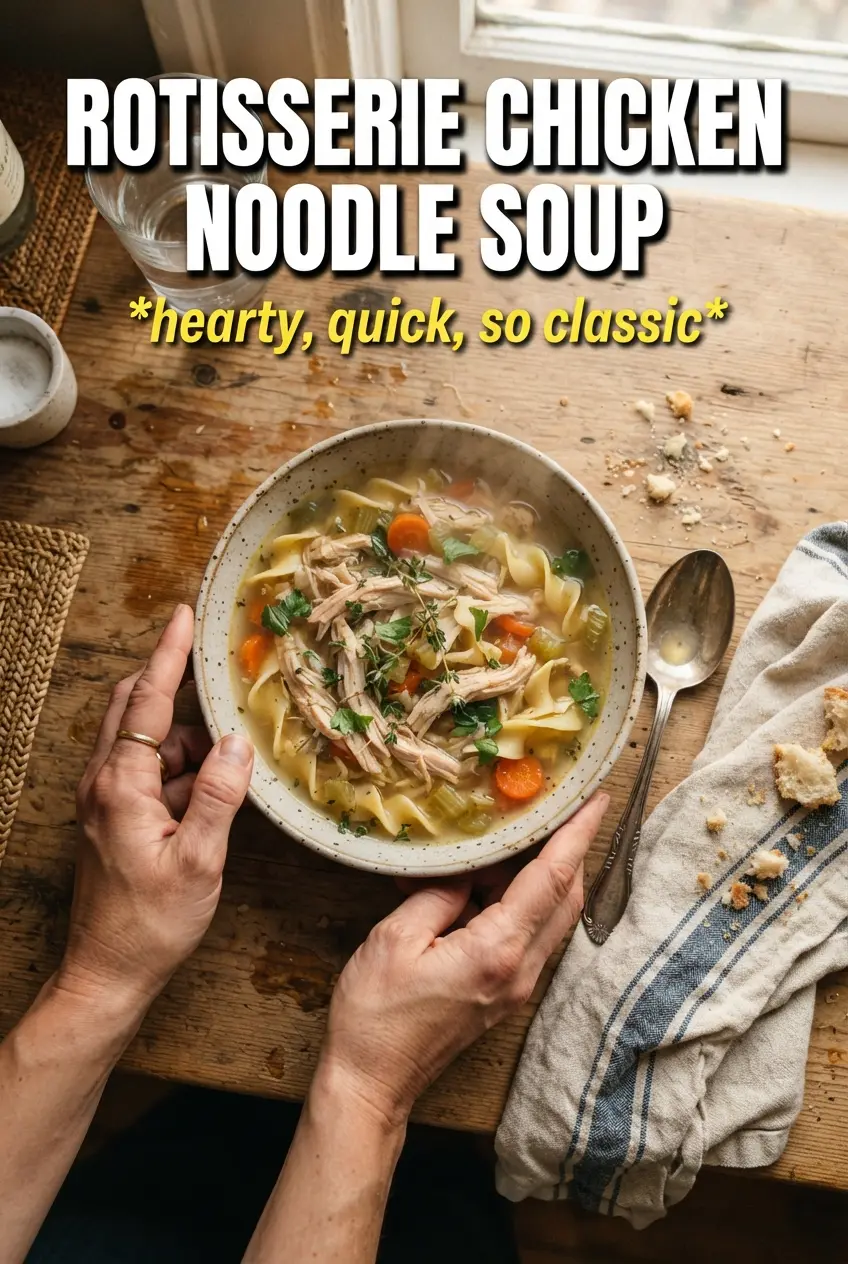
Rotisserie Chicken Noodle Soup
Ingredients
Equipment
Method
- Heat the olive oil or butter in a large pot over medium heat. Sauté the onion, carrots, and celery for 5 minutes, stirring, until slightly softened and fragrant.
- Add the garlic and cook for 1 minute, stirring, until fragrant. Stir in the chicken broth, dried thyme, dried parsley, and garlic powder.
- Bring the soup to a boil over high heat. Once boiling, add the shredded rotisserie chicken.
- Reduce to a simmer and cook for 10 minutes. Add the egg noodles and simmer until tender, 6-8 minutes.
- Season generously with salt and pepper to taste. Garnish with fresh parsley and serve hot.