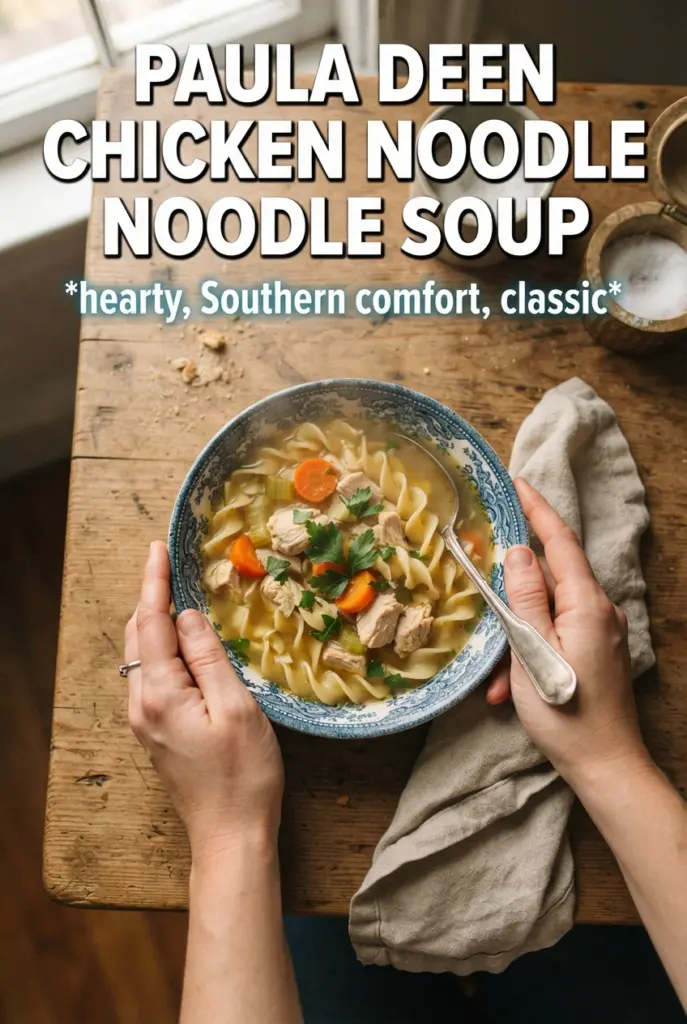
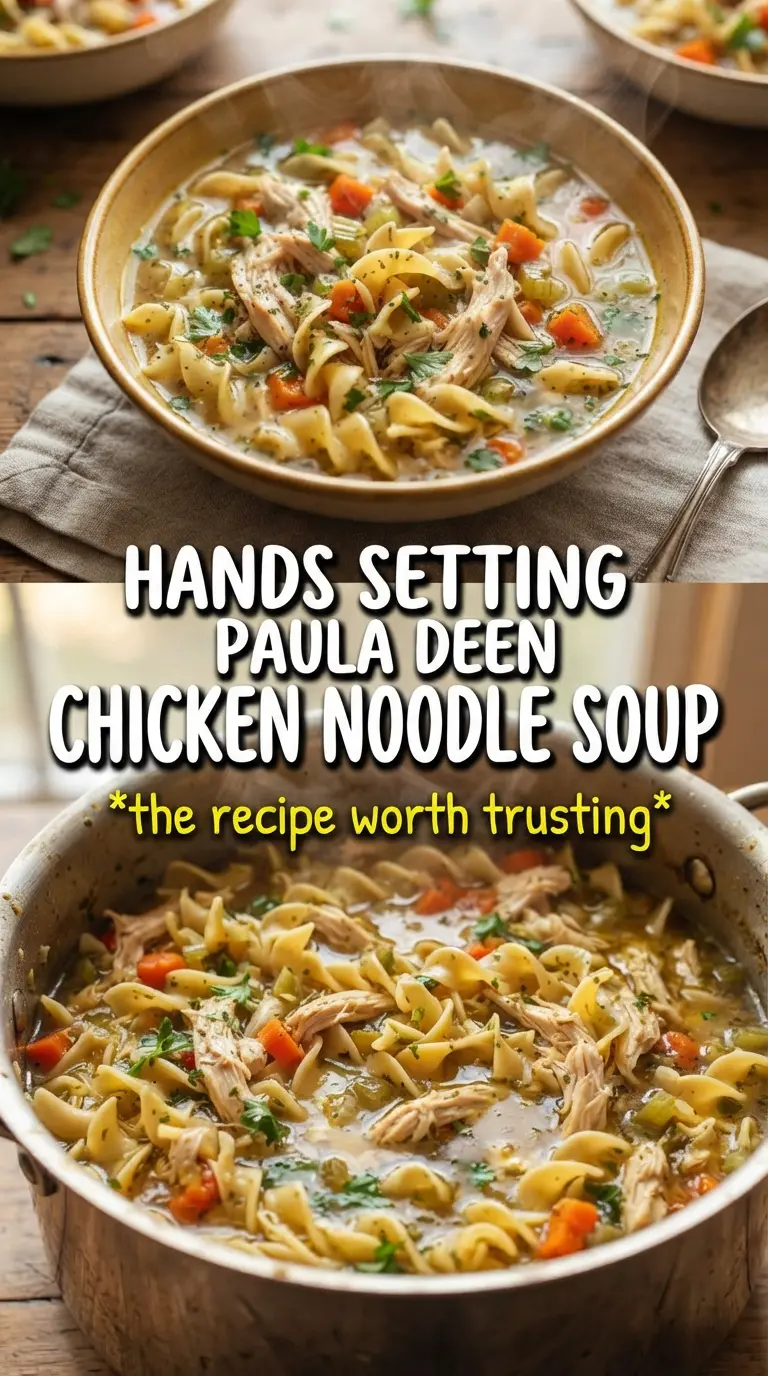
Golden broth, tender shreds of chicken, and wide egg noodles that hold onto every bit of flavor make this the kind of soup people go back to for a second bowl before they’ve even finished the first. The chicken simmers right in the pot with the aromatics, which gives the broth a deeper, rounder taste than starting with plain stock alone. Then a little butter goes in at the end, and that’s the part that makes the whole bowl taste richer and more Southern without turning heavy.
The trick here is building the broth in layers. You start with the whole chicken, some of the vegetables, and just enough broth to get the pot going, then strain it before adding the fresh carrots, celery, onion, and garlic. That keeps the finished soup clear and full of texture instead of muddy and overcooked. The noodles go in last, which matters more than people think, because they keep their shape instead of soaking up all the broth and going soft.
Below, I’ve included the exact cues I use to know when the chicken is done, how to keep the noodles from getting mushy, and what to do if you want to stretch this soup into leftovers that still taste good the next day.
The broth tasted rich and homemade, and the noodles stayed tender without falling apart. I loved that the chicken was so juicy after simmering with the vegetables first.
Save this Paula Deen chicken noodle soup for the kind of night when you want buttery broth, tender chicken, and noodles that soak up the whole pot.
The Reason This Broth Tastes Like It Simmered All Day
When chicken noodle soup falls flat, it’s usually because the broth never gets enough time with the chicken, or the vegetables are boiled so long they lose all their character. This version avoids both problems. The whole chicken goes in first with part of the vegetables, so the broth gets flavor from the meat, bones, and aromatics before anything else is added. That gives you a base that tastes rounded and savory instead of thin and salty.
Straining the broth after the first simmer matters too. It leaves you with a cleaner soup and lets the second batch of vegetables stay bright and tender. The butter added near the end isn’t there to make it creamy; it softens the edges of the broth and gives the soup that old-fashioned, comforting finish people expect from a Paula Deen-style bowl.
- Whole chicken — A bone-in bird gives you the deepest broth and the most tender shredded meat. Chicken pieces will work, but you won’t get quite the same body in the soup.
- Chicken broth plus water — Using both keeps the flavor strong without making the soup taste overly processed or too salty. If you only have broth, use it, but pull back on added salt until the end.
- Butter — This is what gives the soup its rich finish. Don’t swap in oil here if you want the same round, Southern-style taste.
- Wide egg noodles — They hold up better than thin noodles and give you that classic homey texture. If you use a smaller noodle, shorten the cooking time and watch it closely.
- Fresh parsley and dried herbs — The dried thyme and parsley season the broth from within, while fresh parsley at the end keeps the soup from tasting dull.
What Each Ingredient Is Actually Doing in This Recipe
- Primary ingredient (the star) — Quality matters most. Choose the best you can find.
- Cooking medium (oil, butter, or broth) — This carries flavors and prevents dryness.
- Seasonings (salt, pepper, spices, herbs) — Layer flavors so nothing overpowers. Build depth gradually.
- Aromatics (garlic, onion, herbs) — Cook with fat to bloom flavors. Become the foundation.
- Supporting ingredients — Complement the main ingredient without overpowering it.
- Sauce or liquid (if applicable) — Brings flavors together. Balance richness with acid.
- Acid (lemon, vinegar, wine, or other) — Brightens and prevents flat-tasting results.
- Final finish (garnish, glaze, or sauce) — Prevents one-dimensional taste and adds visual appeal.
Building the Broth Without Turning the Noodles to Mush
Starting the Chicken in Cold-to-Hot Liquid
Put the whole chicken in the pot with the water, some of the broth, and the first round of vegetables before bringing it up to a boil. This gives the pot time to extract flavor gradually instead of shocking the chicken and tightening the meat. Once it boils, skim the foam so the broth stays cleaner. Then drop the heat to a steady simmer; a hard boil will make the broth cloudy and can leave the chicken stringy.
Straining and Rebuilding the Soup
When the chicken is fall-off-the-bone tender, pull it out, shred the meat, and strain the broth before returning it to the pot. This is where the soup gets its second layer of flavor. Add the remaining broth, butter, and the fresh vegetables so they cook into the finished soup instead of disappearing into the stock. If the vegetables go in too early, they lose shape and the final bowl tastes tired.
Adding the Noodles at the End
Egg noodles need only a short simmer, and they should go in after the chicken and vegetables are already where you want them. Cook them just until tender and still supple. If you let them boil too long, they’ll drink up the broth and turn soft in the center while the soup sits. If you know you want leftovers, keep the noodles separate and add them to each bowl when serving.
Use Chicken Thighs Instead of a Whole Bird
Bone-in thighs will still give you good flavor and a more forgiving texture if you don’t want to deal with a whole chicken. The broth won’t have quite the same depth, but the meat will be easy to shred and stays juicy. This is the best shortcut when you want the soup without the extra work of breaking down a bird.
Make It Gluten-Free Without Losing the Comfort
Swap the egg noodles for a sturdy gluten-free pasta that holds its shape in broth, and cook it separately if the brand tends to soften fast. Rice noodles can work too, but they give a different texture and don’t feel as classic in this soup. The broth and chicken stay the same, so the heart of the recipe doesn’t change.
Skip the Butter for a Lighter Bowl
You can leave out the butter if you want a leaner soup, though the finish will taste a little sharper and less rounded. If you go this route, add a splash more broth at the end and lean harder on the parsley and black pepper. The soup will still be good; it just won’t have the same rich Southern-style depth.
Storage and Reheating
- Refrigerator: Store for up to 4 days. The noodles will keep absorbing broth, so the soup thickens as it sits.
- Freezer: Freeze the broth, chicken, and vegetables without the noodles for the best texture. Frozen noodle soup turns soft and bloated once thawed.
- Reheating: Warm it gently on the stove over medium-low heat until steaming, not boiling. If it looks thick, add a splash of broth or water; hard boiling is what breaks the texture and makes the noodles fall apart.
Answers to the Questions Worth Asking
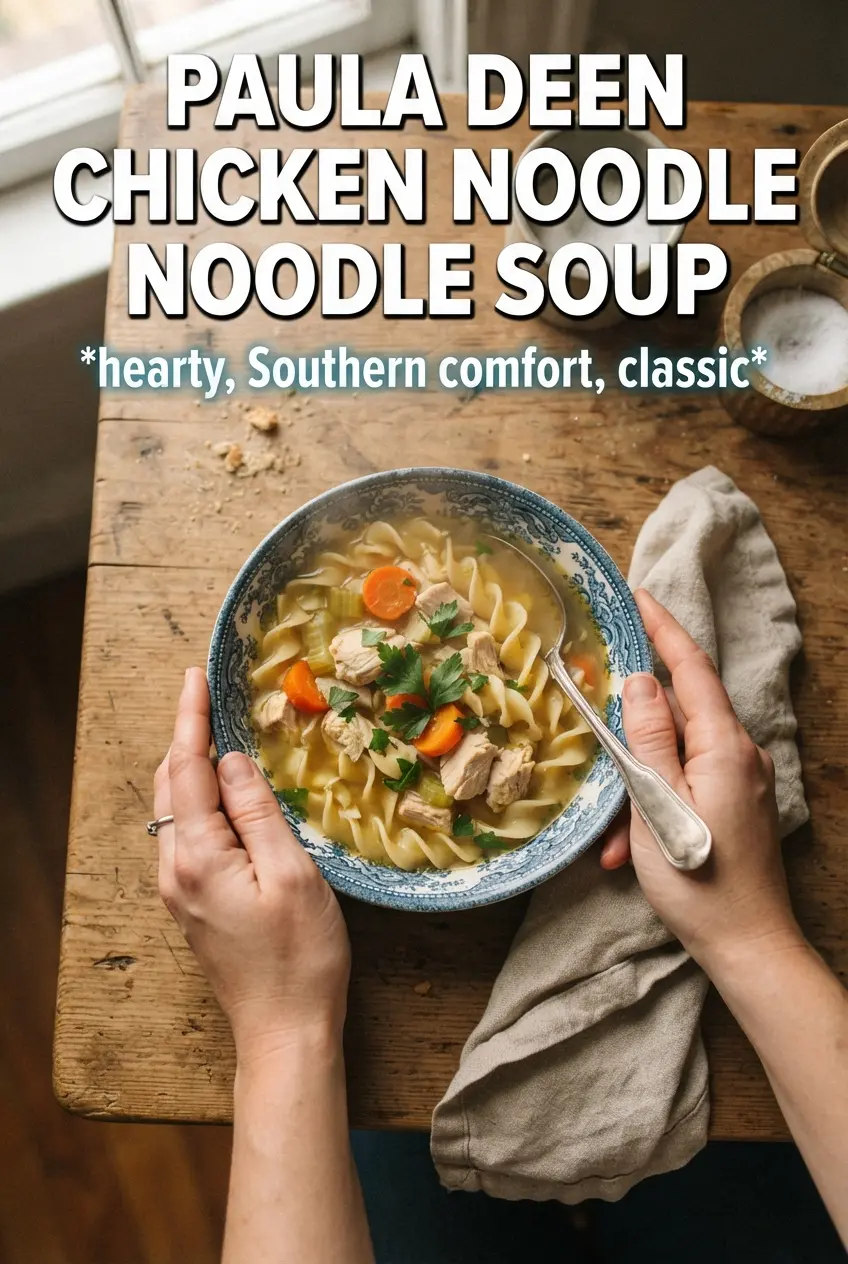
Paula Deen Chicken Noodle Soup
Ingredients
Equipment
Method
- Place the whole chicken in a very large pot with the water, 2 cups chicken broth, half the carrots, half the celery, half the onion, bay leaves, and 1 teaspoon salt. Bring to a boil.
- Skim any foam from the top. Simmer for 45 minutes until the chicken is fall-off-the-bone tender with visible gentle bubbles.
- Remove the chicken from the pot and let it cool briefly enough to handle. Shred all meat and discard the skin, bones, and used vegetables.
- Strain the broth to remove solids. Return the strained broth to the pot.
- Add the remaining chicken broth, butter, remaining carrots, remaining celery, remaining onion, and the minced garlic to the strained broth. Simmer for 10 minutes until the vegetables soften slightly.
- Add the shredded chicken, dried thyme, and dried parsley. Simmer just until heated through, with the broth actively bubbling.
- Add the wide egg noodles and cook for 6-8 minutes until tender. Stir occasionally so the noodles don’t stick.
- Season generously with salt and pepper to taste. Garnish with fresh parsley and serve hot.