
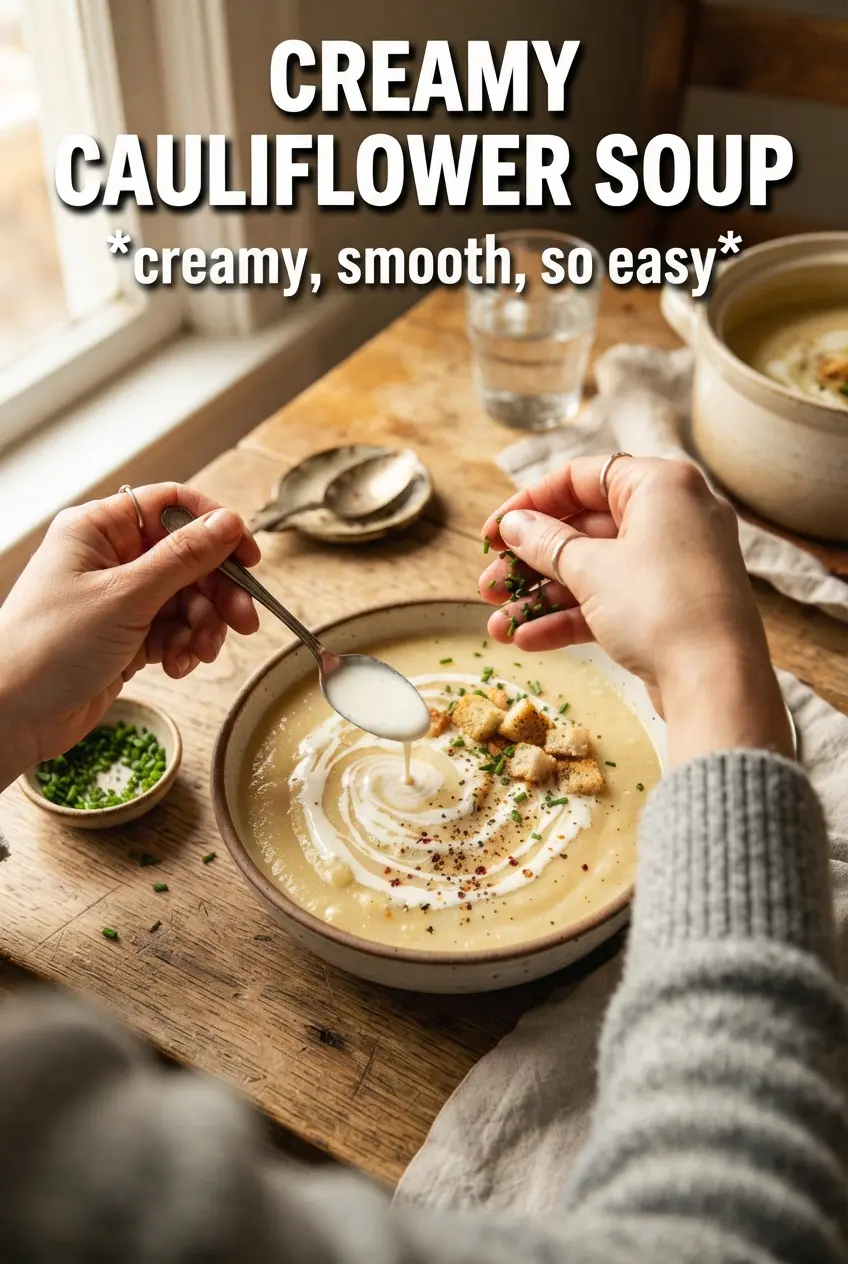
Silky, pale, and rich without feeling heavy, creamy cauliflower soup has a way of disappearing fast once it hits the table. The best bowls have real body from the cauliflower itself, a gentle sweetness from the onion and garlic, and just enough cream to round everything out without turning it flat or bland. When it’s blended until completely smooth and finished with roasted cauliflower on top, the texture turns from simple to restaurant-worthy.
This version works because the cauliflower does two jobs. Most of it cooks down into the soup and gives you that velvety base, while a handful of florets gets roasted until deeply golden for garnish. That contrast matters. You get a silky spoonful, then a little crisp edge and nuttiness on top. The truffle oil is optional, but used lightly it adds a finish that makes the whole bowl smell expensive without overpowering the cauliflower.
Below, I’ll walk through the one step that makes the biggest difference for texture, plus the small choices that keep the soup from tasting dull or thin. If you’ve ever had cauliflower soup that felt watery or chalky, this method fixes both problems.
The soup blended up unbelievably smooth, and roasting some cauliflower for the top made it taste like something from a nice cafe. I loved the little hit of truffle oil with the chives.
Creamy cauliflower soup with roasted florets, truffle oil, and chives is worth saving for a night when you want something smooth, cozy, and a little special.
The Shortcut to Velvet-Smooth Soup Is in the Blender, Not the Pot
Cauliflower soup can go wrong in two very specific ways: it can taste thin, or it can turn grainy after blending. The fix for both is simple. Cook the cauliflower until it’s fully tender, then blend it long enough that the florets disappear completely. If you still see tiny bits, keep going. A soup like this needs a full puree, not a quick pulse.
The other thing that matters is heat management after the cream goes in. Once the cauliflower is smooth, lower the heat before adding the cream. Hard boiling at that stage can make the dairy taste heavy instead of silky, and it can dull the clean flavor of the cauliflower. This soup should taste rich, but still bright and vegetable-forward.
- Cauliflower — Fresh heads give you the best clean flavor and the creamiest texture. Frozen cauliflower works in a pinch, but it usually brings more water, which means the soup needs a little extra simmer time to thicken.
- Onion and garlic — These build the base. Cooking the onion until it softens before adding the garlic keeps the garlic from turning bitter. That small order change matters more than most people think.
- Heavy cream — This is what gives the soup its lush finish. Half-and-half can work if that’s what you have, but the soup will be a little lighter and less plush.
- Broth — Vegetable broth keeps the flavor clean and lets the cauliflower stay center stage. Chicken broth adds a little more savory depth. Either one works, as long as it tastes good enough to sip on its own.
- Truffle oil — Use this sparingly. A few drops on top are enough. Too much and it takes over the whole bowl.
What Each Ingredient Is Actually Doing in This Recipe

- Primary ingredient (the star) — Quality matters most. Choose the best you can find.
- Cooking medium (oil, butter, or broth) — This carries flavors and prevents dryness.
- Seasonings (salt, pepper, spices, herbs) — Layer flavors so nothing overpowers. Build depth gradually.
- Aromatics (garlic, onion, herbs) — Cook with fat to bloom flavors. Become the foundation.
- Supporting ingredients — Complement the main ingredient without overpowering it.
- Sauce or liquid (if applicable) — Brings flavors together. Balance richness with acid.
- Acid (lemon, vinegar, wine, or other) — Brightens and prevents flat-tasting results.
- Final finish (garnish, glaze, or sauce) — Prevents one-dimensional taste and adds visual appeal.
Roasting a Handful of Cauliflower Is What Makes the Bowl Feel Finished
Roast the garnish first
Toss the reserved cauliflower florets with olive oil and spread them out on a hot baking sheet so they have room to brown. If they’re crowded, they steam and turn soft instead of caramelized. You want edges that are deeply golden and a little crisp, because those florets give the finished soup texture and a second layer of cauliflower flavor.
Build the base in the pot
Melt the butter, then cook the onion until it turns translucent and sweet. Add the garlic for just a minute; once it smells fragrant, move on. If the garlic browns, it will taste sharp in the finished soup. Stir in the cauliflower and broth, bring it to a boil, then lower the heat and simmer until the florets collapse easily with a spoon.
Blend until the texture turns glossy
An immersion blender is the easiest tool here because you can keep everything in the pot. Blend longer than you think you need to. The soup should look smooth and slightly glossy, with no visible chunks. If you use a countertop blender, work in batches and vent the lid so steam doesn’t build up. That step is about safety, but it also keeps the soup from splattering all over the kitchen.
Finish with cream and seasoning
Stir in the cream, nutmeg, and white pepper after the soup is fully blended. The nutmeg should be subtle; you’re adding warmth, not dessert spice. Taste for salt at the end. Cauliflower needs enough seasoning to wake up, and if the soup tastes flat, it usually needs salt more than anything else.
How to Adapt This for a Lighter Bowl, a Dairy-Free Version, or a Bigger Batch
Dairy-Free Cauliflower Soup
Swap the butter for more olive oil and replace the heavy cream with full-fat coconut milk or an unsweetened plain oat creamer. Coconut milk gives the soup a richer body, while oat creamer keeps the flavor more neutral. Either one still blends into a smooth finish, but the soup will taste a little less classic and a little more modern.
Lighter Soup With Less Cream
Use half-and-half instead of heavy cream, or reduce the cream by half and add a splash more broth until the soup reaches the texture you like. The result will be lighter and a little less luxurious, but it still tastes clean and comforting. Keep the blending thorough so the lighter version doesn’t read thin.
Make It Vegetarian Without Losing Depth
Use vegetable broth and let the onion cook until it takes on a little color before the garlic goes in. That extra browning gives the soup more savory depth so you don’t miss the chicken broth. The truffle oil helps here too, but keep it light.
Storage and Reheating
- Refrigerator: Store in an airtight container for up to 4 days. It thickens as it chills, so don’t panic if it looks denser the next day.
- Freezer: It freezes well, but the texture can loosen a little after thawing because of the cream. Freeze without the garnish, then re-blend briefly after reheating if needed.
- Reheating: Warm it slowly over low heat, stirring often. Don’t boil it hard or the cream can separate and the texture will lose that silky finish.
Questions I Get Asked About This Recipe
Creamy Cauliflower Soup
Ingredients
Equipment
Method
- Toss the reserved cauliflower florets with olive oil, then spread them in an even layer. Roast at 425F for 20-25 minutes, until golden, and set aside for serving.
- Melt the butter in a large pot over medium heat. Sauté the onion for 5 minutes, until softened, then add the garlic and cook for 1 minute.
- Add the remaining cauliflower and broth to the pot, then bring the mixture to a boil. Reduce to a simmer and cook for 20 minutes, until very tender.
- Blend the soup completely smooth using an immersion blender. Stir in the heavy cream, nutmeg, and white pepper until evenly combined.
- Season the soup with salt to taste. Serve hot with the roasted cauliflower, a drizzle of truffle oil, and chives.