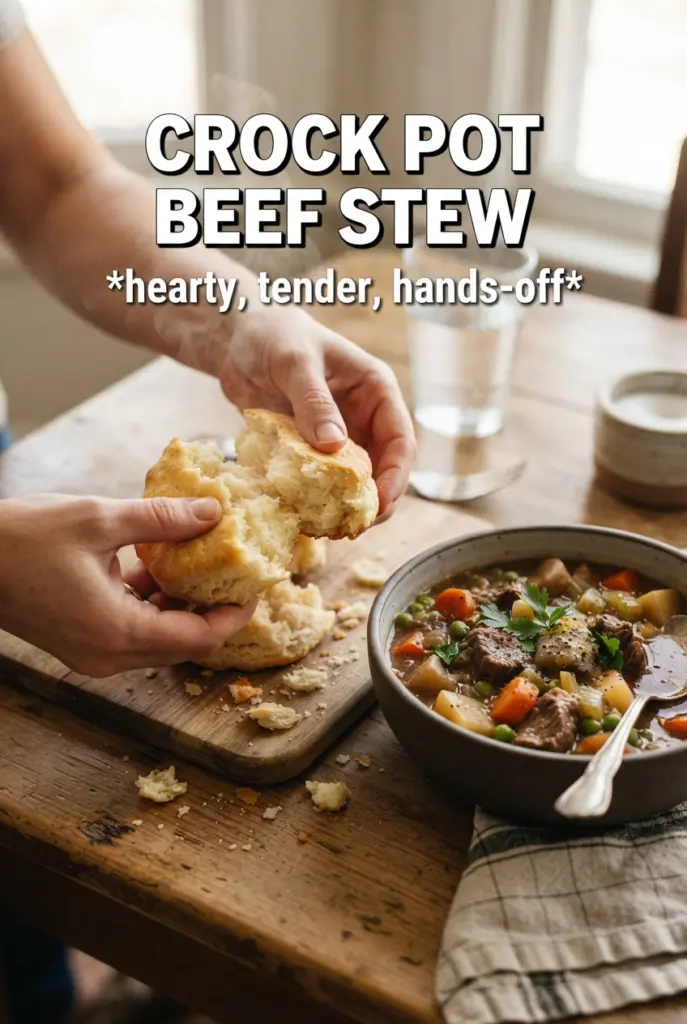
Slow-cooked beef stew earns its place in the rotation when the beef turns spoon-tender and the broth settles into something deep, savory, and rich enough to coat the back of a spoon. The potatoes hold their shape, the carrots soften without going mushy, and every bite tastes like it had time to become itself.
The part that makes this version work is the layering. The vegetables go in first, which keeps the beef lifted a little above the bottom of the pot so it braises instead of sinking into a starchy tangle, and the tomato paste plus Worcestershire sauce give the broth a darker, more rounded flavor than a plain broth-only stew. A little red wine helps, but if you skip it, the stew still comes out full and balanced with extra broth.
Below, I’ve included the small timing detail that keeps the stew from tasting flat, plus a few swaps for when you need to work with what’s already in the pantry.
The beef was falling apart after 8 hours on low, and the broth thickened up beautifully with the cornstarch slurry. I loved that the potatoes held their shape instead of turning to mush.
Love how this Crock Pot Beef Stew turns out with tender beef, hearty vegetables, and a rich broth? Save it to Pinterest for the kind of slow-cooked dinner that tastes even better the next day.
The Broth Gets Rich Because the Slow Cooker Has Time to Work
A good beef stew does not taste like browned meat floating in beige liquid. It needs time for the tomato paste, Worcestershire, wine, and beef broth to meld into something darker and more complete. The slow cooker is doing more than softening the beef here; it’s extracting flavor from the onions, garlic, herbs, and tomato paste until the broth tastes like it was simmered all day on purpose.
The biggest mistake with crock pot stew is underseasoning before the long cook. Salt and pepper on the beef matters because that seasoning doesn’t just stay on the surface. It seasons the liquid as the stew cooks, which is what gives the final broth its depth. If your stew tastes flat at the end, it usually means the base never got enough seasoning early on.
What Each Ingredient Is Actually Doing in This Stew
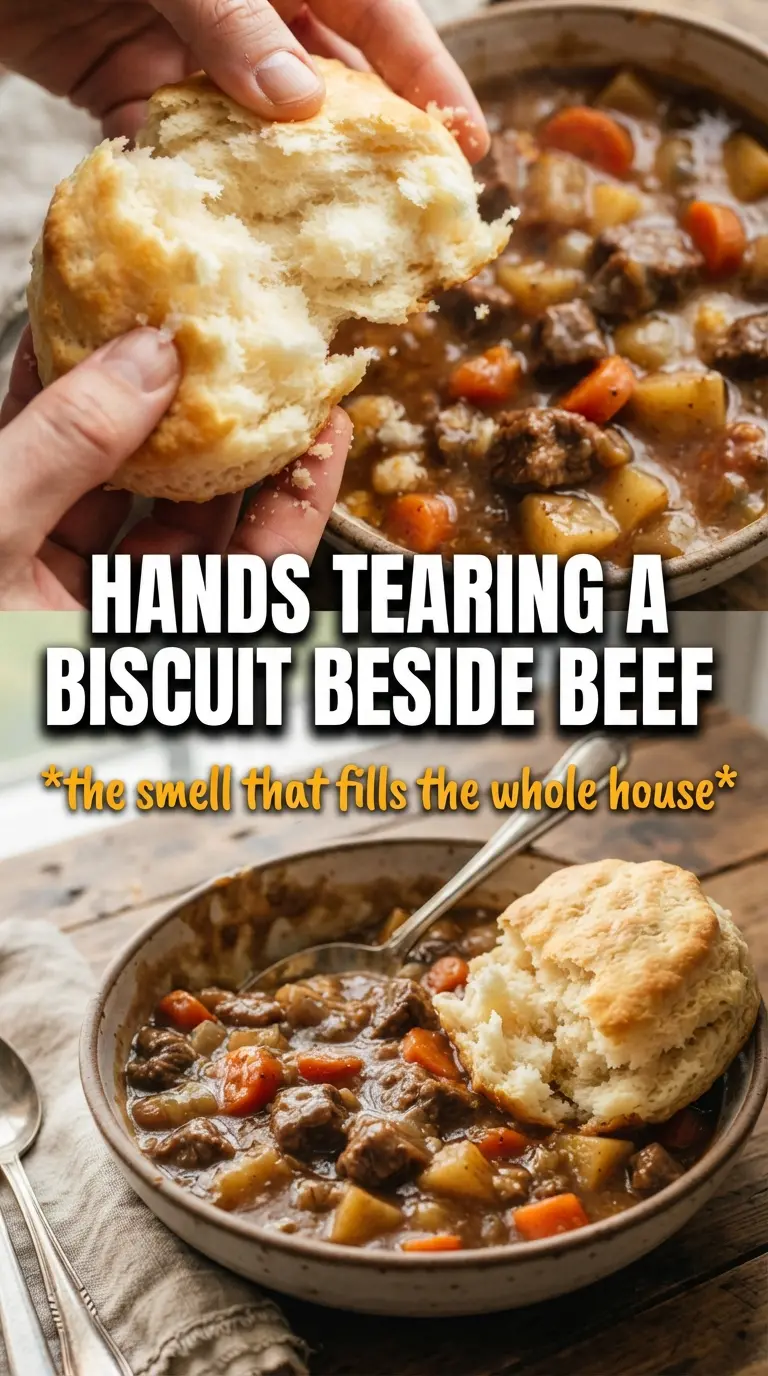
- Beef chuck — This is the cut that turns silky and tender after hours of low heat. Leaner cuts dry out before they soften, so chuck really is the right choice here.
- Red wine or extra beef broth — Wine gives the stew a deeper edge and helps the broth taste less one-note. If you skip it, use more broth and add an extra splash of Worcestershire for backbone.
- Tomato paste and diced tomatoes — These don’t make the stew taste like tomato soup. They add body, color, and a slow-cooked richness that plain broth can’t deliver on its own.
- Baby potatoes — Halved baby potatoes hold their shape better than big chunks of russet or Yukon Gold potatoes, which can start breaking apart during a long cook. If you only have larger potatoes, cut them into bigger pieces so they don’t disappear.
- Cornstarch slurry — This thickens the broth at the end without leaving a floury taste. Stir it in only after the beef is already tender; if you add it too early, the stew can turn gluey before the vegetables are ready.
The 20 Minutes That Set Up the Whole Pot
Seasoning the Beef
Coat the beef chunks generously with salt and pepper before they go into the slow cooker. That first layer of seasoning is what keeps the stew from tasting bland after hours of cooking. If you under-salt now, the stew can taste dull even after the broth thickens.
Building the Base in the Pot
Spread the potatoes, carrots, celery, and onion across the bottom of the slow cooker, then place the beef on top. This keeps the vegetables in the cooking liquid and lets the beef braise instead of sitting directly on the hottest surface. Add the garlic, broth, wine, tomatoes, tomato paste, Worcestershire, thyme, rosemary, and bay leaves over everything so the seasonings disperse as the stew heats.
Letting the Slow Cooker Do Its Job
Cook on low for 8 to 10 hours until the beef breaks apart with a fork. High heat can work in a pinch, but low heat gives the chuck more time to soften without tightening up. If the beef still feels chewy, it needs more time; stew beef should not be sliced with effort.
Thickening at the End
Pull out the bay leaves, then stir the cornstarch slurry into the hot stew. Let it cook on high for 20 to 30 minutes until the broth looks glossy and lightly thickened. If you add the slurry and shut the lid right away, it won’t fully activate and the stew can stay thinner than you want.
Three Ways to Make This Stew Fit What You’ve Got
Dairy-Free and Naturally Gluten-Free
This stew already lands in a good place for both diets as written, since the thickener is cornstarch instead of flour and there’s no dairy in the pot. Just check that your Worcestershire sauce is one you trust, because some brands vary. The result stays the same: a glossy broth with tender beef and vegetables.
No Wine, No Problem
Use extra beef broth in place of the wine, then add an extra teaspoon of Worcestershire for a little more depth. You’ll lose a touch of acidity, but the stew will still taste full and savory. If you want that slight brightness back, a small splash of vinegar at the end works better than adding more tomato.
Turn It Into a Bigger, Heartier Pot
You can stretch this with mushrooms, parsnips, or a handful of peas stirred in near the end. Mushrooms deepen the savory flavor, parsnips add sweetness, and peas keep the stew from feeling too heavy. Add delicate vegetables late so they don’t disappear into the long cook.
Storage and Reheating
- Refrigerator: Keeps well for 4 days. The broth thickens as it chills, so it may look even richer the next day.
- Freezer: Freezes well for up to 3 months. Cool it completely, portion it into containers, and leave a little space for expansion.
- Reheating: Warm it gently on the stove over medium-low heat or in the microwave in short bursts. If it seems too thick, add a splash of broth or water; boiling it hard can make the beef dry out and the vegetables fall apart.
Answers to the Questions Worth Asking
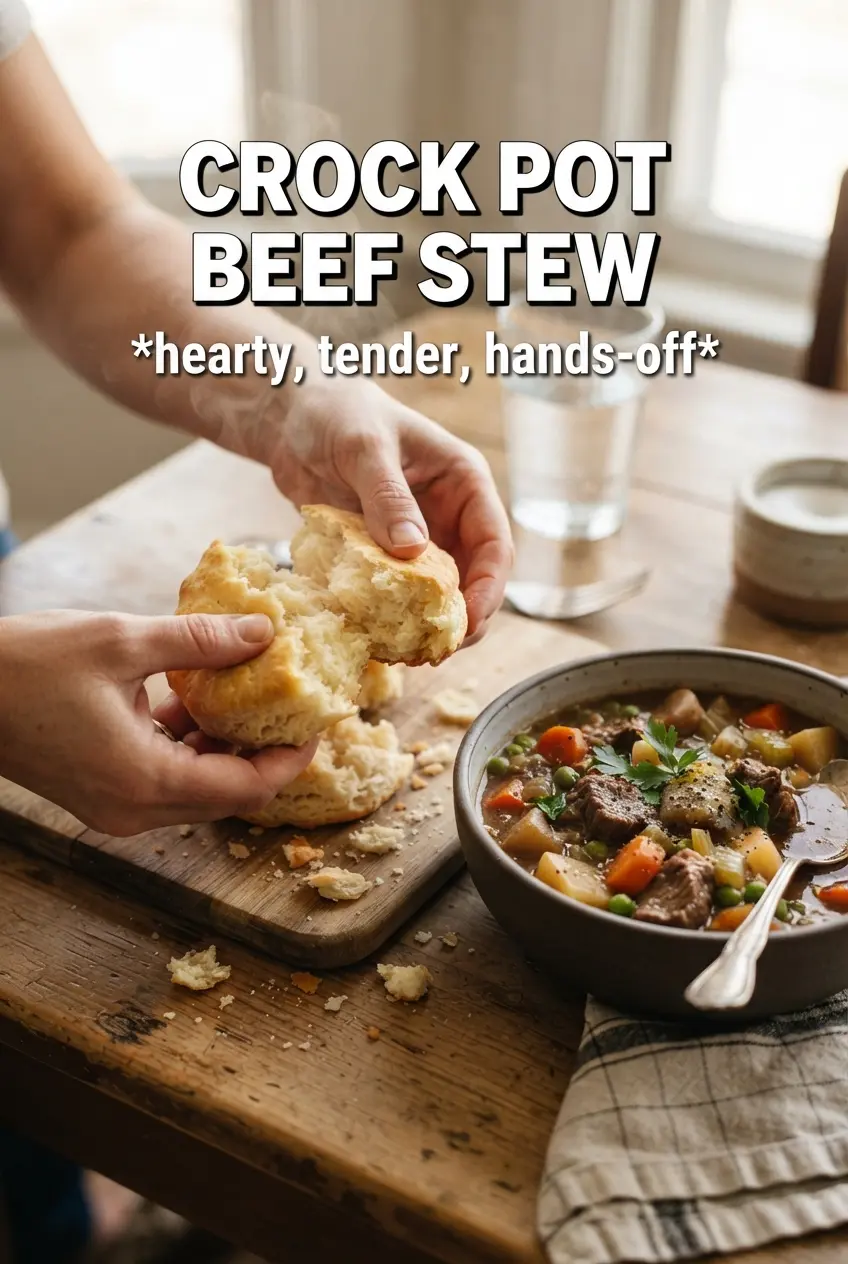
Crock Pot Beef Stew
Ingredients
Equipment
Method
- Season the beef chuck generously with salt and pepper until evenly coated, using a firm hand to press seasoning into the surface.
- Add the potatoes, carrots, celery, and onion to the bottom of the slow cooker in an even layer.
- Nestle the seasoned beef on top of the vegetables so the beef is mostly centered and not stacked too high.
- Add the garlic, beef broth, red wine (or extra beef broth), diced tomatoes, tomato paste, Worcestershire sauce, dried thyme, dried rosemary, and bay leaves over the top to cover as much of the beef as possible.
- Cook on Low for 8-10 hours, until the beef is fall-apart tender and the vegetables are soft around the edges.
- If short on time, cook on High for 4-5 hours, until the beef is fall-apart tender and the vegetables are fork-tender.
- Remove the bay leaves from the stew and stir so the remaining spices distribute evenly.
- Stir the cornstarch slurry (cornstarch mixed with water) into the stew until no dry lumps remain.
- Cook on High for 20-30 minutes at a steady simmer so the broth thickens to a spoon-coating consistency.
- Season with salt and pepper to taste, then stir and serve hot.