
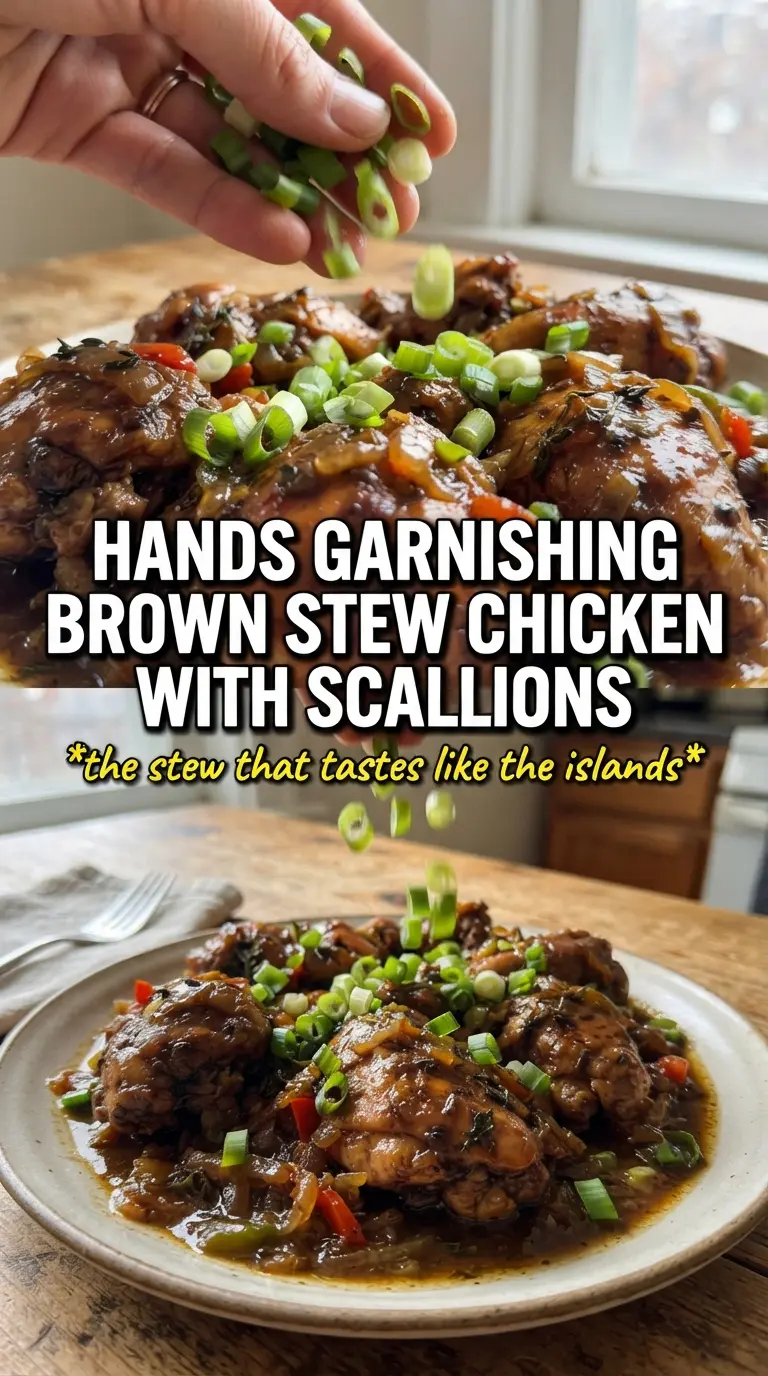
Brown stew chicken earns its place in the rotation because the gravy turns dark, glossy, and deeply seasoned while the chicken goes tender enough to pull apart with a spoon. The first bite should give you sweet caramelized edges, thyme, garlic, and that warm peppery note that makes Jamaican stewed chicken so satisfying over rice. This version keeps the method straightforward, but it doesn’t skip the two things that matter most: a proper marinade and the browning step that builds the color and flavor of the sauce.
The trick is not rushing the base. Letting the chicken sit with browning sauce, thyme, garlic powder, onion powder, and seasoning gives the meat a head start, and caramelizing the sugar before the chicken hits the pan adds that signature mahogany color without making the stew taste burnt. I also like to sauté the vegetables just long enough to soften and pick up the fond from the pan, then let the broth do the slow work of turning everything into gravy.
Below, I’ll walk you through the part that matters most: how to get the chicken deeply browned without scorching the pan, how to keep the sauce from tasting flat, and how to adjust the heat if you’re using Scotch bonnet or habanero.
The gravy turned that deep brown color I never seem to get when I rush stews, and the chicken was fall-apart tender after 40 minutes. I served it with rice and the pan was practically scraped clean.
Brown Stew Chicken with that glossy mahogany gravy is worth saving for the nights you want bold Jamaican flavor without a lot of fuss.
The Browning Step Is What Gives This Chicken Its Color and Depth
If you’ve ever made stew chicken that tasted fine but looked pale, the missing piece was usually the browning. The sugar needs a moment in the oil before the chicken goes in, and that short caramelization gives the sauce its dark color and a slightly sweet edge that balances the peppers and thyme. If the sugar smokes hard or goes black, pull it back and start over — burnt browning tastes bitter fast.
The other place people lose flavor is skipping a proper sear on the marinated chicken. The pieces don’t need to be cooked through at that point, but they do need real color on the skin and edges. That first browning layer gives the stew body, and the dark bits left in the pan become the backbone of the gravy once the broth goes in.
What Each Ingredient Is Doing in This Stew
- Chicken thighs and drumsticks — Bone-in pieces stay juicy through the long simmer and give the gravy more body than boneless chicken. You can use all thighs if that’s what you have, but don’t swap in breast meat unless you shorten the cook time a lot; it dries out before the sauce finishes.
- Browning sauce — This is doing part of the color work before the chicken even hits the pan. If you don’t have it, a little more time on the sugar browning step can help, but you won’t get the same deep color in as little time.
- Sugar — Just enough sugar in the oil gives the dish that signature dark, slightly sweet base. Watch it closely; once it turns golden amber, the chicken goes in right away so it doesn’t tip into bitterness.
- Thyme, garlic, onion, and green onion — These build the savory backbone of the stew. Fresh thyme is especially good here because it holds up through the simmer and keeps the gravy tasting alive instead of flat.
- Scotch bonnet or habanero — This is for heat, not just spice. Leave it out if you want a milder pot, or add only a little if you want warmth without the full burn.
- Chicken broth — It stretches the pan juices into a proper stew without washing out the flavor. Low-sodium broth is the best choice if your seasoning blend is already salty.
From Marinating to Gravy: The Part That Actually Needs Your Attention
Letting the Marinade Do Its Job
Mix the chicken with the browning sauce, seasoning, garlic powder, onion powder, thyme, salt, and pepper, then let it sit for at least 2 hours. Overnight gives you deeper seasoning all the way through the meat. If you rush this step, the outside tastes seasoned but the meat underneath stays bland, and the stew never quite tastes finished.
Caramelizing the Sugar Without Burning It
Warm the oil in a heavy skillet or Dutch oven, then add the sugar and watch it closely as it melts. You want a golden-brown caramel that smells nutty, not black smoke. The moment it reaches that color, add the chicken, because the sugar keeps cooking even off the direct heat and can turn bitter in seconds.
Browning the Chicken Before the Simmer
Brown the marinated chicken pieces on all sides until they pick up deep color. Don’t crowd the pan or the chicken will steam instead of sear, and you’ll lose both flavor and texture. If the pan looks dry or the seasoning starts sticking too aggressively, the heat is too high; lower it and keep turning the pieces until they’re richly colored.
Building the Stew and Finishing the Texture
Sauté the onions, peppers, garlic, green onions, and Scotch bonnet in the same pot, then return the chicken and add the broth. Bring it to a boil, then drop the heat and cover it so the simmer stays gentle. The chicken is done when it’s tender enough to pull cleanly from the bone and the gravy clings to a spoon instead of looking thin and watery.
Three Ways to Adjust Brown Stew Chicken Without Losing the Point
Milder Heat for the Same Deep Flavor
Skip the Scotch bonnet entirely, or leave it whole and remove it before serving. You’ll still get the thyme, garlic, peppers, and browned gravy that define the dish, just without the lingering burn. This is the easiest way to keep the stew family-friendly without flattening the flavor.
Dairy-Free and Gluten-Free Without Any Extra Work
This recipe is naturally dairy-free, and it can stay gluten-free as long as your browning sauce and all-purpose seasoning are certified gluten-free. The stew itself gets its thickness from reduction and the chicken juices, not from flour, so you don’t need a separate adjustment.
Using Only Thighs for Extra Juicy Meat
All thighs work beautifully if you want meat that stays especially tender and easy to shred. They’ll also give you a richer gravy because thighs release more flavor into the pot. Keep the simmer gentle so the meat stays juicy instead of tightening up.
Storage and Reheating
- Refrigerator: Store in an airtight container for up to 4 days. The gravy thickens as it chills, and the flavor gets even better by day two.
- Freezer: It freezes well for up to 3 months. Cool it completely first, then freeze the chicken and gravy together so the meat stays moist when thawed.
- Reheating: Warm it gently on the stove over low heat with a splash of broth or water. High heat can tighten the chicken and make the gravy separate, so give it time to loosen back up slowly.
Answers to the Questions Worth Asking
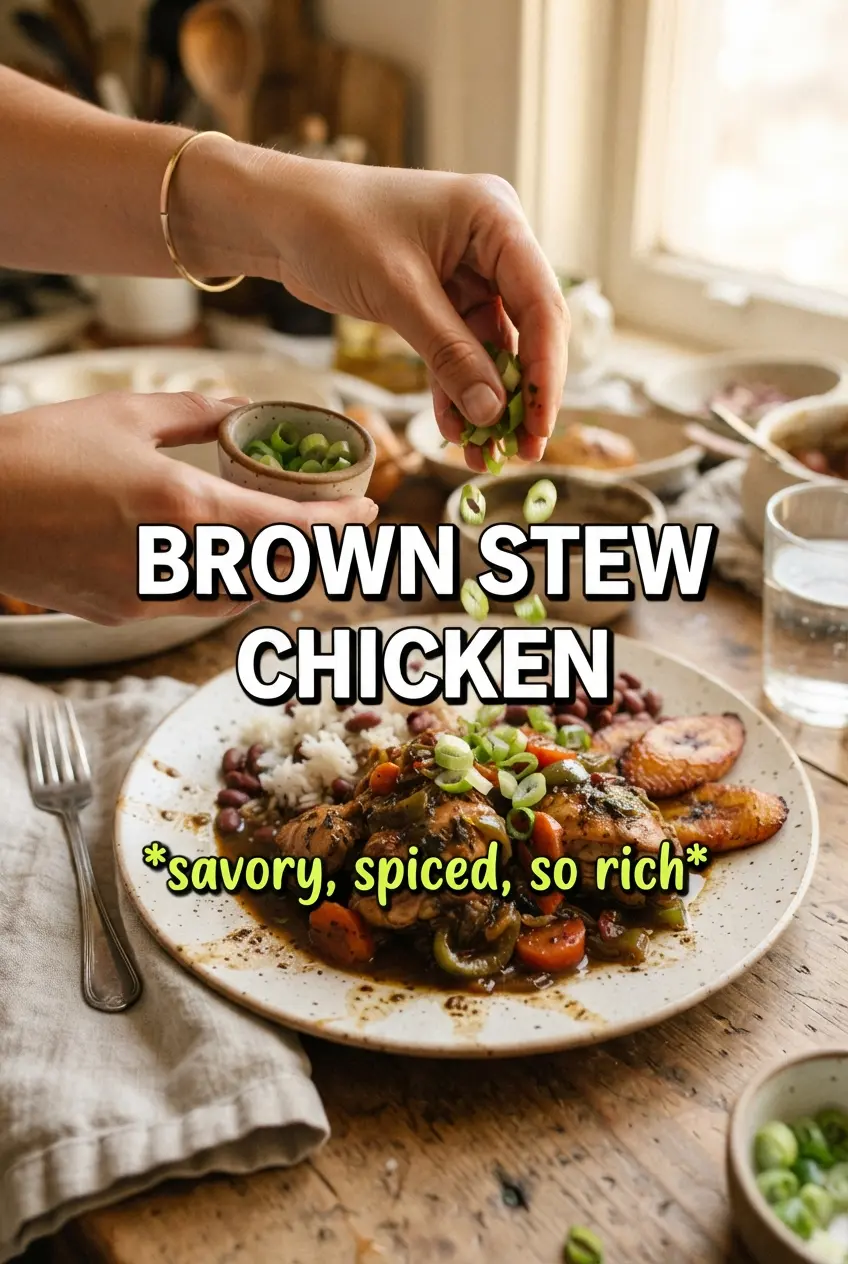
Brown Stew Chicken
Ingredients
Equipment
Method
- Combine all marinade ingredients with the chicken pieces and coat well. Marinate for at least 2 hours or overnight in the refrigerator, covered, until the chicken is seasoned through.
- Heat the vegetable oil in a large skillet or Dutch oven over medium-high heat, then add the sugar and let it caramelize until golden brown. Keep an eye on the sugar so it turns amber, not dark.
- Add the marinated chicken pieces and brown until deeply golden on all sides, about 3-5 minutes per side depending on thickness. Remove the chicken to a plate once browned.
- Sauté the onion, bell peppers, garlic, green onions, and scotch bonnet for 4 minutes. Stir until fragrant and slightly softened.
- Return the chicken to the pot, add the chicken broth, and bring the mixture to a boil. Scrape up any browned bits for flavor.
- Reduce the heat to low, cover, and simmer for 35-40 minutes until the chicken is fall-apart tender and the gravy is thick. Stir once or twice near the end to keep the sauce from thinning.
- Serve the brown stew chicken with rice and sprinkle with fresh thyme. Spoon the thick mahogany gravy over the chicken for the best texture.