
Golden broth, tender noodles, and shredded rotisserie chicken make this soup feel like a full reset, not a leftover meal. The chicken stays juicy because it goes in near the end, the vegetables soften just enough to sweeten the broth, and the lemon at the finish keeps the whole pot from tasting flat. It’s the kind of dinner that lands fast and still tastes like you put care into it.
What makes this version work is timing. Rotisserie chicken is already cooked, so it doesn’t need a long simmer the way raw chicken would; it only needs a few minutes to warm through and take on the broth. The noodles also matter. Egg noodles cook quickly and soak up flavor without turning the soup heavy, as long as you stop them while they still have a little bite. A small squeeze of lemon does more than you’d think here. It wakes up the broth and sharpens the savory flavors without making the soup taste lemony.
Below, I’ve included the most common places this soup can go wrong, plus the ingredient swaps that still keep it tasting like a proper bowl of chicken noodle soup. The technique is straightforward, but a couple of small choices make the difference between watery and comforting.
The broth tasted like it had been simmering all day, and the rotisserie chicken stayed so tender because it went in at the very end. The lemon at the end pulled everything together.
Save this rotisserie chicken noodle soup for the nights when you need a fast, brothy dinner that still tastes homemade.
The Trick to Keeping Rotisserie Chicken Tender Instead of Stringy
Rotisserie chicken is already cooked through, so the mistake is treating it like raw chicken and simmering it for too long. That’s how you end up with dry shreds and cloudy broth. The chicken should go in only after the noodles are nearly done, then stay in the pot just long enough to heat through and pick up some seasoning.
The other thing that matters here is the order of operations. Build the broth first, cook the noodles separately in that broth, then add the chicken at the end. If you add the chicken too early, especially with fine egg noodles, the meat breaks down and the broth can get muddy. Keeping the chicken for the final few minutes protects its texture and keeps the soup tasting clean and fresh.
What Each Ingredient Is Actually Doing in This Soup
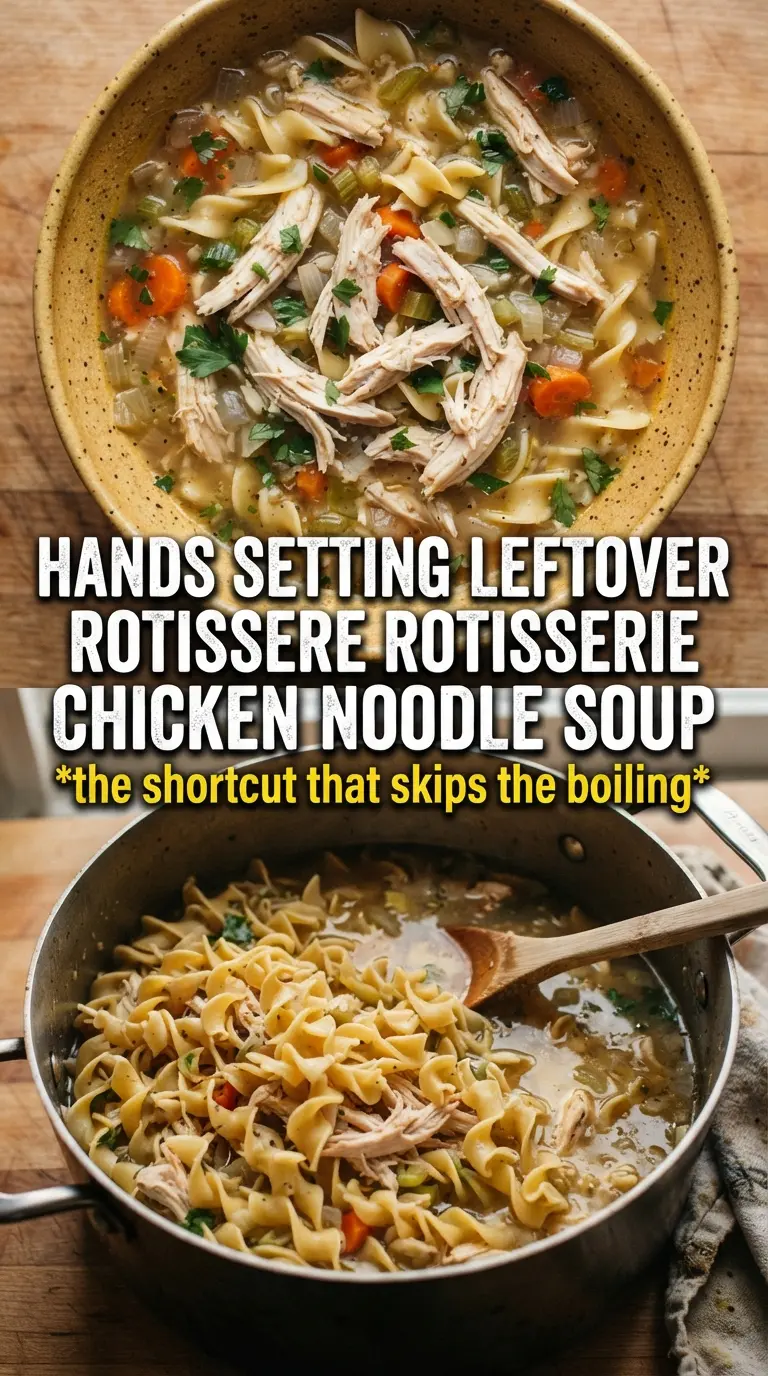
- Rotisserie chicken — This is the backbone of the recipe and the reason it comes together so fast. Dark meat gives the soup more flavor and stays moister, but any leftover chicken works. Pull it into bite-size shreds instead of chopping it into cubes so it blends into the broth naturally.
- Chicken broth — Use the best broth you have, because this soup is only as good as the liquid. If yours tastes thin, add a pinch more salt at the end instead of trying to fix it with more dried herbs. Stock works too, but broth gives a lighter, faster-cooking result.
- Carrots, celery, and onion — This is the flavor base. Sautéing them first softens their sharp edges and gives the broth a little sweetness before the noodles go in. If you rush this part, the soup tastes flat no matter how much seasoning you add.
- Egg noodles — These thicken the soup slightly as they cook and give it that classic chicken noodle texture. Wide egg noodles are the most forgiving, but any small noodle works. If you plan leftovers, cook them just shy of done so they don’t turn mushy later.
- Lemon juice — This doesn’t make the soup lemony. It brightens the broth and keeps the chicken from tasting dull. If you skip it, the soup can taste like it needs more salt even when it doesn’t.
Building the Soup So the Broth Stays Clear and the Noodles Stay Right
Softening the vegetables first
Melt the butter or warm the olive oil, then cook the onion, carrots, and celery until the onion turns translucent and the carrots start to lose their raw edge. You want a gentle sizzle, not aggressive browning. If the heat is too high, the vegetables scorch before they soften and the broth ends up tasting harsh instead of rounded.
Adding the broth and seasoning
Stir in the garlic for just a minute, then pour in the broth and add the thyme, parsley, and garlic powder. The garlic should smell fragrant, not browned; once it browns, it turns bitter fast. Bring the pot to a boil only after the broth is in, so the dried herbs have time to bloom without sticking to the bottom.
Cooking the noodles to the right point
Add the egg noodles and cook them until they’re almost tender but still have a little firmness in the center. They’ll keep softening once the chicken goes in, and they’ll soften again as the soup sits. If you wait until they’re fully done before adding the chicken, they usually overcook by the time everything is hot.
Finishing with chicken and lemon
Stir in the shredded rotisserie chicken and let it warm through for a few minutes. Then squeeze in the lemon juice and taste before adding salt and pepper. That order matters because lemon can make a broth taste brighter and more seasoned than it did a minute earlier, which keeps you from oversalting the pot.
How to Adjust This Soup Without Losing What Makes It Work
Make it gluten-free with the right noodle swap
Use a gluten-free egg-style noodle or a sturdy rice noodle. The texture won’t be quite as springy as wheat noodles, and some gluten-free noodles break down faster, so add them near the end and pull the pot from the heat as soon as they’re tender.
Use leftover turkey instead of chicken
Leftover turkey works in the same amount and gives you the same quick-soup payoff. White meat turkey can taste a little drier than rotisserie chicken, so the lemon and a generous broth base matter even more here.
Add extra vegetables without thinning the broth
A handful of peas, chopped spinach, or diced zucchini can go in near the end. Keep the additions small and quick-cooking so they don’t steal the broth’s body. If you add a lot of vegetables, you may need a touch more salt to keep the soup balanced.
Store it for later without mushy noodles
If you know you’ll have leftovers, cook the noodles separately and add them to each bowl when serving. That keeps them from soaking up too much broth in the fridge. It’s the best fix if you want the soup to taste fresh on day two.
Storage and Reheating
- Refrigerator: Store in an airtight container for up to 4 days. The noodles will keep absorbing broth, so the soup gets thicker as it sits.
- Freezer: The broth and chicken freeze well, but the noodles turn soft after thawing. For the best result, freeze the soup without noodles and cook fresh noodles when you reheat.
- Reheating: Warm gently on the stove over medium-low heat until steaming. If it’s too thick, add a splash of broth or water. High heat can make the chicken dry and push the noodles past their best texture.
Answers to the Questions Worth Asking

Leftover Rotisserie Chicken Noodle Soup
Ingredients
Equipment
Method
- Melt butter in a large pot over medium heat, then sauté onion, carrots, and celery for 4-5 minutes until softened and glossy.
- Stir in garlic and cook for 1 minute until fragrant, being careful not to brown it.
- Pour in the chicken broth and add thyme, dried parsley, and garlic powder, then bring everything to a boil.
- Add egg noodles to the boiling soup and cook for 5-6 minutes until almost tender.
- Add shredded rotisserie chicken and simmer for 3-4 minutes, heating it through without drying it out.
- Squeeze in lemon juice and season with salt and pepper to taste.
- Garnish with fresh parsley and serve hot.