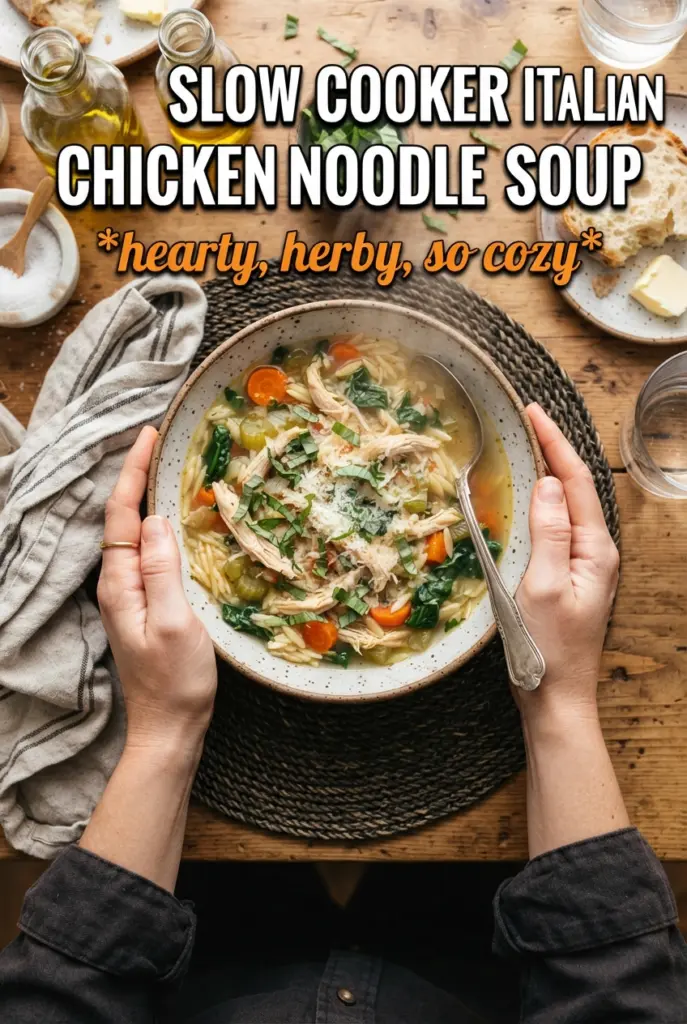
Slow Cooker Italian Chicken Noodle Soup lands in the bowl with a broth that tastes like it simmered all afternoon, even though the slow cooker did the heavy lifting. The chicken turns tender enough to shred with a fork, the vegetables soften without disappearing, and the tomatoes give the broth a gentle richness that keeps it from tasting thin or flat. It’s the kind of soup that makes a second bowl feel inevitable.
What sets this version apart is the balance: enough broth to keep it spoonable, enough tomato to give it body, and just enough Italian seasoning and basil to make the pot taste layered instead of one-note. I like using chicken thighs here because they stay juicy through a long cook and bring more flavor to the broth than lean breast meat usually does. The pasta goes in at the end, not at the start, so it keeps its shape instead of turning soft and bloated.
Below, you’ll find the timing that keeps the noodles from overcooking, plus a few practical swaps if you need to work with what’s already in the pantry. The soup reheats well, too, as long as you handle the noodles the right way.
The broth had so much flavor, and the noodles stayed perfectly tender since I added them at the end. My husband went back for seconds and asked if there was more for lunch tomorrow.
Save this Slow Cooker Italian Chicken Noodle Soup for a cozy bowl with tender chicken, tomato-rich broth, and noodles added at the end so they stay just right.
The Trick to Keeping the Noodles from Turning Mushy
The biggest mistake in slow cooker noodle soup is adding the pasta too early. Ditalini and egg noodles soak up broth fast, and by the time dinner is ready, they can turn bloated and soft enough to fall apart. Cooking them at the end keeps them intact and gives the soup a better texture from the first spoonful to the last.
The other thing that matters is the slow cooker temperature after the chicken comes out. If the broth isn’t hot enough when the noodles go in, they’ll take forever and absorb more liquid than they should. If it’s boiling hard, they can break down before the center is tender. A steady, high simmer is the sweet spot.
- Chicken thighs stay moist through the full cook and shred into soft, substantial pieces. Breast meat works, but it dries out more easily and won’t give the broth the same depth.
- Cannellini beans add creaminess without any dairy. If you skip them, the soup still works, but the broth will taste lighter and less substantial.
- Diced tomatoes give the broth that tomato-kissed color and a little acidity. Use regular diced tomatoes, not heavily seasoned ones, so the Italian herbs stay in control.
- Fresh spinach goes in at the end because it only needs a minute or two to wilt. If you add it early, it disappears into the soup and loses its bright color.
What Each Ingredient Is Doing in the Slow Cooker
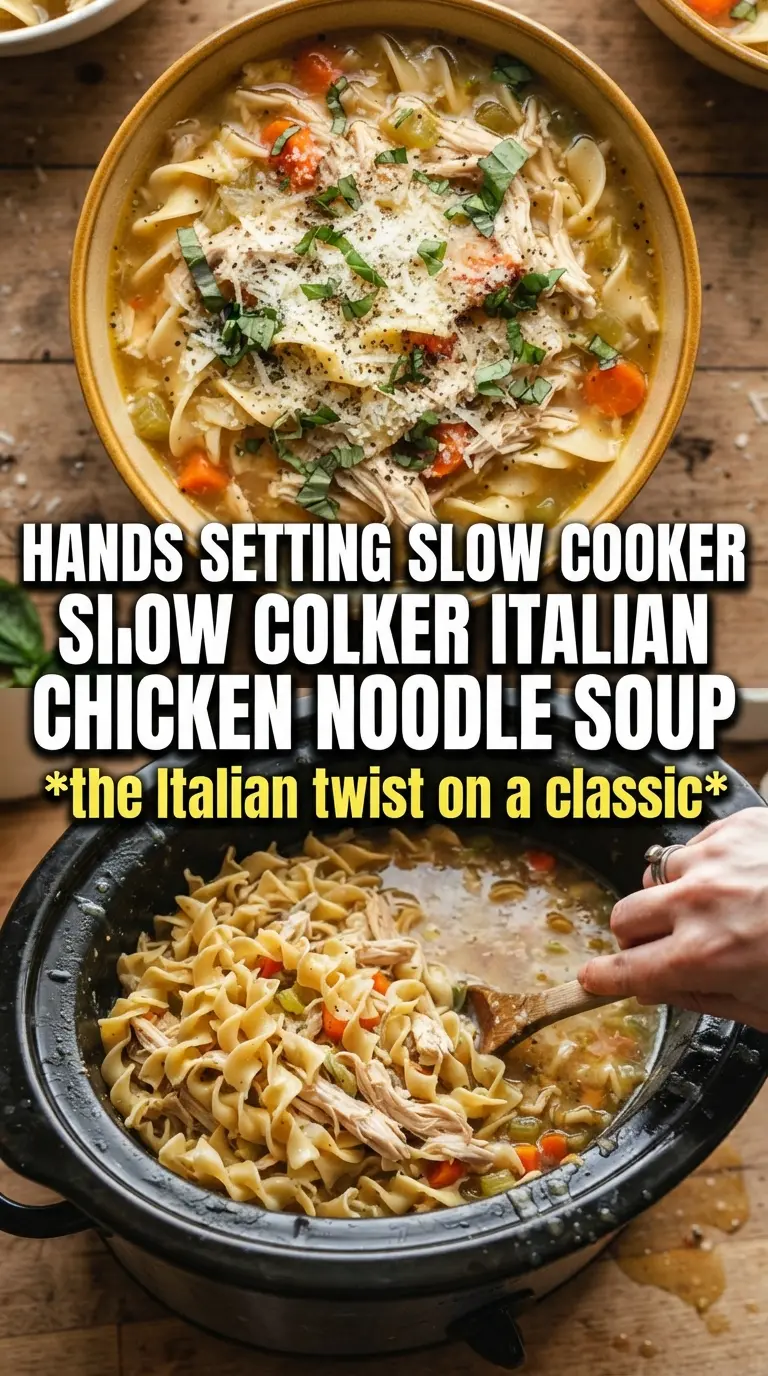
The vegetables build the base here. Carrots, celery, and onion soften slowly and season the broth from the inside out, which is why this soup tastes rounded even before you add salt at the end. Garlic goes in minced, not sliced, so it melts into the broth instead of floating around in sharp little pieces.
Italian seasoning and dried basil do the heavy lifting on aroma, but red pepper flakes keep the soup from tasting too sweet. You don’t need much; just enough heat to wake up the tomatoes and beans. Use low-sodium broth if you can, because the parmesan at the end will add salt on its own.
The pasta is the one ingredient that needs active management. Add it only after the chicken has been shredded and returned to the pot, then watch it closely during the last 20 to 30 minutes. The soup should still be loose when the noodles are done, because they’ll keep drinking broth off the heat.
Building the Soup in the Right Order
Starting with the Slow Cooker Base
Add the chicken thighs, carrots, celery, onion, garlic, tomatoes, beans, broth, Italian seasoning, basil, and red pepper flakes straight into the slow cooker. The chicken should be mostly submerged so it cooks evenly and shreds cleanly later. If you pile the vegetables too high above the liquid, they’ll steam instead of softening into the broth, so press everything down with a spoon before putting the lid on.
Cooking Until the Chicken Shreds Easily
Cook on low for 6 to 8 hours or on high for 3 to 4 hours. You’re looking for chicken that pulls apart without resistance and vegetables that are tender but still hold their shape. If the chicken fights you when you shred it, it needs more time; tough chicken means the connective tissue hasn’t fully relaxed yet.
Adding the Pasta at the End
Remove the chicken, shred it, and return it to the pot before the noodles go in. Then add the pasta and cook just until tender, stirring once or twice so it doesn’t clump at the surface. If the soup seems thicker than you want after the pasta cooks, add a splash of broth or hot water before finishing.
Finishing with Spinach and Cheese
Stir in the spinach and let it wilt for about 5 minutes. The leaves should turn dark green and silky, not dull and overcooked. Taste the broth at the end, then season with salt and pepper and serve with parmesan and fresh basil on top. The parmesan adds a salty finish, so don’t season too aggressively before you taste it.
What to Change When You Need a Different Version
Gluten-Free Version That Still Feels Like Soup Night
Use gluten-free pasta or swap the noodles for cooked rice. Gluten-free pasta can soften faster than regular noodles, so add it near the very end and check it early. Rice makes the soup a little heartier and more brothy, which is a nice trade if you want something that holds up in leftovers.
Dairy-Free Serving That Still Tastes Finished
The soup itself is already dairy-free, so the only thing to watch is the garnish. Skip the parmesan or use a dairy-free parmesan-style topping. A drizzle of good olive oil at the table gives the bowl a polished finish without changing the flavor of the broth.
Using Chicken Breast Instead of Thighs
Chicken breast works if that’s what you have, but reduce the cook time and pull it as soon as it’s cooked through so it doesn’t dry out. The broth will still be good, though a little less rich. If you want to boost flavor, add an extra pinch of basil and a small splash of olive oil at the end.
Making It Ahead for Easy Weeknight Lunches
Cook the soup base without the noodles if you know you’ll be storing it. Pasta keeps soaking up broth as it sits, so adding it later gives you a better texture the next day. When you reheat, stir in freshly cooked noodles or let the soup loosen with a splash of broth before serving.
Storage and Reheating
- Refrigerator: 4 days. The noodles will keep absorbing broth, so the soup thickens as it sits.
- Freezer: Freezes well if you leave the noodles out and add them fresh later. Freeze the broth, chicken, and vegetables in airtight containers for up to 3 months.
- Reheating: Warm it gently on the stove or in the microwave with a splash of broth until hot. Don’t boil it hard, or the noodles will go soft and the chicken can dry out.
Answers to the Questions Worth Asking
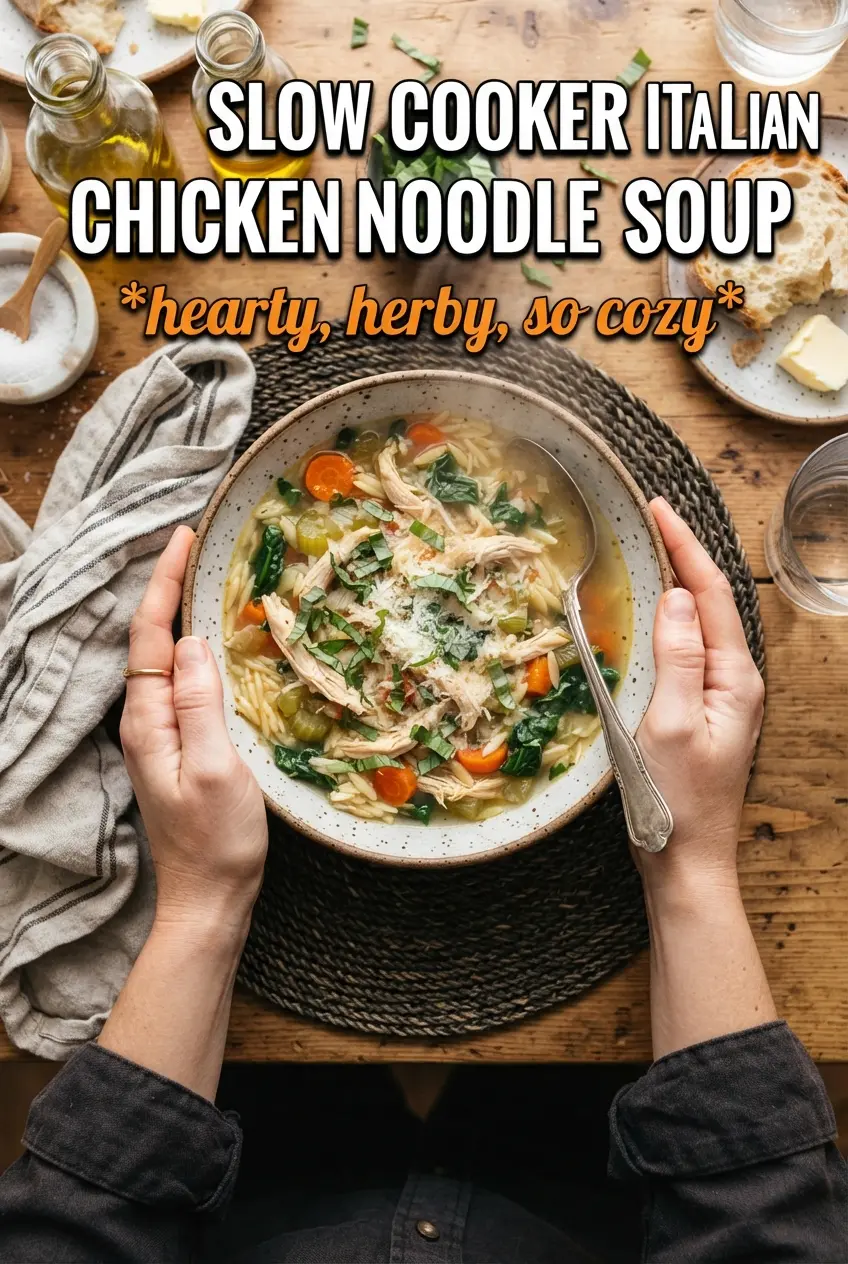
Slow Cooker Italian Chicken Noodle Soup
Ingredients
Equipment
Method
- Place chicken thighs, carrots, celery, onion, garlic, diced tomatoes, cannellini beans, chicken broth, Italian seasoning, dried basil, and red pepper flakes into the Crockpot.
- Cover and cook on Low for 6–8 hours (or High for 3–4 hours) until the chicken is tender and cooked through.
- Remove the chicken from the Crockpot and shred it, then return the shredded chicken to the pot.
- Add ditalini or egg noodles and cook on High for 20–30 minutes until the noodles are tender.
- Stir in fresh spinach and cook for 5 minutes until wilted.
- Season with salt and pepper to taste, then serve with parmesan and fresh basil on top.