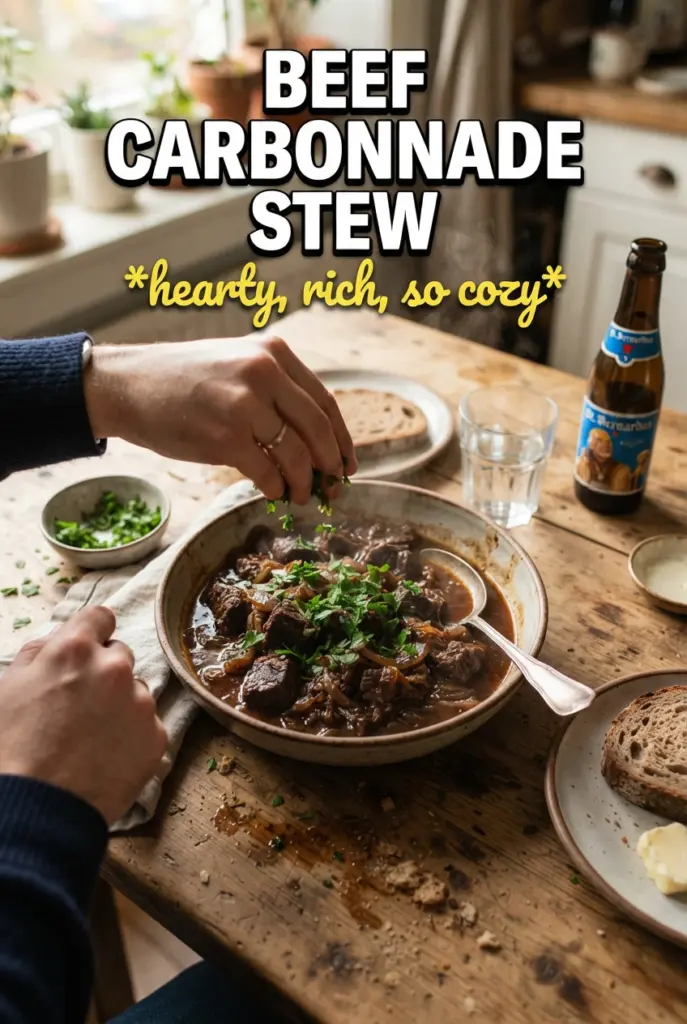
Beef carbonnade stew turns tough chuck into spoon-tender bites wrapped in a deep mahogany sauce that tastes like caramelized onions, dark ale, and slow patience. The broth ends up thick enough to cling to the beef, but it still pours beautifully over crusty bread, which is exactly what you want here.
What makes this version work is the layering. The onions cook all the way down before anything else goes in, so they bring sweetness instead of sharpness. Then the flour cooks in the pan before the ale and broth are added, which gives the stew body without that raw flour taste. The vinegar and Dijon keep the beer and beef from feeling heavy, and the brown sugar rounds out the edges without turning it sweet.
Below you’ll find the part that matters most: how to build the base so the stew tastes rich instead of flat, plus the swaps that still keep the Belgian character intact. The little details matter with a dish like this, and they’re what turn a good pot into one you’ll want to make again.
The onions melted down into the broth and the sauce came out glossy and rich, not thin at all. I let it braise the full two hours and the beef was fork-tender with that deep beer flavor everyone kept asking about.
Keep this beef carbonnade stew handy for the nights when you want deep oniony flavor, tender beef, and a broth that begs for crusty bread.
The Secret to Carbonnade Flavor Is in the Onions, Not Just the Beer
Carbonnade can taste thin if you rush the onions. They need time to soften, collapse, and take on real color before the liquid goes in. That slow cooking builds the sweetness that balances the ale, and it also keeps the finished stew from tasting sharp or bitter.
The other mistake is boiling the stew hard after the beef goes back in. Chuck wants a gentle braise, not a rolling boil. If the pot bubbles aggressively, the meat tightens up and the sauce can turn muddy. Low heat gives the connective tissue time to break down and the onions time to melt into the broth.
- Beef chuck — This is the right cut because it has enough fat and connective tissue to turn tender after a long braise. If you use a leaner cut, the meat can dry out before the sauce has time to deepen.
- Dark Belgian ale or stout — This is where the stew gets its malted backbone. A stout works if you can’t find Belgian ale, but pick one that isn’t heavily bitter or the stew can turn harsh.
- Onions — Don’t rush them. The long cook time coaxes out sweetness and gives the sauce its body, so sliced onions are better here than diced ones, which can disappear too fast.
- Dijon mustard and red wine vinegar — These cut through the richness and keep the stew from feeling flat. They don’t make it tangy in the front; they just sharpen the edges so the beef and beer taste fuller.
What Each Ingredient Is Actually Doing in This Recipe

- Primary ingredient (the star) — Quality matters most. Choose the best you can find.
- Cooking medium (oil, butter, or broth) — This carries flavors and prevents dryness.
- Seasonings (salt, pepper, spices, herbs) — Layer flavors so nothing overpowers. Build depth gradually.
- Aromatics (garlic, onion, herbs) — Cook with fat to bloom flavors. Become the foundation.
- Supporting ingredients — Complement the main ingredient without overpowering it.
- Sauce or liquid (if applicable) — Brings flavors together. Balance richness with acid.
- Acid (lemon, vinegar, wine, or other) — Brightens and prevents flat-tasting results.
- Final finish (garnish, glaze, or sauce) — Prevents one-dimensional taste and adds visual appeal.
Building the Pot So the Beef Stays Tender
Brown the beef first, and brown it hard
Season the beef well, then sear it in batches in hot oil until you get a deep brown crust on several sides. If the pieces crowd the pan, they’ll steam instead of sear, and that browned flavor is one of the main reasons the stew tastes rich. Pull the beef out as soon as the exterior is crusted; it doesn’t need to be cooked through at this stage.
Cook the onions until they collapse
Add the sliced onions to the same pot and cook them over medium heat until they’re very soft, golden, and reduced in volume. This usually takes 20 to 25 minutes, and the pan will look crowded at first before the onions slowly melt down. If they start sticking, a splash of water loosens the browned bits without washing away flavor.
Let the flour cook before the liquid goes in
Stir in the garlic, then sprinkle over the flour and cook it for about a minute. That short toast keeps the stew from tasting pasty later. When you add the beer, scrape the bottom of the pot thoroughly so all those browned bits dissolve into the sauce instead of burning onto the pan.
Braise gently until the beef yields
Once the broth, tomato paste, vinegar, brown sugar, mustard, thyme, bay leaves, and beef are in the pot, bring everything just to a boil and then lower the heat right away. The surface should barely tremble. After about 2 hours, the beef should give easily when pressed with a spoon and the sauce should look glossy, not greasy.
What to Change When You Need a Different Finish
For a gluten-free version
Skip the all-purpose flour and thicken the stew by simmering it uncovered during the last 20 to 30 minutes. You can also whisk a small spoonful of cornstarch with cold water and stir it in at the end if you want a slightly thicker sauce. The texture will be a touch lighter, but the flavor stays right.
For a deeper, darker sauce
Use a stout instead of a lighter Belgian ale and let the onions go a shade farther before adding the garlic. That gives you a more roasted, almost cocoa-like edge. Just avoid an aggressively bitter stout, because the bitterness will hang around after the long braise.
For a lower-alcohol pot
Use half beer and half extra beef broth. You’ll lose a little of the ale’s malty depth, but the stew still comes out rich because the onions, tomato paste, and long braise carry the flavor. This is the easiest adjustment if you want the same texture with a milder finish.
For make-ahead meals
This stew gets even better after a night in the fridge because the onions and broth settle into each other. Reheat it slowly and add a splash of broth if the sauce thickens too much. The beef stays tender as long as you warm it gently instead of boiling it again.
Storage and Reheating
- Refrigerator: Store for up to 4 days. The sauce thickens as it chills, and the flavor deepens overnight.
- Freezer: Freezes well for up to 3 months. Cool it completely, portion it into airtight containers, and leave a little space for expansion.
- Reheating: Warm it slowly on the stovetop over low heat, stirring now and then and adding a splash of broth if needed. Don’t boil it hard or the beef can tighten up.
Questions I Get Asked About This Recipe
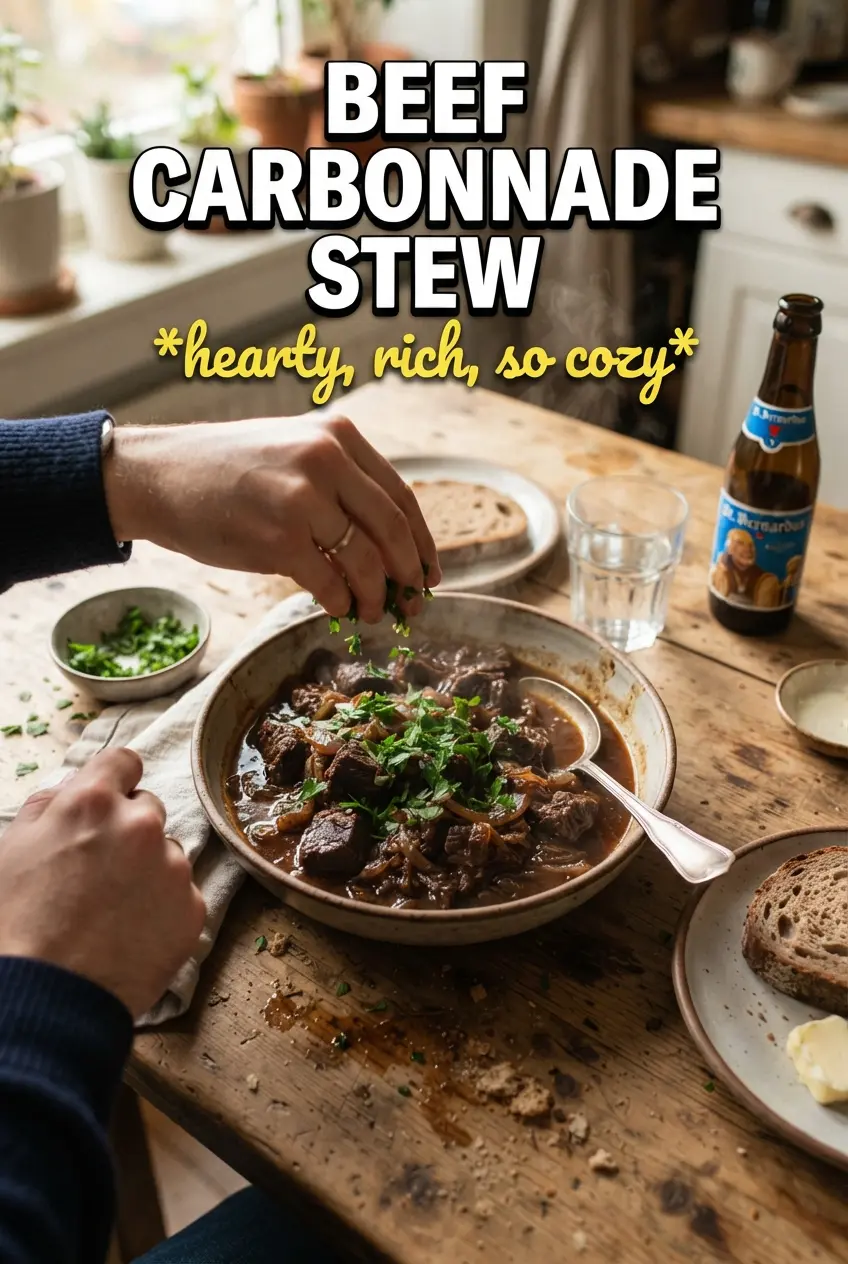
Beef Carbonnade Stew
Ingredients
Equipment
Method
- Season beef chuck cubes with salt and pepper. Heat vegetable oil in a Dutch oven over high heat and sear the beef until deeply browned, about 6-8 minutes total, turning as needed for even color.
- Remove the browned beef to a plate. Leave any browned bits in the Dutch oven for flavor as you move to the onions.
- Cook the thinly sliced onions in the Dutch oven over medium heat, stirring, until very soft and golden, 20-25 minutes. Keep the heat at medium so the onions caramelize without burning.
- Add minced garlic and cook for 1 minute. Stir constantly until fragrant and lightly softened.
- Whisk in all-purpose flour and cook for 1 minute. This step should look slightly paste-like and smell toasty.
- Pour in the dark Belgian ale or stout beer and deglaze, scraping up all browned bits from the bottom of the pot. Let the liquid bubble for 1-2 minutes to start thickening.
- Add beef broth, tomato paste, red wine vinegar, brown sugar, Dijon mustard, fresh thyme, bay leaves, and the beef back to the Dutch oven. Stir to combine so the beef is mostly submerged.
- Bring the stew to a boil, then reduce heat to maintain a gentle simmer. Cover and braise for 2 hours, stirring once or twice, until the beef is very tender and the sauce is thick.
- Remove bay leaves and thyme from the stew. Taste and adjust seasoning with salt and black pepper if needed.
- Serve the beef carbonnade hot with crusty bread for dipping. Spoon the thick, mahogany broth over the beef for maximum bread-friendly sauce.