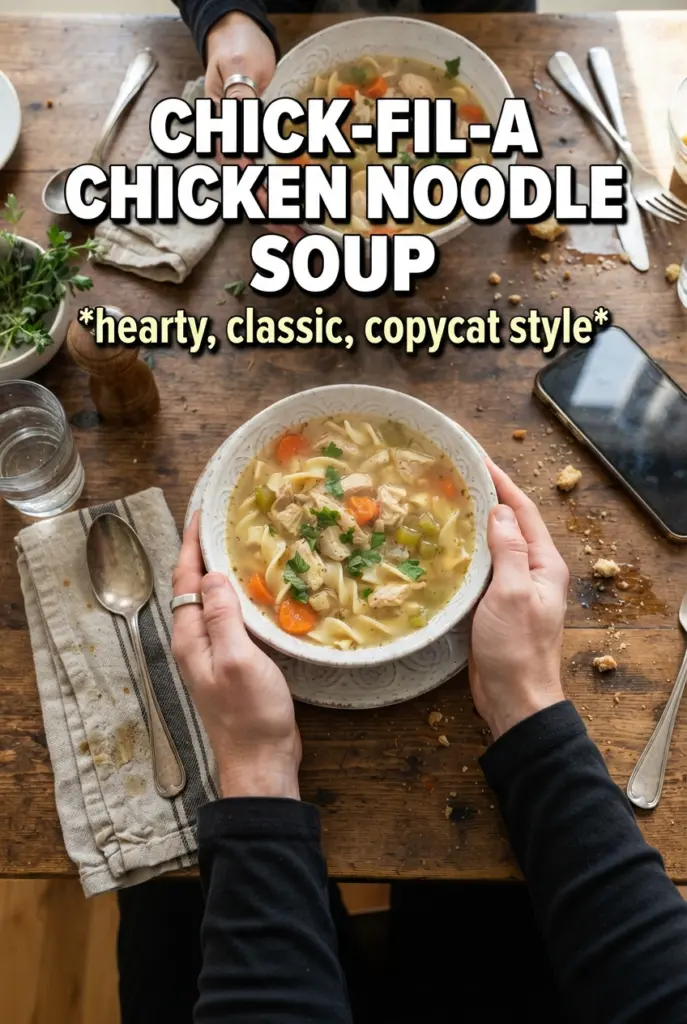
Clear broth, tender noodles, and little bites of chicken and vegetables are what make this soup so satisfying. It tastes light at first spoonful, then quietly builds into something comforting enough to eat for dinner and lunch the next day. The best part is that it stays simple on purpose. Nothing muddies the broth, and the chicken is cut into neat little dice so every bite feels like the same spoonful you’d get from the restaurant version.
The trick is keeping the broth clean and the vegetables just tender before the noodles go in. If the carrots and celery cook too long, they lose that pleasant little bit of snap that makes the soup feel fresh instead of soft all the way through. Finely diced chicken matters here too. Shredded chicken can take over the texture and make the soup feel more rustic than the fast-food-style version people are usually after.
Below, I’ll walk through the small details that make this copycat soup taste right, plus the swaps that still keep the broth clear and comforting. There’s also a note on storing it without turning the noodles into mush.
The broth stayed clear and the noodles didn’t turn mushy, which is exactly what I wanted. Dicing the chicken small made every spoonful taste like the restaurant soup my kids ask for.
Pin this Chick-fil-A chicken noodle soup for the days when you want a clear, cozy broth with tender noodles and that finely diced chicken texture.
The Small Details That Keep This Soup Clear, Not Cloudy
Chicken noodle soup sounds simple, but the texture falls apart fast if you rush the pot. A hard boil after the noodles go in can make the broth look starchy and dull. A long simmer after the vegetables are already tender does the same thing, and the carrots lose their shape before the soup even reaches the bowl. Keep the heat at a steady simmer once the broth is seasoned and the noodles are cooking. That’s what keeps the liquid looking clean and the vegetables intact.
The other mistake is using chicken that’s too stringy or too large. Big shreds drift through the bowl and change the whole feel of the soup. Small, even dice blend into the broth better and give you the same bite every time. That’s a big part of why this copycat version tastes close to the original instead of just reading like any basic chicken noodle soup.
What Each Ingredient Is Actually Doing in This Bowl
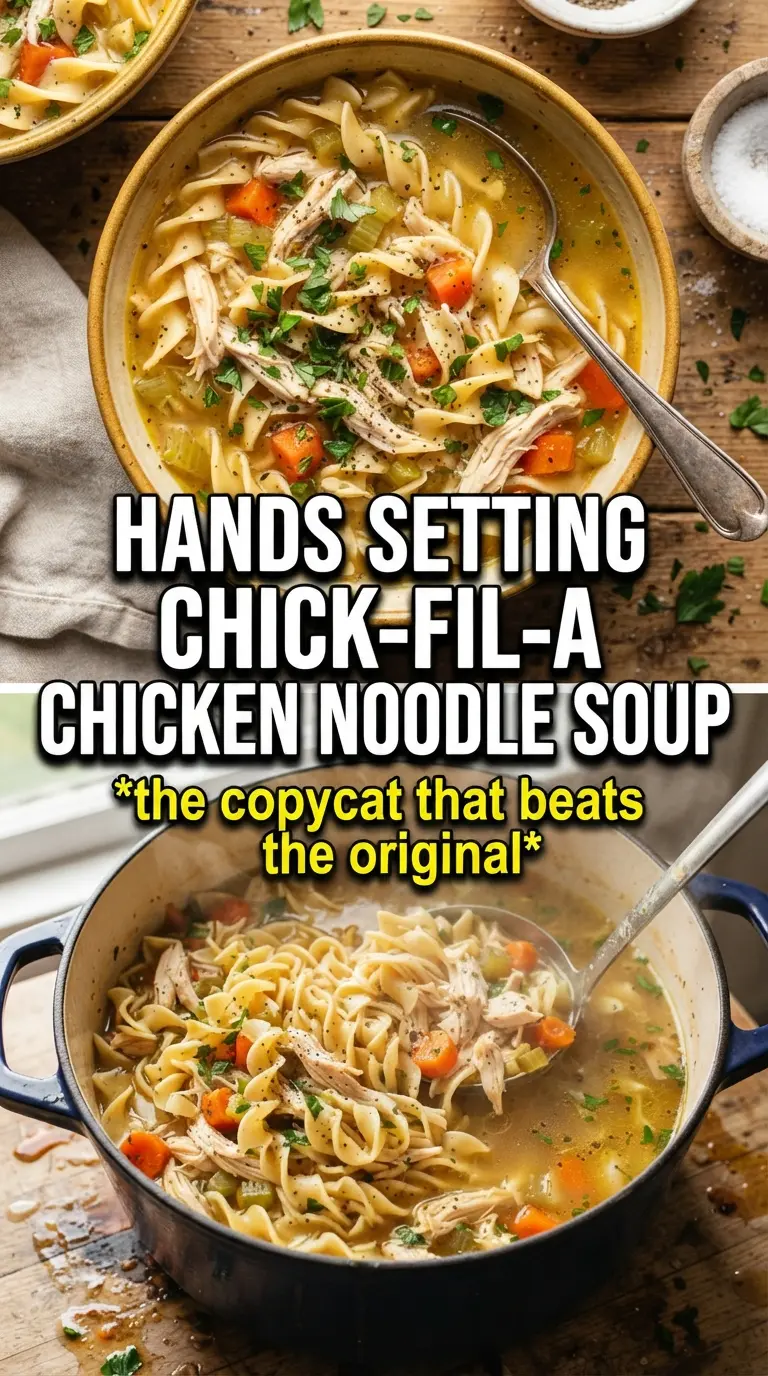
- Cooked chicken breast — Use chicken that’s already cooked and dice it finely instead of shredding it. Small cubes hold their shape in the broth and make the soup eat more like the restaurant version. Rotisserie chicken works if you want to save time, but keep the pieces neat and small.
- Carrots, celery, and onion — This trio builds the base of the soup. Dice them small so they soften evenly in about 10 minutes without turning mushy. If the pieces are too big, the soup feels chunky in a way that doesn’t match the clean style of this recipe.
- Chicken broth plus water — The broth brings the savory backbone, and the water keeps it from tasting too heavy or salty. If your broth is low-sodium, you’ll have more room to season at the end. If it’s regular broth, wait until the final taste to add extra salt.
- Egg noodles or small pasta — Egg noodles give the closest texture, but small pasta works if that’s what you have. Cook them just until tender because they keep softening in the hot broth. If you know you’ll have leftovers, cook them a little shy of done or keep them separate.
- Dried parsley and thyme — These herbs add a gentle savory note without making the soup taste like a herb-heavy stew. Dried works fine here because the broth has enough simmer time to pull out the flavor. Fresh herbs are fine too, but use a little more and add them near the end.
Building the Broth in the Right Order
Softening the Vegetables First
Start by bringing the broth and water to a boil, then add the carrots, celery, onion, garlic, parsley, thyme, and garlic powder. Let the pot settle into a simmer and cook until the vegetables are just tender, about 10 minutes. You want the carrots to keep their shape and the celery to lose its raw edge, not collapse into the broth. If the simmer gets too aggressive, the broth can turn cloudy and the vegetables soften unevenly.
Adding the Chicken and Corn at the End of the Base
Stir in the diced chicken and corn and simmer for about 5 minutes. This warms the chicken through without overcooking it, and the corn adds a little sweetness that keeps the soup from tasting flat. If you add chicken too early, it can dry out and pick up a stringy texture. Keep the heat gentle here so the broth stays clear.
Cooking the Noodles Without Overdoing Them
Add the egg noodles last and cook just until tender, usually 6 to 8 minutes. Stir now and then so they don’t clump at the bottom of the pot, but don’t keep the soup at a hard boil. That’s how noodles break apart and release starch into the broth. Taste at the end and season with salt and pepper only after the noodles are done, since they absorb seasoning as they cook.
What to Change When You Need a Different Version
Gluten-Free Without Losing the Comfort
Use a gluten-free egg noodle or another small gluten-free pasta. Cook it carefully and lean toward the lower end of the timing so it doesn’t fall apart in the broth. The soup still tastes familiar, but the noodles are a little more delicate, so leftovers soften faster.
Use Rotisserie Chicken for a Faster Lunch
Rotisserie chicken works well if you dice it small and keep the pieces even. It brings a little more roasted flavor, which is nice, but it also makes the soup slightly richer than the straight-up copycat version. Pull off any skin before adding it so the broth stays clean.
Dairy-Free and Naturally Light
This soup is already dairy-free as written, which is part of why the broth tastes so clean. If you want it a touch richer without dairy, simmer the broth with a parmesan rind and remove it before serving. That adds depth without changing the clear, simple style of the soup.
How to Keep Leftover Noodles from Going Soft
If you plan on leftovers, cook the noodles separately and add them to each bowl when serving. Stored in the soup, they keep absorbing broth and turn bloated by the next day. This small change keeps the texture much closer to fresh.
Storage and Reheating
- Refrigerator: Store in an airtight container for up to 4 days. The noodles will keep soaking up broth, so the soup thickens a bit as it sits.
- Freezer: Freeze the broth, vegetables, and chicken without the noodles for the best texture. Noodles freeze poorly here and usually turn soft and bloated after reheating.
- Reheating: Warm gently on the stove over medium-low heat until steaming. If the soup was stored with noodles, add a splash of broth or water before reheating so it doesn’t tighten up too much.
Answers to the Questions Worth Asking
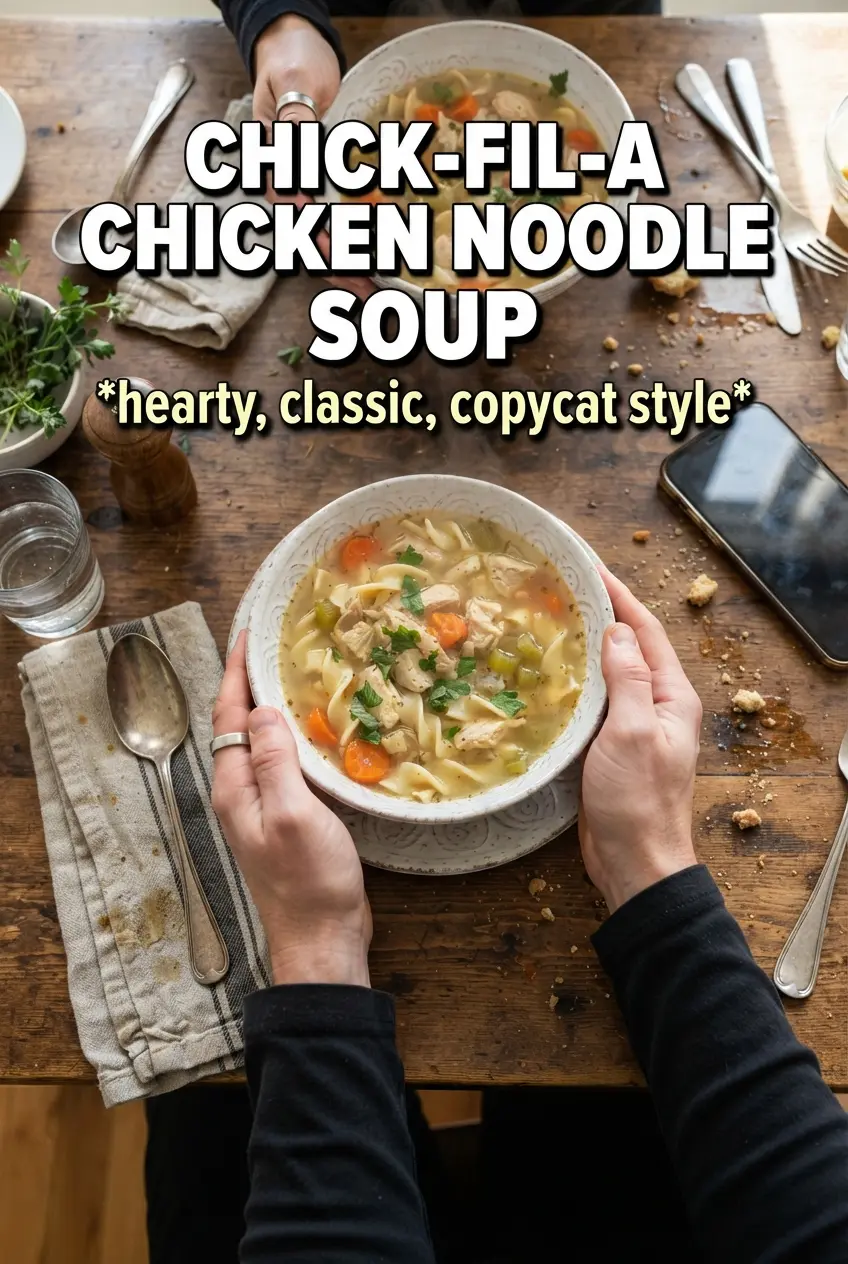
Chick-Fil-A Chicken Noodle Soup (Copycat)
Ingredients
Equipment
Method
- Bring chicken broth and water to a boil in a large pot. Let it bubble actively for a full moment so the vegetables cook evenly.
- Add carrots, celery, onion, garlic, dried parsley, dried thyme, and garlic powder, then reduce to a simmer. Simmer for 10 minutes until the vegetables are just tender, with a steady gentle bubble.
- Stir in the finely diced chicken and corn kernels, then simmer for 5 minutes. Watch for the broth to stay clear and gently thicken while the chicken heats through.
- Add egg noodles (or small pasta) and simmer for 6–8 minutes until tender. Stir occasionally so the noodles don’t stick, and cook just until soft but not mushy.
- Season with salt and pepper to taste. Taste for a clean broth flavor and adjust at the end so the noodles stay perfectly textured.