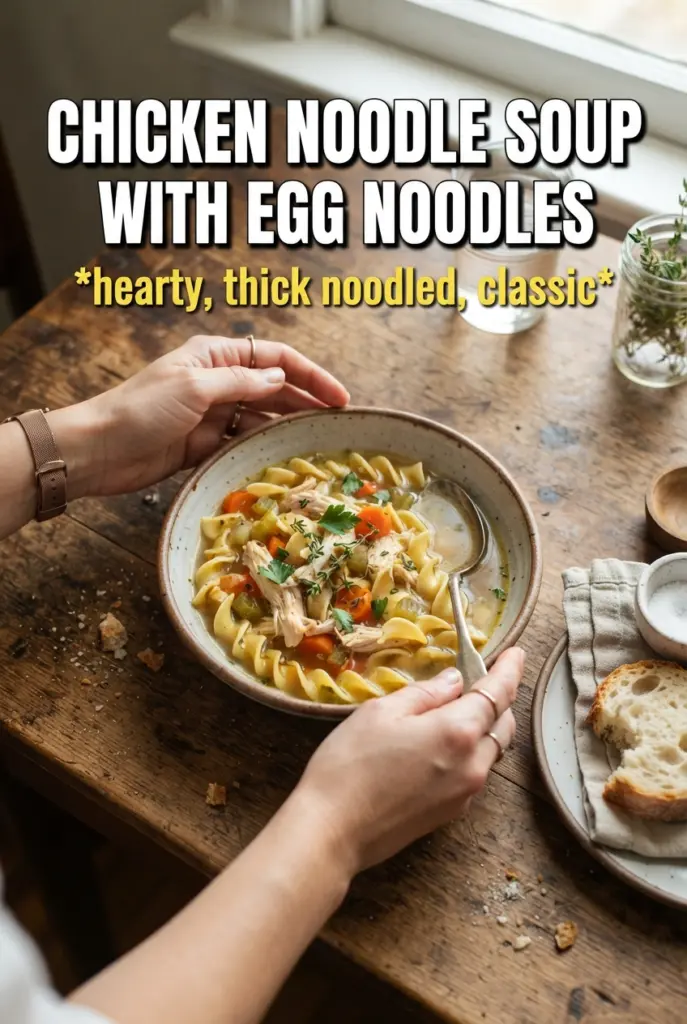
Chicken noodle soup with egg noodles hits that sweet spot between soothing and satisfying. The broth stays clear and savory, the vegetables turn tender without falling apart, and the wide egg noodles give each spoonful a little more body than standard pasta ever could. When the chicken is shredded back into the pot and the dill goes in at the end, the whole bowl tastes fresh instead of heavy.
What makes this version work is timing. The chicken cooks right in the broth so the soup picks up more flavor, but the noodles go in only after the chicken is done and shredded. That keeps them from bloating and stealing too much liquid from the pot. A little garlic powder adds depth without muddying the broth, and fresh dill at the end wakes everything up.
Below, I’ve laid out the little things that matter most: when to pull the chicken so it stays juicy, how to keep the noodles from going soft, and what to do if you want to stretch the soup for leftovers.
The broth was clear, the chicken shredded beautifully, and the egg noodles stayed tender instead of turning to mush. I added the dill at the end like suggested and it made the whole pot taste brighter.
Save this chicken noodle soup with egg noodles for the kind of dinner that tastes homemade from the first spoonful.
The Broth Stays Clear When the Noodles Wait Their Turn
Most chicken noodle soup problems start when the noodles go in too early. Egg noodles drink up broth fast, and if they sit in the pot while the chicken cooks, you end up with soft noodles and a soup that’s gone oddly thick before it ever reaches the bowl. Cooking the chicken first, then adding the noodles at the end, keeps the texture where it should be: tender noodles, not swollen ones.
Another thing that matters here is the simmer. A hard boil can pull the chicken apart into stringy pieces and make the carrots break down before the broth has a chance to taste balanced. A gentle simmer gives you juicy chicken and vegetables that still have some shape. If the broth looks cloudy, that usually means it boiled too aggressively.
What Each Ingredient Is Actually Doing in This Soup
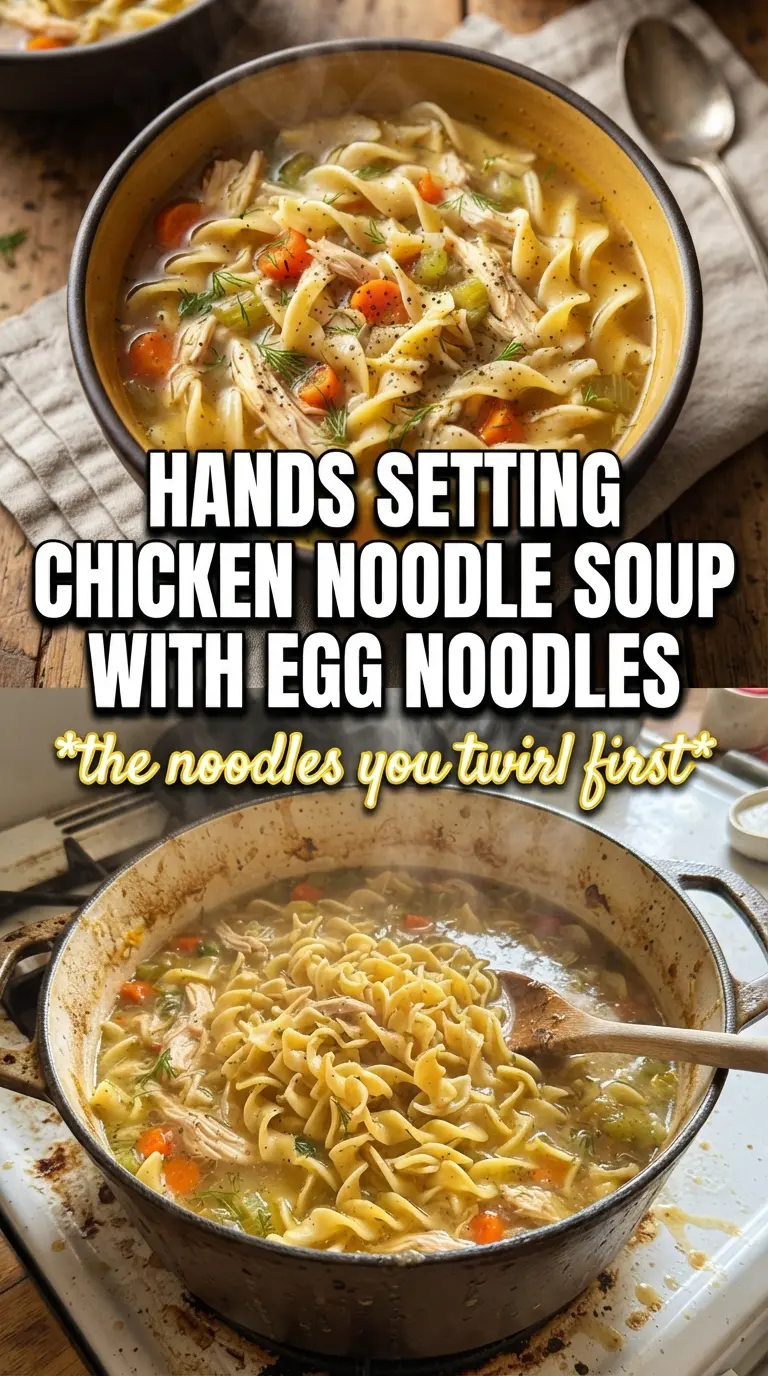
- Chicken breast — It gives you lean, shreddable meat that cooks directly in the broth. If you want a little more richness, boneless chicken thighs work too, and they stay even juicier during the simmer.
- Chicken broth — This is the backbone of the soup, so use one you’d actually taste on its own. A low-sodium broth is the safest choice because you can season the finished pot exactly where you want it.
- Wide egg noodles — They hold up better than thinner noodles and give the soup that classic comfort-food feel. Don’t swap in small pasta shapes unless you want a soup that eats more like a stew.
- Fresh dill — This is the ingredient that keeps the soup from tasting flat. Dried dill won’t give the same lift, so add fresh dill at the end if you can.
- Carrots, celery, onion, and garlic — These build the base flavor before the broth goes in. Dice the onion and slice the vegetables evenly so they soften at the same pace.
- Dried thyme and dried parsley — They round out the broth with that classic chicken soup flavor. If your thyme is old and dusty, replace it; stale dried herbs disappear in a broth this simple.
The Order That Keeps the Chicken Juicy and the Noodles Tender
Softening the Vegetables First
Start by heating the olive oil and cooking the onion, carrots, and celery until the onion turns translucent and the carrots begin to lose their raw edge. That first 5 minutes builds the savory base of the soup. If you rush this step, the broth can taste thin even after everything simmers together.
Simmering the Chicken in the Broth
Add the garlic for just a minute, then pour in the broth and seasonings before nestling in the chicken. Bring the pot to a boil only long enough to get things moving, then reduce it to a steady simmer. The chicken is ready when it reaches the point where it shreds easily with two forks and no longer looks pink in the center.
Shredding Before the Noodles Go In
Lift the chicken out and shred it while it’s still hot enough to pull apart cleanly. Return it to the pot before adding the noodles so the meat can finish absorbing flavor from the broth. If you leave the chicken in whole while the noodles cook, it tends to dry out before the soup is done.
Cooking the Egg Noodles at the End
Bring the soup back to a boil, add the noodles, and cook just until they’re tender but still have a little chew. Wide egg noodles can go from perfect to swollen fast, so start tasting at the 7-minute mark. Turn off the heat as soon as they’re done and stir in the dill and plenty of salt and pepper.
How to Adapt This for a Bigger Batch or a Different Pantry
Use chicken thighs for a richer bowl
Boneless, skinless thighs work well here and give the soup a deeper, slightly richer taste. They stay moist a little longer than breast meat, which is useful if the pot sits on the stove while you get the table ready.
Make it gluten-free with the right noodle swap
Use a gluten-free egg noodle or a sturdy rice noodle that can handle simmering without breaking apart. Add it near the very end and start checking early, because gluten-free noodles can go soft faster than the wheat version.
Add extra vegetables without throwing off the broth
Mushrooms, peas, or chopped spinach can all go in, but add them at the right time. Mushrooms need a little extra simmering with the aromatics, while peas and spinach should go in during the last few minutes so they keep their color and texture.
Storage and Reheating
- Refrigerator: Store for up to 4 days. The noodles will keep soaking up broth, so expect the soup to thicken overnight.
- Freezer: Freeze the soup without the noodles for the best texture. Egg noodles turn soft after freezing, so cook fresh noodles when you reheat if you want the best bowl.
- Reheating: Warm it gently on the stove over medium-low heat. If it’s gotten thick, add a splash of broth or water before serving, and don’t boil it hard or the chicken can dry out.
Answers to the Questions Worth Asking
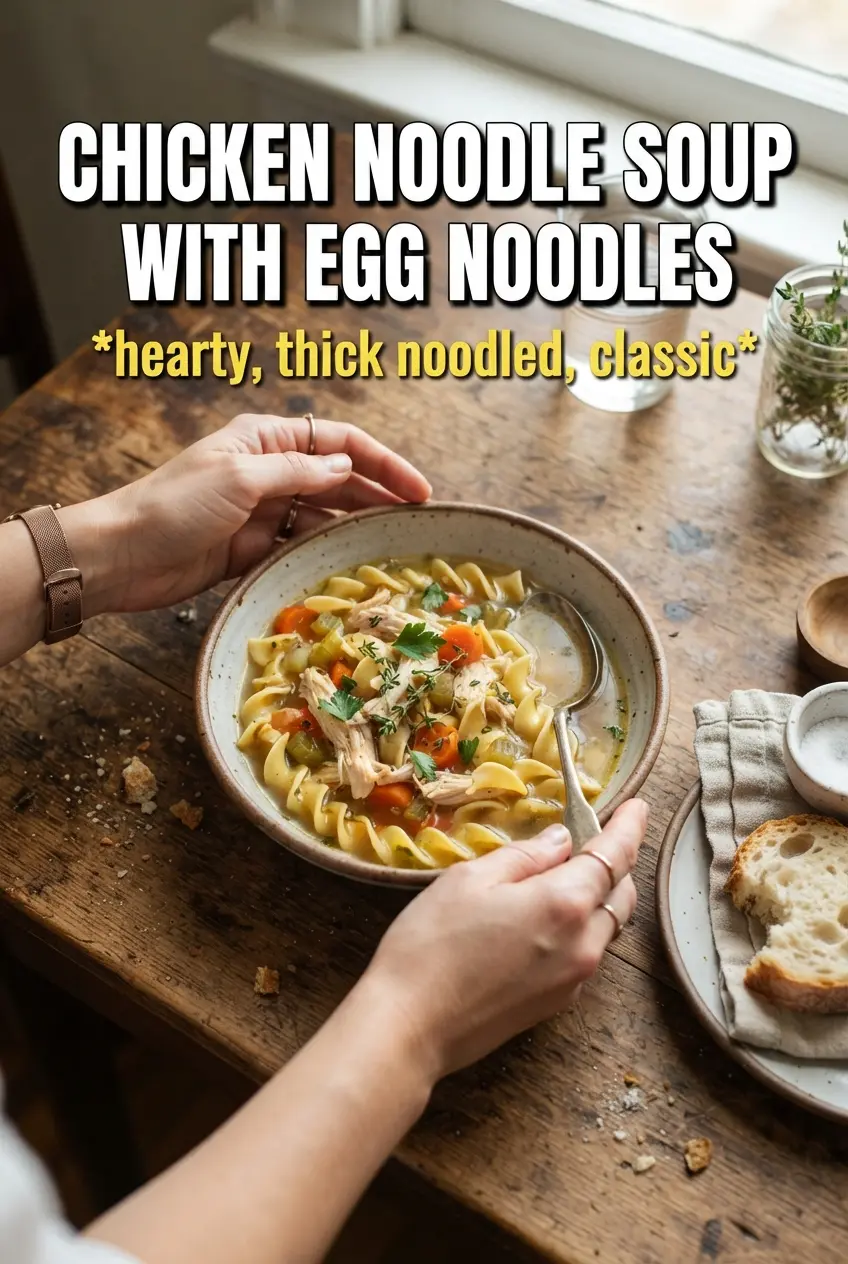
Chicken Noodle Soup With Egg Noodles
Ingredients
Equipment
Method
- Heat the olive oil in a large pot over medium heat, then add the onion, carrots, and celery. Sauté for 5 minutes, stirring now and then, until the vegetables start to soften and smell fragrant.
- Stir in the garlic and cook for 1 minute. Cook just until fragrant, with no browning, for a clean garlic flavor.
- Add the chicken broth, dried thyme, dried parsley, garlic powder, and the chicken breast to the pot. Bring the mixture to a boil over high heat, then immediately reduce to a simmer.
- Simmer for 18-20 minutes, until the chicken is cooked through. You should be able to cut into the thickest part with no pink remaining.
- Remove the chicken from the pot and shred it with a fork. Return the shredded chicken to the soup and stir to distribute evenly.
- Bring the soup back to a boil. Add the wide egg noodles and stir so they don’t stick together.
- Cook the noodles for 7-8 minutes, until tender but not mushy. Watch for the noodles to soften while still holding their shape.
- Stir in the fresh dill and season generously with salt and pepper. Taste and adjust seasoning so the broth pops and the dill is clearly fresh.