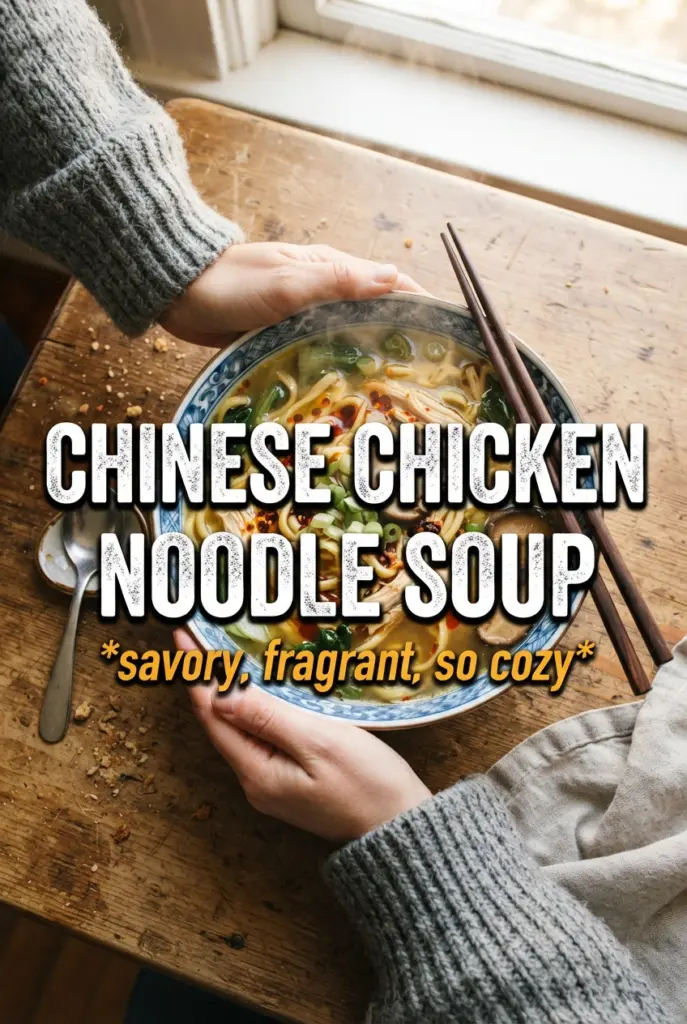
Clear, savory broth, tender chicken, and slippery noodles make Chinese chicken noodle soup the kind of bowl that fixes a long day fast. The broth stays light but still tastes full because the ginger, garlic, soy sauce, and sesame oil get a chance to simmer together before the chicken goes in. That extra bit of attention is what keeps this from tasting flat or one-note.
Thinly sliced chicken breast cooks quickly and stays tender instead of turning stringy. The noodles are cooked separately so they don’t drink up all the broth or break apart in the pot, and the bok choy goes in at the end so it keeps a little bite. White pepper adds that quiet, peppery warmth that belongs in this kind of soup more than black pepper does.
Below, I’ve laid out the part that matters most: how to keep the broth clean and balanced, which ingredient swaps actually work, and what to do if you want to make this ahead without the noodles going soft.
The broth came out clear and really flavorful, and the chicken stayed tender even after simmering. I loved that the noodles were cooked separately because the leftovers were still great the next day.
Keep this Chinese chicken noodle soup in your back pocket for a fast broth-and-noodles dinner that still tastes layered and fresh.
The Broth Stays Clear When You Don’t Boil the Chicken
The biggest mistake with chicken noodle soup is rushing the protein. A hard boil pulls the chicken fibers tight, clouds the broth, and leaves you with a stringy texture that feels tired instead of tender. A steady simmer keeps the broth clean and gives the chicken just enough heat to cook through without turning chalky.
That also gives the ginger and garlic time to steep into the broth before the noodles and vegetables show up. The soup tastes better when the base has a few minutes to settle into itself. You’re building a light broth with enough body to carry noodles, not trying to make a heavy stock pot dinner.
- Thin-sliced chicken breast cooks fast and stays tender. If the pieces are thick, they’ll need longer and the broth will overwork while you wait.
- White pepper gives the soup its classic warmth. Black pepper works in a pinch, but the flavor is sharper and more obvious.
- Sesame oil should be added in a modest amount. It should smell nutty and round, not take over the bowl.
What Each Ingredient Is Actually Doing in This Bowl
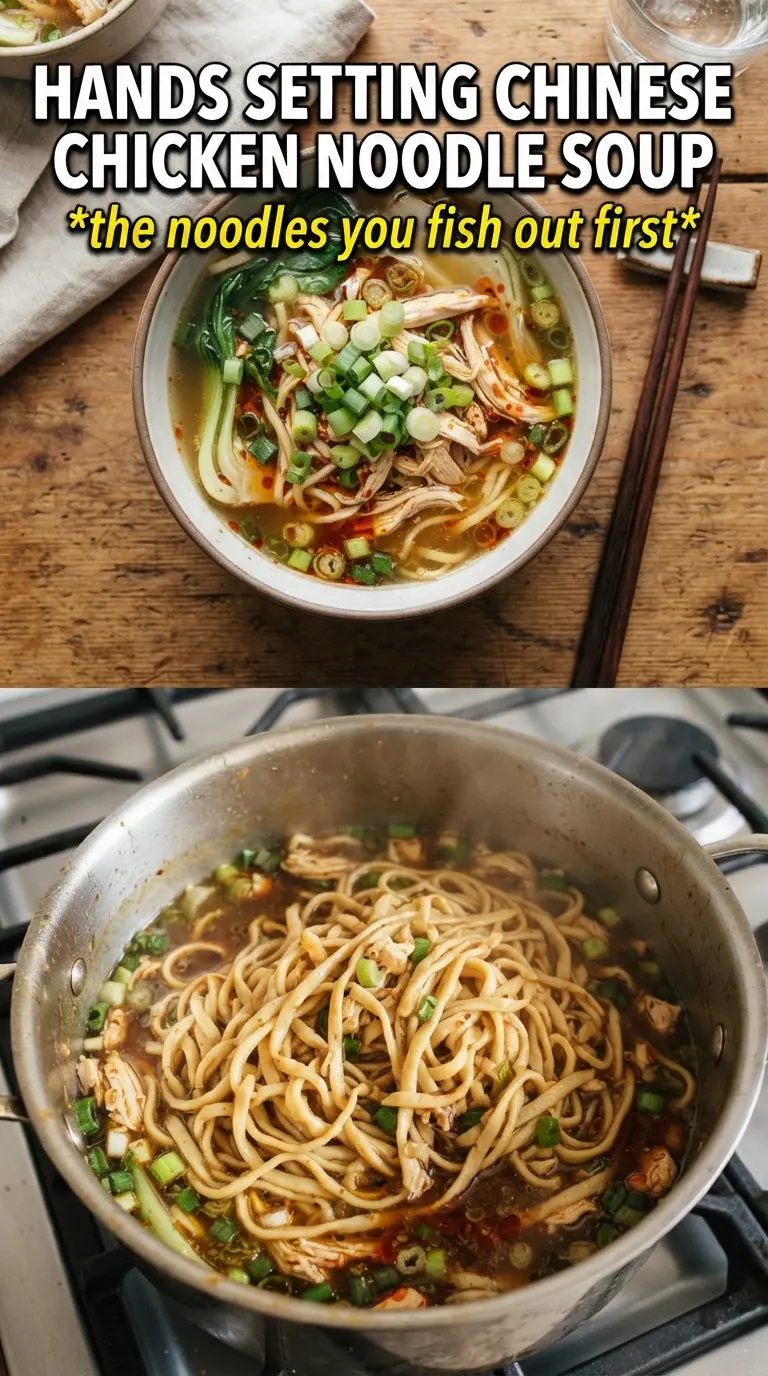
- Chicken broth is the base, so use one you’d actually sip. If yours tastes thin, a little extra soy sauce and a short simmer with ginger and garlic will help, but it can’t fully replace a good broth.
- Chinese wheat noodles or rice noodles keep the soup light. Wheat noodles give a little chew; rice noodles are softer and naturally gluten-free, but they need careful timing so they don’t turn gummy.
- Bok choy and shiitakes bring the bowl to life. Bok choy adds freshness and crunch at the end, while shiitakes give a deeper, almost brothy mushroom note that regular button mushrooms won’t match as well.
- Rice vinegar brightens the broth just enough to keep it from tasting heavy. Don’t skip it unless you plan to add a squeeze of something equally sharp at the end.
- Cilantro and chili oil are the finish, not decoration. They add lift and heat after the soup is in the bowl, which keeps the herbs clean and the chili oil fragrant.
The 20 Minutes That Actually Matter
Steeping the Broth Base
Bring the broth to a gentle simmer, then add the garlic and ginger and let them cook for about 5 minutes. You want the broth moving softly, not bubbling hard enough to throw off the aromatics. If the garlic starts to look browned or the broth turns cloudy fast, the heat is too high and the flavor will skew harsh.
Seasoning Before the Chicken Goes In
Stir in the soy sauce, sesame oil, and rice vinegar before the chicken. That lets the broth taste balanced early, so you can adjust the salt later instead of trying to fix a flat bowl at the end. Taste now. The broth should be savory with a small edge of brightness and a soft sesame note.
Poaching the Chicken and Mushrooms
Add the sliced chicken and shiitake mushrooms and simmer until the chicken is cooked through, about 10 to 12 minutes. The chicken should turn opaque and springy, not tight and dry. If you cut the pieces too thick, they’ll need longer and the broth will start tasting cooked-down instead of fresh.
Keeping the Noodles Separate
Cook the noodles in their own pot and drain them well. This is the difference between a bowl of soup with structure and a bowl that turns starchy and thick before you even sit down. Divide the noodles into bowls first, then ladle the broth on top so each serving stays clear and the noodles hold their shape.
Finishing with Greens and Heat
Add the bok choy to the broth for the last 3 minutes, just until the stems are tender and the leaves wilt. Ladle the soup over the noodles, then season with white pepper and salt. Finish with green onions, cilantro, and a small drizzle of chili oil. That last bit of heat wakes everything up, especially if the broth tastes gentle after simmering.
Three Ways to Make This Soup Fit What You Have
Make It Gluten-Free
Use rice noodles and check your soy sauce carefully. Tamari works well here and keeps the broth just as savory, with a slightly rounder finish.
Swap in Chicken Thighs for a Richer Bowl
Boneless thighs give you a deeper, silkier texture and stay juicy even if they simmer a little longer. They’re a good move if you want more richness without changing the rest of the soup.
Add More Vegetables Without Weighing It Down
Snow peas, sliced carrots, or baby spinach can go in near the end. Keep them in the green-onion-and-bok-choy timing range so the soup stays bright instead of turning into a long-cooked stew.
Storage and Reheating
- Refrigerator: Store the broth, chicken, and vegetables for up to 4 days. The noodles soften as they sit, so keep them separate if you can.
- Freezer: The broth and chicken freeze well for up to 3 months, but the noodles and bok choy don’t hold up. Freeze the soup base without them, then add fresh noodles when reheating.
- Reheating: Warm the soup gently on the stove over medium-low heat until steaming, not boiling. If you boil it hard, the chicken tightens up and the broth can lose its clean taste.
Answers to the Questions Worth Asking
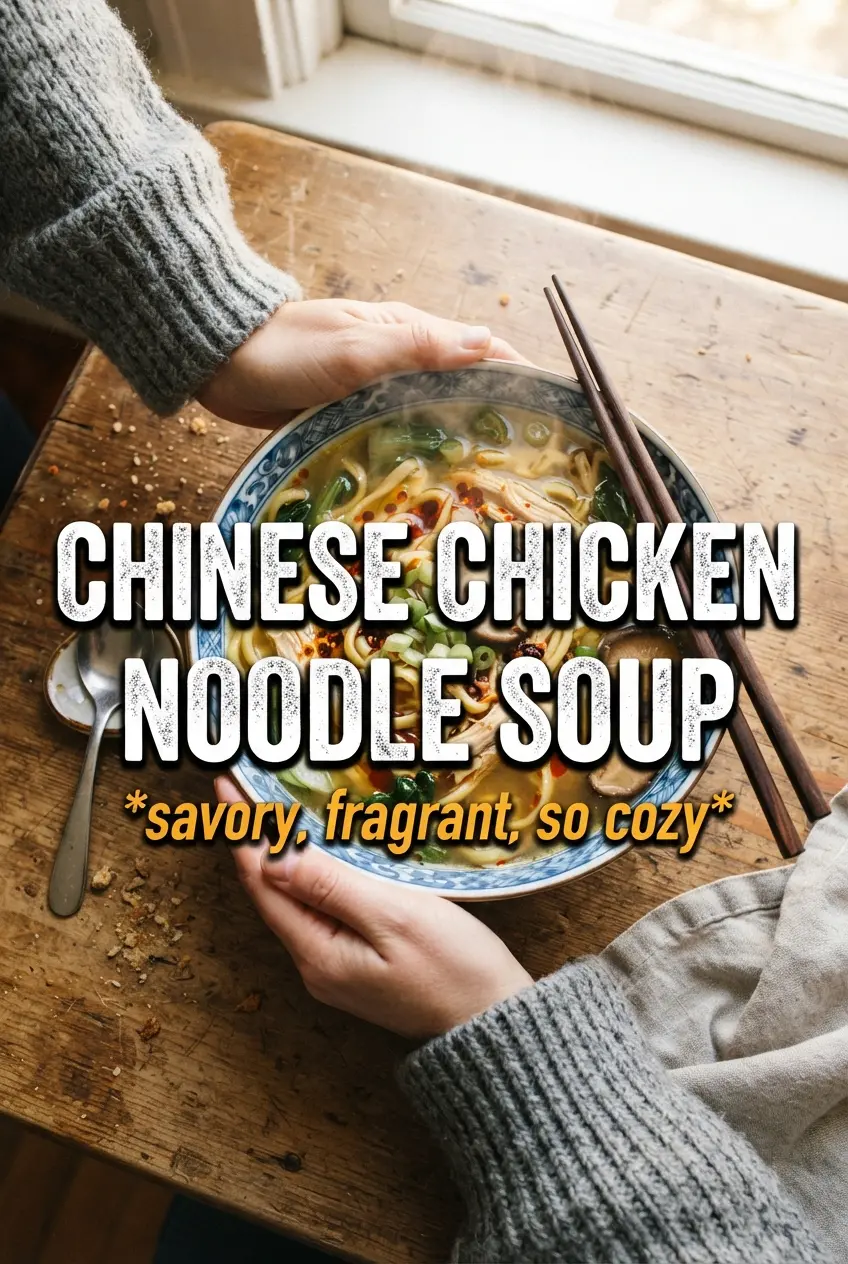
Chinese Chicken Noodle Soup
Ingredients
Equipment
Method
- Bring the chicken broth to a simmer in a large pot over medium-high heat, then stir in the minced garlic and grated ginger. Simmer for 5 minutes so the broth turns lightly fragrant.
- Stir in the soy sauce, sesame oil, and rice vinegar, then taste and adjust to your preference. Keep the broth at a gentle simmer while you prep the rest.
- Add the thinly sliced chicken and sliced shiitake mushrooms to the simmering broth. Simmer for 10-12 minutes until the chicken is cooked through.
- Add the chopped bok choy to the pot and cook for 3 minutes, until wilted but still bright green. Keep the broth at a gentle simmer during this step.
- Cook the thin Chinese wheat noodles or rice noodles separately according to the package directions. Drain, then divide into serving bowls.
- Ladle the hot soup over the noodles in each bowl. Season each bowl with white pepper and salt to taste.
- Finish with green onions, cilantro, and a drizzle of chili oil. Serve immediately while the noodles are springy.