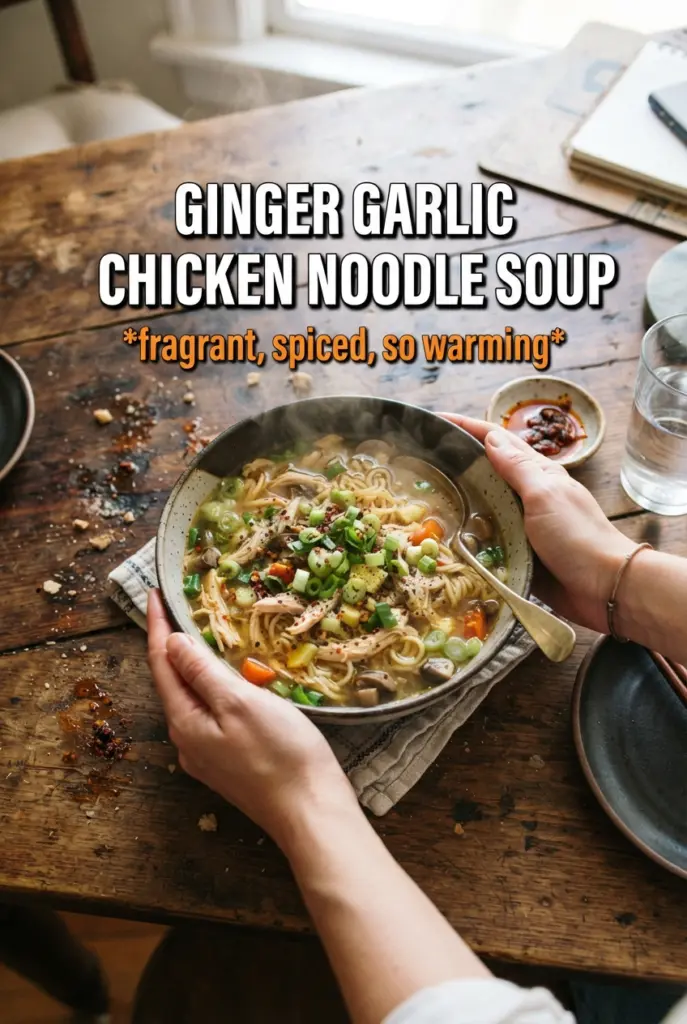
Clear, golden broth with ginger and garlic at the center gives this chicken noodle soup the kind of comfort that tastes fresh instead of heavy. The vegetables stay tender, the chicken turns silky and shred-able, and the noodles soak up just enough broth to feel satisfying without going mushy. It’s the bowl you want when you need something warm, fast, and genuinely restorative.
What makes this version work is the layering. Onion, carrot, and celery get a few minutes first so the broth doesn’t taste raw or flat. Then the garlic and ginger bloom in the pot before the stock goes in, which pulls their aroma into every spoonful. A small splash of rice vinegar at the end keeps the soup bright, and sesame oil adds the round, savory finish that makes the whole pot taste complete.
Below, I’ve included the small details that matter most: how to keep the noodles from overcooking, when to shred the chicken, and how to adjust the soup if you want it a little richer or a little lighter.
The ginger and garlic came through without overpowering the broth, and the noodles stayed just right because I added them at the very end. My husband asked if I could put this on the weekly rotation.
Save this ginger garlic chicken noodle soup for the nights when you want a clear, fragrant broth and tender noodles in one pot.
The Reason the Broth Stays Bright Instead of Muddy
Chicken noodle soup goes flat when everything is boiled at full force from the start. The broth gets cloudy, the vegetables lose their shape, and the chicken can turn stringy before the rest of the pot is ready. A steadier simmer keeps the soup clear and gives the aromatics time to do their work.
The other trap is adding the noodles too early. They keep cooking in the hot broth even after the heat is off, so they need to go in at the end and stay there just long enough to turn tender. If you want leftovers, undercook the noodles by a minute or two and stop the pot sooner. That keeps the texture from collapsing the next day.
What Each Ingredient Is Actually Doing in This Soup
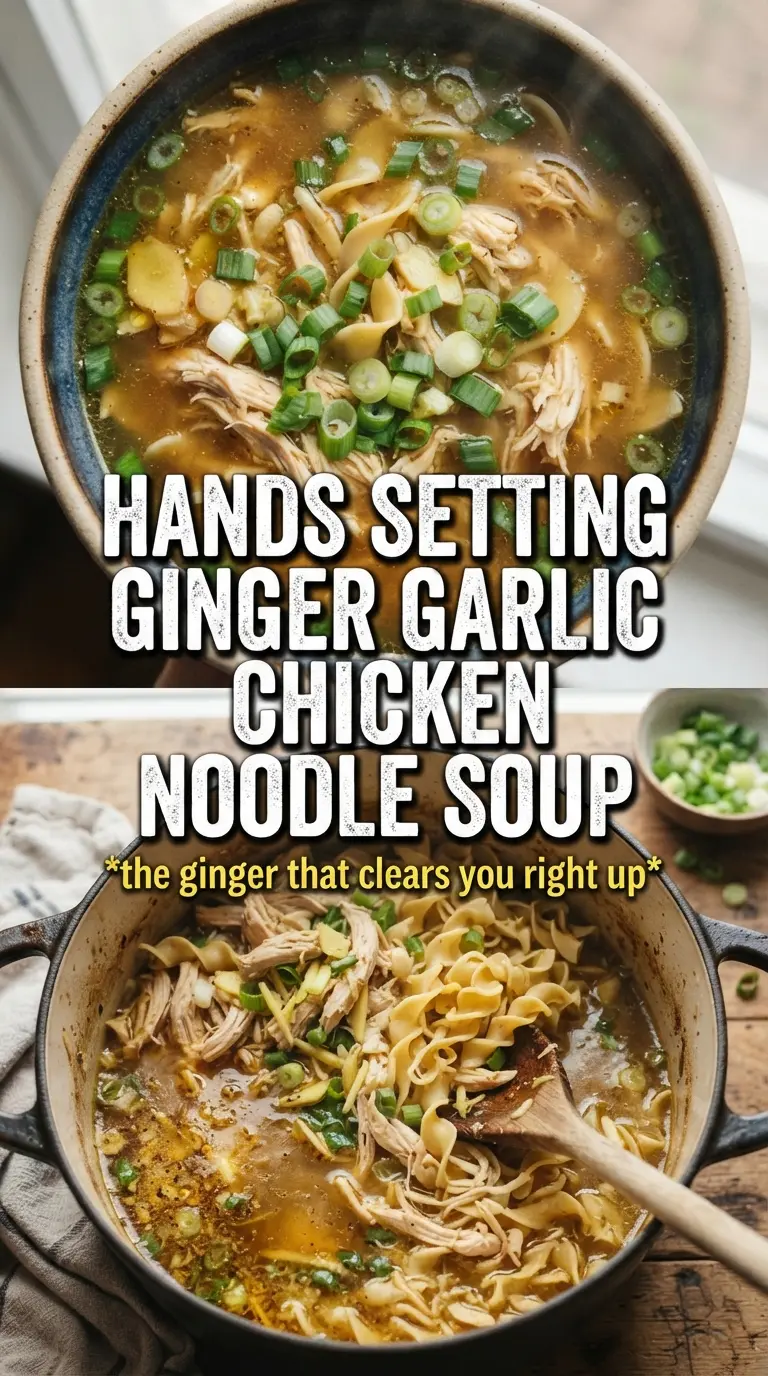
- Chicken breast or thighs — Thighs stay a little juicier and give the broth more body, while breast cooks a bit leaner and shreds into finer pieces. Either works. If you use thighs, pull them when they’re cooked through and tender, not when they start falling apart in the pot.
- Fresh ginger and garlic — These are the backbone of the soup, and dried versions don’t give the same clean heat or aroma. Grating the ginger helps it disappear into the broth instead of floating in chewy bits. The garlic should cook just until fragrant; if it browns, it turns bitter fast.
- Chicken broth — Use a broth you’d actually drink on its own, because this recipe doesn’t mask a thin base. Homemade or a good low-sodium store-bought broth both work well. Low-sodium is the better choice if you like to control the salt at the end.
- Sesame oil and rice vinegar — These go in at the end because heat strips away some of what makes them special. Sesame oil gives the soup a nutty finish, while rice vinegar sharpens the broth just enough to wake everything up. Don’t add either early.
- Ramen noodles or egg noodles — Ramen gives you a softer, springier bowl, while egg noodles lean a little more classic. If you know you’ll have leftovers, cook them separately and add them to each bowl so they don’t drink up the broth.
- Green onions, cilantro, and sesame seeds — These aren’t just garnish. They add freshness, a little crunch, and a finish that makes the soup taste complete instead of one-note. Skip them only if you have to, because they balance the warm broth beautifully.
Building the Soup in the Right Order
Softening the Vegetables First
Heat the oil and cook the onion, carrots, and celery until the onion looks translucent and the carrots start to soften at the edges. You’re not trying to brown them here. If the pan runs dry or the vegetables start to stick, lower the heat and stir; the goal is sweetness, not color.
Waking Up the Ginger and Garlic
Add the garlic and ginger after the vegetables have had their head start. Stir them for about 2 minutes, just until they smell intense and warm. If they darken too much, the soup will pick up a harsh note, so keep the heat moderate and move quickly once they hit the pan.
Simmering the Chicken Until It Shreds Easily
Pour in the broth and soy sauce, then add the chicken and bring the pot up to a boil before dropping it to a steady simmer. The surface should move gently, not roar. After about 20 minutes, the chicken should shred with almost no resistance. If it still feels tight in the center, give it a few more minutes before pulling it out.
Finishing with Noodles and Brightness
Shred the chicken and return it to the pot, then add the noodles and cook until they’re just tender. Turn off the heat before stirring in the sesame oil and rice vinegar. That last step matters because boiling them flattens the flavor, and the soup wants that fresh finish right at the end.
How to Adapt This Bowl for Different Nights
Make It Gluten-Free Without Losing the Comfort
Use rice noodles or a certified gluten-free noodle, and swap the soy sauce for tamari or coconut aminos. The broth stays just as fragrant, but the noodles will soften faster, so watch them closely near the end.
Use Chicken Thighs for a Richer Bowl
Thighs bring a little more richness and stay tender even if the soup sits on low heat for a while. They’re the better choice if you want a rounder, more savory broth and don’t mind a slightly meatier texture.
Turn It Into a Vegetable-Forward Soup
Skip the chicken and add mushrooms, baby bok choy, or diced tofu after the broth comes to a simmer. You’ll lose the depth that comes from simmering chicken in the pot, so add an extra pinch of salt and a little more soy sauce to keep the broth full-bodied.
Storage and Reheating
- Refrigerator: Store the soup for up to 4 days. The noodles will continue to soften, so the texture is best on day one and two.
- Freezer: Freeze the broth, chicken, and vegetables without the noodles for up to 3 months. Cook fresh noodles when you reheat so they don’t turn mushy.
- Reheating: Warm it gently on the stove over medium-low heat until steaming. If the broth has tightened up, splash in a little water or extra broth before serving.
Answers to the Questions Worth Asking
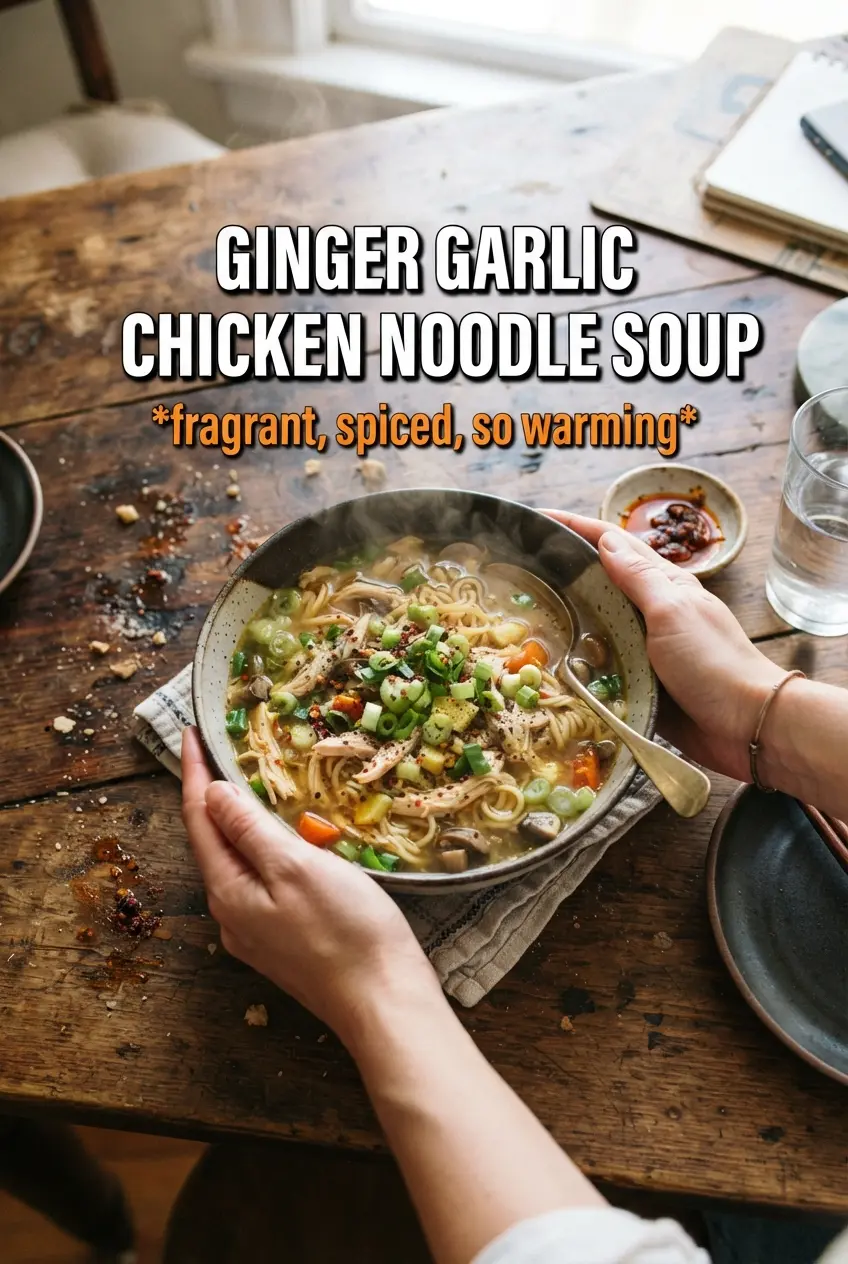
Ginger Garlic Chicken Noodle Soup
Ingredients
Equipment
Method
- Heat 1 tablespoon sesame oil in a large pot over medium heat, then add the onion, carrots, and celery and sauté for 4 minutes until they begin to soften and smell sweet. Visual cue: onion should look slightly translucent.
- Add the garlic and fresh ginger, then cook for 2 minutes until very fragrant, stirring constantly to prevent browning. Visual cue: you should smell ginger-garlic intensely within the first minute.
- Add the chicken broth, soy sauce, and chicken to the pot, bring to a boil, then simmer for 20 minutes until the chicken is cooked through. Visual cue: broth should gently bubble and chicken should be opaque.
- Remove the chicken from the pot, shred it, then return the shredded chicken to the broth. Visual cue: shredded strands will look moist and lightly coated in broth.
- Add the ramen noodles or egg noodles and cook for 3-5 minutes until tender. Visual cue: noodles should be fully hydrated but not mushy.
- Stir in the remaining sesame oil and the rice vinegar, then season with salt and pepper to taste. Visual cue: broth will look slightly glossier and the flavor will brighten.
- Ladle into bowls and top with green onions, fresh cilantro, and sesame seeds. Visual cue: garnish should sit on top in distinct green and tan flecks.