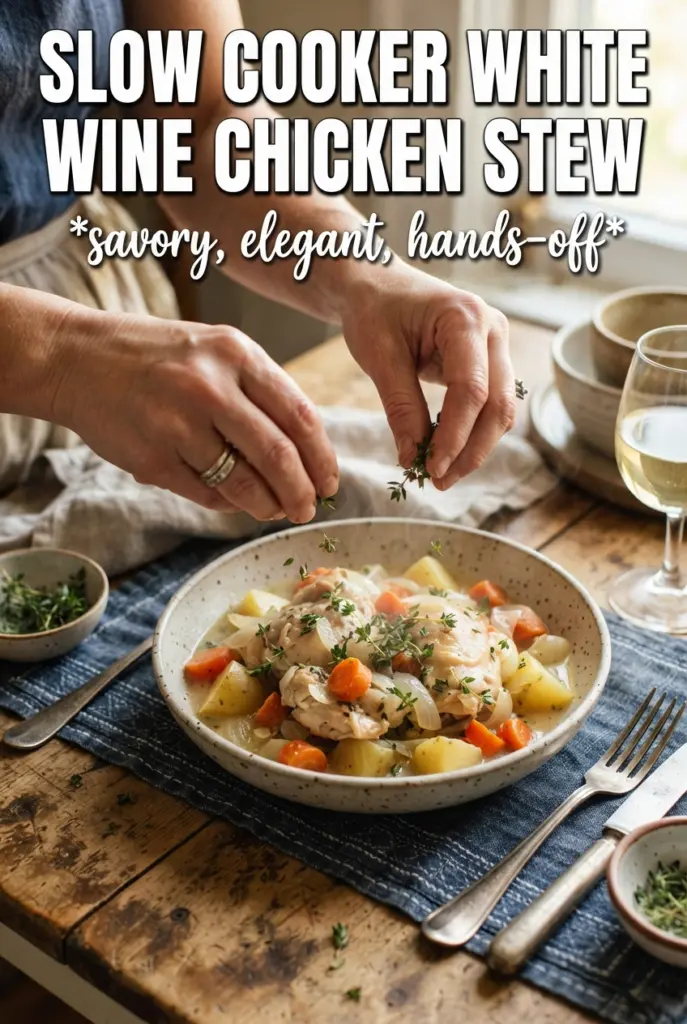
Tender chicken thighs, mushrooms, pearl onions, and carrots cook down into a broth that tastes like it took far more effort than it did. The slow cooker does the heavy lifting here, but the stew still ends up with real body and a polished finish because the wine, Dijon, and tomato paste get whisked together before they ever hit the pot. That keeps the broth balanced instead of flat, and the cornstarch slurry at the end turns it from soupy to spoonable without masking the flavor.
What I like most about this stew is that it doesn’t rely on cream to feel rich. Bone-in thighs stay juicy over a long cook, mushrooms bring depth, and the butter stirred in at the end gives the broth a round, silky finish. If you’ve ever had a slow cooker stew taste one-note, this version fixes that with a little acidity from the wine and a little sharpness from Dijon.
Below, you’ll find the exact order that keeps the chicken tender and the sauce clean-tasting, plus a few swaps that still work if you don’t have pearl onions or want to make the dish a little lighter. The bread on the side is not optional in my kitchen.
The broth thickened up beautifully and the chicken stayed fall-apart tender. I used frozen pearl onions and the stew still tasted like I’d been stirring it all afternoon.
Pin this slow cooker white wine chicken stew for a cozy dinner with tender chicken thighs, mushrooms, and a silky white wine broth.
The Secret to Keeping a Slow Cooker Stew from Tasting Flat
The biggest mistake with slow cooker stew is treating every ingredient like it wants the same amount of time and the same treatment. Chicken thighs can handle a long cook, but mushrooms and pearl onions need enough liquid and seasoning around them to keep their flavor from disappearing into the broth. That is why the wine, broth, tomato paste, and Dijon are mixed before they go in. The sauce starts seasoned, not rescued later.
The other thing that matters here is acidity. White wine gives the stew lift, but if you dump in too much and never balance it, the broth can taste sharp instead of rounded. Tomato paste and butter smooth that edge out. The final cornstarch slurry thickens the broth just enough to cling to the chicken and vegetables without turning it into gravy.
What Each Ingredient Is Actually Doing in This Stew

- Bone-in chicken thighs — These stay juicy through a long slow cook and bring more flavor than boneless pieces. Boneless thighs work in a pinch, but they soften faster and won’t give the broth the same richness.
- Dry white wine — This adds brightness and depth, not sweetness. Use something you’d actually drink; a harsh cooking wine can leave the stew tasting bitter.
- Tomato paste and Dijon mustard — These two are the backbone of the broth. Tomato paste gives the stew a deeper color and savory base, while Dijon quietly sharpens everything without making the dish taste like mustard.
- Cremini mushrooms and pearl onions — Creminis hold up better than white button mushrooms and bring a fuller, earthier flavor. Pearl onions add little bursts of sweetness; frozen ones are a perfectly good shortcut if you don’t want to peel fresh ones.
- Cornstarch slurry — This thickens the broth at the end without needing a roux. Mix it with cold water first or you’ll get little gummy lumps that never fully disappear.
- Butter — Stirred in at the end, it rounds out the wine and makes the broth feel finished. Don’t add it too early or it can get lost during the long cook.
How to Build the Stew So the Sauce Stays Clean and the Chicken Stays Tender
Season the Chicken and Load the Pot
Season the chicken thighs well with salt and pepper before they go into the slow cooker. Once the rest of the ingredients are in, the meat is harder to season evenly, and underseasoned chicken is one of the fastest ways to make the whole stew taste dull. Nestle the thighs in with the mushrooms, pearl onions, carrots, and garlic so the vegetables sit under and around the chicken instead of on top of it.
Whisk the Broth Before It Hits the Slow Cooker
Whisk the wine, broth, tomato paste, and Dijon until the tomato paste is fully dissolved. If you drop tomato paste into the crock in a clump, it can stay concentrated in one spot and you’ll lose that even, savory base. Pour the liquid over the chicken and vegetables so everything starts cooking in the same seasoned bath.
Let Low Heat Do the Work
Cook on Low for 6 to 7 hours if you can. High heat will cook the chicken faster, but it also makes the meat more likely to shred dry at the edges before the broth has time to deepen. The chicken is ready when it pulls apart easily at the bone and the carrots are tender all the way through, not chalky in the center.
Thicken at the End, Not the Beginning
Stir in the cornstarch slurry during the final 20 minutes on High. If you add it at the start, the stew can thicken too much and lose that broth-like body by the time dinner is ready. Remove the herb sprigs, stir in the butter, and taste again for salt and pepper before serving with parsley and crusty bread.
What to Change When You Need a Different Version of This Stew
Make It Dairy-Free
Skip the butter at the end and finish with a drizzle of good olive oil instead. You lose a little of the rounded, buttery finish, but the stew still tastes full because the wine, mushrooms, and Dijon carry the broth.
Use Boneless Chicken Thighs Instead
Boneless thighs work if that’s what you have, but reduce the cook time by about 45 to 60 minutes on Low. They won’t enrich the broth quite as much as bone-in thighs, so the final flavor is a little lighter.
Make It Gluten-Free
This stew is already naturally gluten-free as written, as long as your broth and Dijon are certified gluten-free. The thickening step stays the same because cornstarch gives you a clean, glossy finish without flour.
Swap the Pearl Onions
If you can’t find pearl onions, use a small yellow onion cut into chunks. You lose the sweet little onion bites, but the stew still gets the same savory backbone and the sauce won’t suffer.
Storage and Reheating
- Refrigerator: Store in an airtight container for up to 4 days. The broth thickens a bit as it chills, which is normal.
- Freezer: It freezes well for up to 3 months. Cool it completely first, then freeze in portions so the chicken and vegetables reheat evenly.
- Reheating: Warm gently on the stove over medium-low heat or in the microwave at reduced power. If the stew looks too thick, add a splash of broth or water before reheating so the chicken doesn’t dry out.
Answers to the Questions Worth Asking
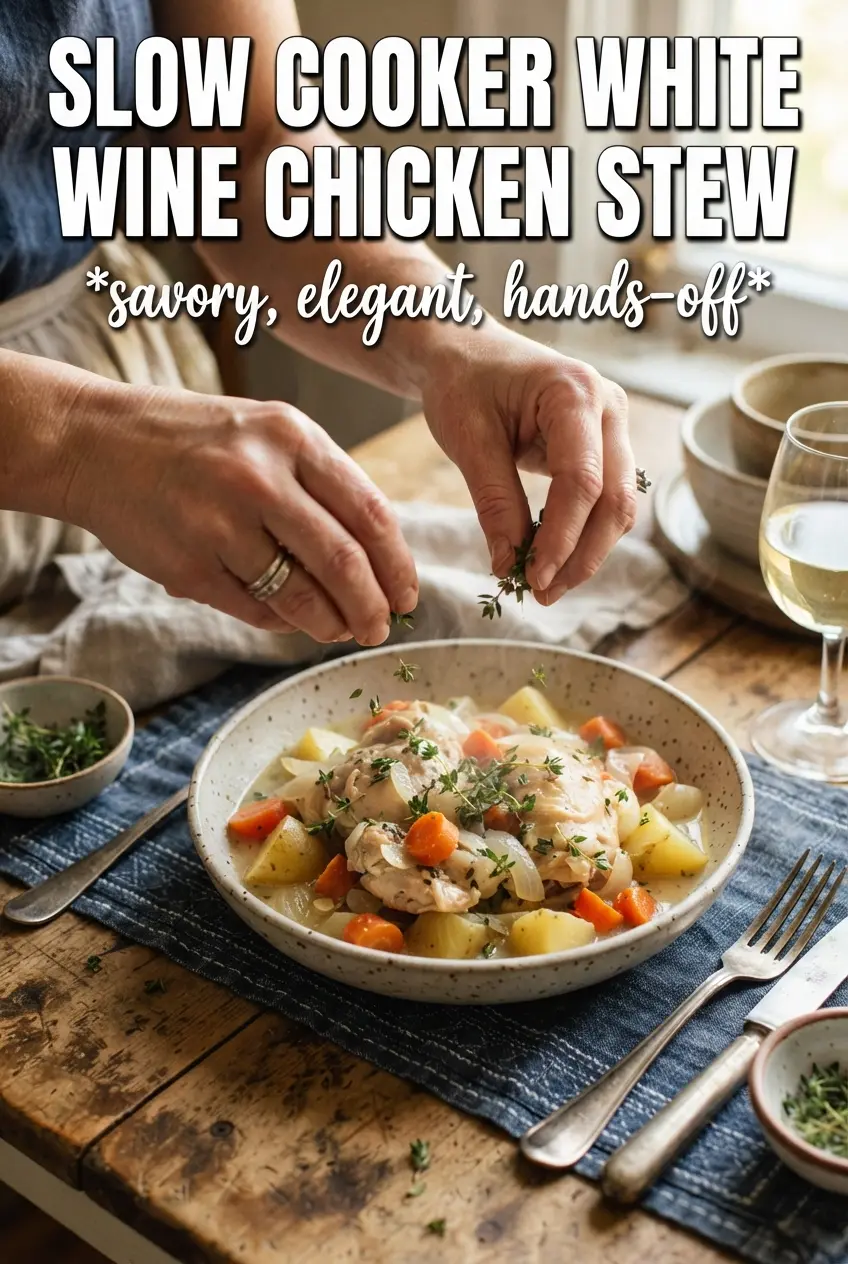
Slow Cooker White Wine Chicken Stew
Ingredients
Equipment
Method
- Season the bone-in chicken thighs with salt and black pepper, then place them in the slow cooker along with the halved cremini mushrooms, pearl onions, sliced carrots, and minced garlic.
- Whisk together the dry white wine, chicken broth, tomato paste, and Dijon mustard, then pour the mixture over the chicken and vegetables so everything is covered.
- Add the thyme sprigs and the rosemary sprig, nestling the herbs into the liquid so they steep during cooking.
- Cook on Low for 6-7 hours (or High for 3-4 hours) until the chicken is very tender and the vegetables are softened, with gentle bubbling around the edges of the broth.
- Stir together cornstarch and water to make a smooth slurry, then pour it into the stew while stirring.
- Turn the slow cooker to High and cook for 20 minutes until the broth is thickened and glossy, with steam visibly rising from the surface.
- Remove the thyme and rosemary sprigs, then stir in the unsalted butter until melted and the stew looks silky.
- Taste and adjust with additional salt and black pepper, then serve hot with fresh parsley and crusty bread for dipping.