
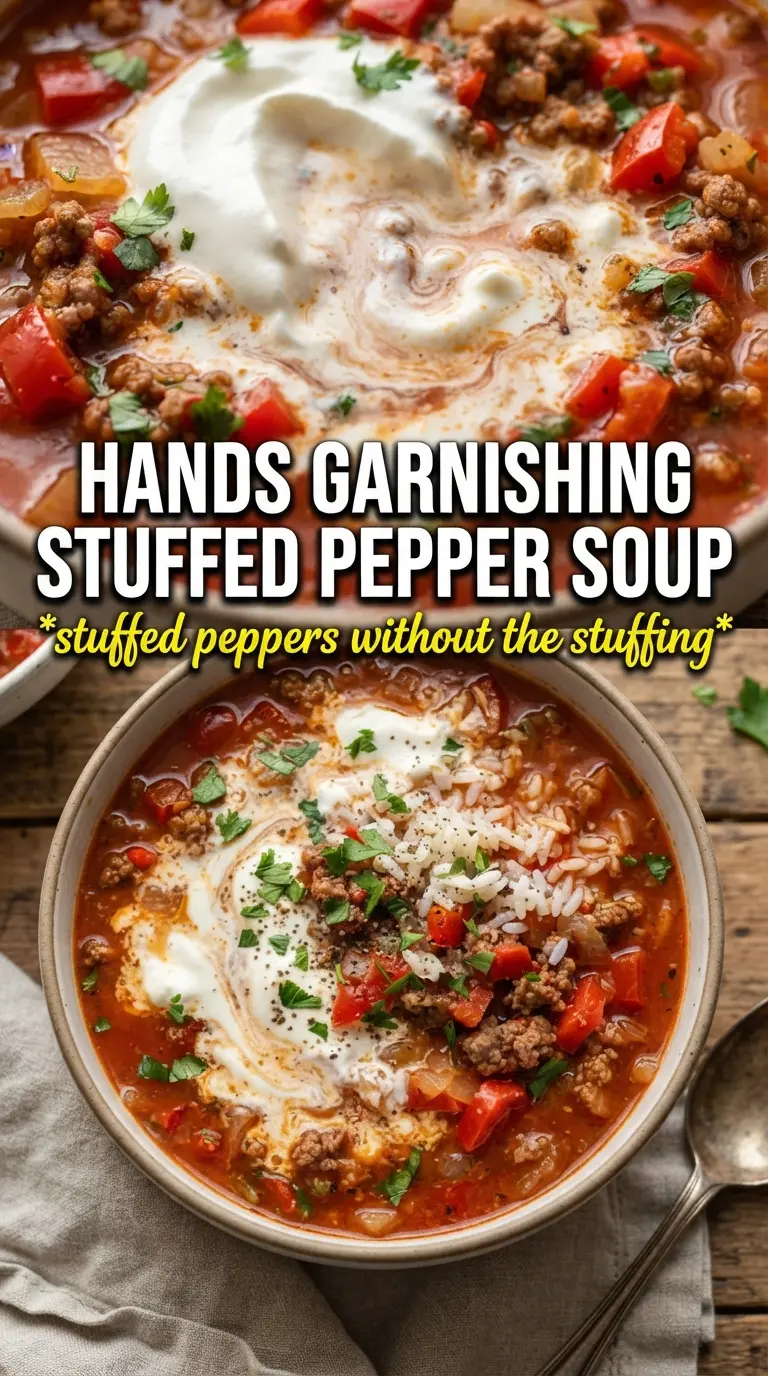
Stuffed pepper soup gives you all the comfort of classic stuffed peppers without the extra work of hollowing, filling, and baking a tray of them. It comes out hearty and spoonable, with tender rice, sweet bell peppers, and a tomato broth that tastes like it simmered all afternoon even though it lands on the table fast. The beef makes it filling enough for dinner, and the cheddar on top melts into the bowl in the best way.
What makes this version work is the order. Browning the beef first builds a savory base, then the peppers and onion go into the same pot so they pick up all that flavor. The tomato paste needs a short cook before the broth goes in; that step takes the raw edge off and deepens the soup instead of leaving it flat. Adding the rice directly to the simmering broth keeps the texture hearty and lets it absorb the seasoning as it cooks.
Below, I’ll walk through the small details that keep the rice from going mushy and the broth from tasting thin. There’s also a few easy ways to adapt it if you need a different grain, a lighter version, or leftovers that reheat well the next day.
The rice stayed perfectly tender and didn’t soak up all the broth overnight like some soups do. I also loved that the peppers still had a little bite instead of turning to mush.
Love the cozy tomato broth, tender rice, and melted cheddar in this stuffed pepper soup? Save it to Pinterest for nights when you want a hearty one-pot dinner without the fuss of stuffing peppers.
The Trick to Soup That Tastes Like Stuffed Peppers Instead of Tomato Rice
The biggest mistake with stuffed pepper soup is treating it like plain tomato soup with leftovers tossed in. It needs a real savory base, or the whole pot tastes one-note. Browning the beef first matters because those browned bits on the bottom carry the same depth you’d get from baking stuffed peppers and scraping every good thing from the pan.
The other place this goes wrong is the rice. If you add it too early or simmer it too hard, it turns soft and the soup loses that hearty, spoonable texture. A gentle simmer is enough. You want the rice cooked through but still holding its shape, and you want the peppers tender with a little bite left in them.
- Ground beef — Use a beef with enough fat to brown well, then drain off the excess. Too lean and the soup can taste flat unless you lean harder on seasoning.
- Tomato paste — This is not filler. Cooking it for a couple of minutes deepens the broth and gives the soup the cooked-tomato taste that makes it feel finished.
- Bell peppers — Green peppers bring the classic stuffed pepper flavor, while the red pepper adds sweetness. Dicing them evenly helps them soften at the same rate.
- Uncooked white rice — Long grain white rice holds up better than short grain. If you swap in brown rice, it needs a longer simmer and more broth.
What Each Ingredient Is Doing in This Pot
- Ground beef — It gives the soup its backbone and makes it feel like a full meal. After browning, drain the fat so the broth stays rich instead of greasy.
- Green and red bell peppers — These are the stuffed-pepper part of the equation. The green peppers bring that familiar savory edge, and the red pepper adds sweetness so the broth doesn’t taste sharp.
- Onion and garlic — They build the base flavor behind the tomatoes and beef. Cook them briefly in the pot after the beef comes out so they soften and pick up the flavor left behind.
- Crushed tomatoes and diced tomatoes — The crushed tomatoes give body, while the diced tomatoes leave you with little bursts of tomato in each spoonful. Using both keeps the soup thick without turning it into sauce.
- Beef broth — This stretches the tomato base into soup and carries the seasoning through the whole pot. A low-sodium broth gives you more control over the final salt level.
- Rice — Uncooked rice thickens the soup as it cooks, which is part of the appeal here. If you want leftovers that keep a looser broth, cook the rice separately and add it to each bowl instead.
The 20 Minutes That Matter Most
Browning the Beef for Real Flavor
Cook the ground beef in a large pot over medium-high heat until it has browned edges and no pink left. Break it up as it cooks, but don’t stir nonstop or you’ll steam it instead of browning it. If there’s a lot of fat in the pot after cooking, drain it off before you add the vegetables so the soup doesn’t feel heavy.
Softening the Peppers and Building the Base
Add the onion and all the bell peppers to the same pot and cook them for 4 to 5 minutes, just until they start to soften and the onion turns translucent at the edges. Stir in the garlic and tomato paste and cook for 2 minutes. That short tomato paste step is important; it darkens the paste a bit and takes away the raw, tinny taste that can make a soup seem unfinished.
Letting the Rice Finish in the Broth
Once the tomatoes, broth, and seasonings go in, bring the pot to a boil, then lower the heat to a steady simmer before adding the rice. Cover the pot and cook just until the rice is tender, about 18 to 20 minutes. If the soup boils hard the whole time, the rice can split and get mushy before the peppers are ready.
Finishing in the Bowl
Season with salt and pepper after the rice is cooked. Tomato and broth both vary in saltiness, so tasting at the end gives you a cleaner result. Serve it hot with shredded cheddar and fresh parsley; the cheese melts into the broth and gives every bowl a little creamy richness without needing cream in the pot.
How to Adapt This for a Different Pot, Pantry, or Diet
Use ground turkey instead of beef
Ground turkey works well here, especially if you want a lighter bowl. It won’t bring quite as much richness as beef, so use a good broth and don’t skip the tomato paste step, which gives the soup more depth.
Make it gluten-free without changing the texture
This soup is naturally gluten-free as written as long as your broth is certified gluten-free. The rice keeps the body of the soup without needing flour or a roux, so nothing else needs to change.
Use cooked rice for leftovers that stay brothy
If you know you want this soup to hold up for several days, cook the rice separately and add it to each bowl. That keeps the rice from absorbing too much broth in the fridge, which is the main reason this soup can turn thick overnight.
Storage and Reheating
- Refrigerator: Store in an airtight container for up to 4 days. The rice will keep absorbing broth, so expect the soup to thicken.
- Freezer: It freezes, but the rice softens after thawing. For the best texture, freeze the soup without rice and cook fresh rice when you reheat it.
- Reheating: Warm it gently on the stove over medium-low heat with a splash of broth or water if needed. High heat can make the rice break down and turn the soup pasty.
Answers to the Questions Worth Asking

Stuffed Pepper Soup
Ingredients
Equipment
Method
- Brown ground beef in a large pot over medium-high heat until cooked through, then drain the fat.
- Keep the heat on medium while you prep the vegetables so the pot stays hot for sautéing.
- Sauté onion and all bell peppers in the same pot for 4-5 minutes, stirring, until softened.
- Add garlic and tomato paste and cook for 2 minutes, stirring to coat the vegetables.
- Add crushed tomatoes, diced tomatoes, beef broth, Italian seasoning, garlic powder, and smoked paprika, then bring the mixture to a boil.
- Add uncooked long grain white rice, reduce heat to maintain a gentle simmer, then cover and simmer for 18-20 minutes until the rice is cooked.
- Season with salt and pepper to taste.
- Serve hot topped with shredded cheddar and fresh parsley.